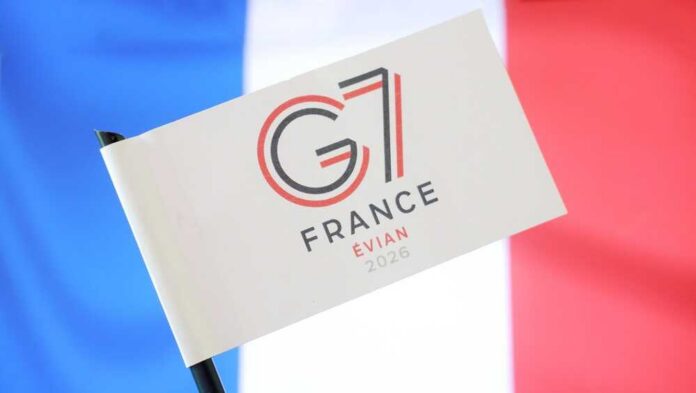
As G7 finance ministers gather in Paris for Day 2 of talks, many Americans are wondering whether these global elites will finally fix the mess they helped create or double down on the same failing, big-government playbook that drove inflation and energy shocks in the first place.
Story Snapshot
- G7 finance ministers and central bank governors meet in Paris for a second day of crisis talks on inflation, trade, and financial stability.
- The gathering is framed around war-related energy shocks, sanctions, and disruptions to key trade routes.
- Coverage focuses on arrivals and vague “coordination,” with little hard detail on concrete policy commitments.
- The lack of transparency raises questions for U.S. taxpayers about sovereignty, spending, and who really benefits.
Elites Gather in Paris as Ordinary Citizens Shoulder the Costs
G7 finance ministers and central bank governors convened in Paris for a second day of meetings, arriving to cameras and choreographed greetings from French Finance Minister Roland Lescure.[3] Broad reporting describes an agenda centered on inflation, financial stability, trade, and international economic cooperation, with repeated references to “high-stakes” talks on the global economy.[1][7] These leaders say they are trying to contain the economic fallout from overlapping crises, but the concrete measures remain largely behind closed doors.[4][5] For workers, retirees, and small business owners, the consequences of these choices are not abstract—they show up in grocery bills, fuel prices, and shrinking savings.
Reporting from Paris places the meeting squarely in the context of war-related tensions in the Middle East, sanctions campaigns, and energy disruptions that have rattled markets.[2][5] Coverage emphasizes worries about rising energy prices and the impact of sanctions on Russian oil, along with concerns about disruptions around the Strait of Hormuz.[5][4] These risks feed directly into the inflation that families have been battling for years, after a decade of overspending, loose monetary policy, and a globalist consensus that allowed America to become dangerously dependent on unstable regimes and hostile suppliers for energy and critical materials. Conservative voters expect U.S. officials at the table to defend national interests, not rubber-stamp European priorities or appease bureaucrats in multilateral forums.
Inflation, Energy Shocks, and the Missing Accountability
Media summaries make clear that the Paris discussions are framed as a response to inflationary pressures, higher energy prices, and the knock-on effects of sanctions and war on the broader financial system.[1][2][5] Commentators describe ministers searching for “common ground” on global economic tensions and critical raw material supplies, while warning that these strains are testing the group’s unity.[4][7] Yet there is no publicly available communique or detailed readout in the material provided, meaning citizens cannot see who is pushing for more fiscal discipline, who wants more bailouts, or who is lobbying for yet another round of sanctions that might spike prices again. That opacity makes it harder to hold anyone accountable when elite decisions hit household budgets.
Secondary coverage stresses that ministers are talking about “cooperation” and “coordination” but offers little on the hard tradeoffs: whether they will push for more government borrowing, more central-bank interventions, or greater protection for national supply chains.[1][4] The risk for American taxpayers is that vague language about “stability” often hides policies that socialize losses while privatizing gains for multinational firms and financial institutions. Without a clear record of what U.S. representatives are endorsing in Paris, citizens are left with headlines instead of concrete answers about how these talks will affect inflation, interest rates, and the long-term health of the dollar.
War, Sanctions, and the Push for Deeper Entanglements
Reports tie the G7 finance meetings to ongoing conflicts, describing how the war in the Middle East and energy shock from sanctions on Russian oil are central to the ministers’ agenda.[2][5] Officials are said to be weighing how to contain the economic impact of disrupted shipping lanes and possible threats to key choke points that carry oil and goods worldwide.[5] For conservatives, the question is whether these discussions will reinforce a policy mix that keeps America entangled in endless foreign crises and sanction regimes that often hurt ordinary people more than ruling elites abroad.
Last night’s bulletin on @ChannelsTV 🌍
G7 finance ministers are in Paris today as the Iran war dominates. Rachel Reeves pressing for coordinated action on Hormuz. Bond markets selling off on inflation fears. US Treasury Secretary Scott Bessent calling for sanctions on Iran’s… pic.twitter.com/PsECWjfheI
— Juliana Olayinka (@JulianaOlayinka) May 19, 2026
Multiple live feeds and short clips confirm that the Paris event is real and heavily stage-managed, with ministers arriving, posing for “family photos,” and offering carefully scripted remarks about unity and resolve.[1][3][6] Yet the substance of their deliberations on sanctions, war financing, and energy policy is largely inaccessible in the available coverage, highlighting how multilateral forums can operate with minimal democratic scrutiny.[1][5] That pattern should concern anyone who believes in constitutional checks and balances, national sovereignty over economic policy, and the need to protect American families from decisions made by distant bureaucracies who never have to stand for election in the United States.
Sources:
[1] YouTube – G7 Finance Ministers Arrive in Paris for Day 2 of Critical …
[2] YouTube – G7 finance ministers meet amid Middle East war economic …
[3] YouTube – Paris Hosts Day-2 of Major G7 Finance Ministers Meeting
[4] YouTube – LIVE: G7 finance ministers arrive for Day 2 in Paris
[5] Web – Europe Today: Energy shock and Russian oil sanctions …
[6] YouTube – WATCH NOW: G7 Finance Ministers Arrive in Paris for High-Level …
[7] YouTube – LIVE: G7 finance ministers arrive for a meeting in Paris