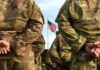

Hundreds of thousands of Americans who served in the dangerous Gulf of Oman theater are still being treated as if their war never happened—and many are locked out of benefits they earned in uniform.
Story Snapshot
- Roughly 300,000 veterans of the Gulf of Oman and related missions are still missing key “wartime” recognition and some benefits tied to that status.
- The Department of Veterans Affairs (VA) counts Gulf of Oman service under the broader Gulf War illness framework, but not as its own recognized conflict.
- Because many benefits hinge on legal definitions of “war” and “combat service,” veterans can be denied pensions, awards, and easier disability approvals.[2]
- Conservatives who back the troops are pressing Washington to fix the rules so the government finally matches its words of gratitude with action.[2][3]
How A “Non‑War” Left Gulf of Oman Veterans in Bureaucratic Limbo
Military.com reports that about 300,000 veterans who served in the tense Gulf of Oman and related operations never received full recognition as wartime veterans, leaving them ineligible for some benefits, awards, and entitlements reserved for those legally deemed combat or war veterans.[3] Law often treats formal labels like “war,” “wartime service,” or “special duty” as triggers for pensions, medals, and state recognition, regardless of how dangerous the deployments actually were. That legal hair‑splitting is what still blocks many of these veterans.
The Department of Veterans Affairs itself shows how much these labels matter. For pension purposes, the VA defines the “Gulf War period” as running from August 2, 1990, to the present, meaning any active‑duty service during that period technically counts as service during a wartime era for federal pension eligibility.[2] However, separate rules govern combat decorations, certain state benefits, and some “war veteran” designations, which do not automatically apply just because someone served during that broad Gulf War calendar window.
VA Recognizes Gulf of Oman Service for Illnesses, But Not As Its Own War
The Department of Veterans Affairs does acknowledge that service in the Gulf of Oman region can bring special health risks. VA guidance on Gulf War illnesses lists service in Southwest Asia locations such as Bahrain, the Gulf of Oman, Oman, the Gulf of Aden, Iraq, Kuwait, Qatar, Saudi Arabia, and surrounding airspace as qualifying for presumptive disability rules if veterans develop specific unexplained chronic symptoms. These presumptions make it easier to link certain conditions to service without forcing veterans to prove every detail of exposure.
For health care under the PACT Act, the VA further states that veterans who performed active duty on or after August 2, 1990, in nations including Oman qualify for expanded enrollment pathways tied to toxic exposure concerns.[2] At the same time, the agency does not identify any distinct “Gulf of Oman conflict” as a separate wartime period. Instead, it folds those deployments into the wider Gulf War or Southwest Asia theater categories, which can leave veterans’ specific missions invisible when other systems, like awards boards or state laws, ask whether they served in a named war.[2]
Why Legal Definitions of “War” Decide Who Gets Help
Veterans’ advocates note that many benefits are not simply about where someone served, but whether Congress or agencies have formally labeled that service as part of a war, a special duty area, or a qualifying theater. In Canada, for example, Persian Gulf veterans long fought to have their service upgraded from “special duty area” to wartime status, because the lower category limited their access to key benefits and recognition. American law follows a similar pattern: state statutes often list specific conflicts by name when defining who qualifies for certain observances and honors.
That structure creates a serious fairness problem for Gulf of Oman veterans. Even when they faced hostile forces or dangerous conditions, if the deployment falls into a gray area, they can be excluded from benefits that flow automatically to clearly labeled war veterans.[3] Meanwhile, when they try to prove individual disability claims without presumptions, the federal Government Accountability Office found that nearly 95 percent of early Persian Gulf undiagnosed‑illness claims were denied as of mid‑1995, showing how steep the odds can be without strong legal protections.[2][3]
Conservative Concerns: Broken Promises to Those Who Served
For many conservatives who believe government’s first duty is to defend the nation and honor those who defend it, this situation looks like another example of bureaucrats hiding behind technicalities while veterans pay the price. Reports show that Gulf War and Gulf‑related claims are often misunderstood by Department of Veterans Affairs staff, leading to frequent denials even when Congress intended presumptive rules to make things easier.[1][3] When the system is this confusing, older veterans especially can simply give up rather than keep fighting Washington.
Supporters of President Trump’s second‑term agenda argue that fixing these recognition gaps aligns perfectly with conservative priorities of respecting military service, cutting red tape, and forcing agencies to follow common sense. They point out that the Department of Veterans Affairs already treats Gulf of Oman and Oman service as Gulf War service for presumptive illness rules and PACT Act eligibility, and say the same logic should extend to awards and any benefits restricted to wartime or combat veterans.[2] For roughly 300,000 veterans, closing that gap would finally match the government’s words of gratitude with tangible action.[2][3]
Sources:
[1] Web – 300,000 Veterans Still Can’t Access Some Benefits Because Their War …
[2] Web – Why VA Claims Are Often Denied for Gulf War Syndrome
[3] Web – Evidence Considered in Persian Gulf War Undiagnosed Illness Claims