A new wave of “iron fist” crackdowns is sweeping Latin America as terrified citizens choose order over open borders, soft-on-crime leftists, and shrinking freedoms.
Story Snapshot
- Rising crime and extortion are pushing Latin American voters toward Bukele-style strongmen who promise fast security gains.
- El Salvador’s Nayib Bukele is the model: a massive gang crackdown, emergency powers, and plunging homicide rates alongside serious rights concerns.
- Critics warn these approaches erode courts, due process, and free speech, but many citizens say safety now matters more than abstract “norms.”
- The same crime-first politics driving this shift abroad also shape U.S. debates on borders, cartels, and how far government power should go.
Crime, Extortion, and the Rise of “Order First” Politics
Across Latin America, fear of crime is now the main issue deciding elections, not climate pledges or woke social agendas.[22] In country after country, people who lived through lockdowns, inflation, and gang rule are done waiting on polite promises from the left. Rising extortion and everyday threats have pushed voters toward conservative or right-wing populists who talk clearly about taking back the streets fast, even if it means tough prisons, mass arrests, and using the military against cartels and gangs.[22]
The pattern is clear in reporting from the region. The Associated Press describes how a leftward drift after the pandemic has now snapped back, as frustrated citizens rally to leaders who sound a lot like El Salvador’s Nayib Bukele and even cite President Trump as an example of hardline border and crime policy.[22] Analysts call this “security populism” – a style of politics that promises you will feel safer in months, not years, and that blames criminals, corrupt elites, and often illegal migrants for a broken system.[2]
Bukele’s Iron Fist: Results That Many Voters Crave
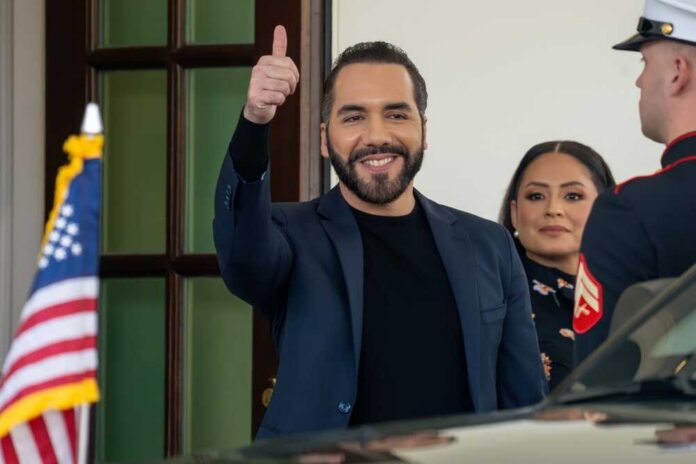
El Salvador’s president, Nayib Bukele, sits at the center of this regional turn.[24] For years his country was one of the most violent on earth, with gangs like MS-13 effectively ruling whole neighborhoods. Starting in 2022, Bukele pushed a “mano dura,” or iron fist, campaign: a rolling state of emergency, mass detention of suspected gang members, harsh sentencing laws, and a giant new mega-prison built to hold tens of thousands of inmates.[24] Publicly, he framed it as a simple promise: fear the state, not the gangs.
The numbers coming out of El Salvador explain why terrified citizens elsewhere are paying attention. One analysis notes that under Bukele the murder rate dropped from 53 per 100,000 people in 2018 to just 2.4 per 100,000 in 2023, with homicides plunging more than half in a single year and extortion also falling sharply.[7] Another report says more than 80,000 people have been jailed under the crackdown, giving the government direct control over much of the gang world that once controlled the streets.[8] Across Latin America, many ordinary people see that as proof that a leader who ignores “elite lectures” on rights can deliver real safety.[26]
The High Cost: Rights, Courts, and a New Authoritarian Temptation
Human rights groups, however, describe a darker side to the Bukele model. Amnesty International reports that El Salvador’s state of emergency brought thousands of arbitrary detentions, torture and ill-treatment in prisons, and at least dozens of deaths in state custody, as due process and basic legal protections were suspended.[11] Another investigation says over 78,000 people were detained in the first two years of the crackdown, with hundreds of deaths behind bars and severe prison overcrowding, as the government treated any criticism as siding with gangs.[12]
Researchers also warn that Bukele’s success is tied to a broader erosion of democratic checks and balances, not just tough policing. A Journal of Democracy study describes how he used a legislative majority to fire top judges and the attorney general, then ruled under emergency powers that sideline independent courts and weaken “horizontal accountability.”[5] A British Academy paper calls El Salvador the clearest example of “substitution politics,” where fear of crime lets leaders expand emergency powers, militarize policing, and normalize mass detention as a permanent tool of rule rather than a short-term response.[24]
From El Salvador to the Region — and Lessons for the U.S.
Despite these warnings, the Bukele-style template is spreading. Analysts note that politicians in countries like Ecuador, Guatemala, Honduras, Costa Rica, and others have either copied or promised similar emergency regimes, tougher sentencing, and huge prison builds, all marketed as the fastest way to crush gangs and extortion.[13] A study of new right-wing movements in Latin America finds that many of these leaders ride anger at crime and corruption, present themselves as anti-elite outsiders, and adopt hardline crime policies as a core brand.[21]
A right-wing backlash surges in Latin America as crime fears fuel Bukele-style crackdowns #AssociatedPress https://t.co/ZLLA4UFVKS
— #TuckFrump (@realTuckFrumper) June 17, 2026
For American readers, this matters for two reasons. First, when leftist governments in the region fail to deliver security, the vacuum is often filled by strongmen who are happy to trade liberty for order – a warning about what happens when elites ignore basic law-and-order demands.[21] Second, as migrant flows, cartel violence, and fentanyl deaths hit our own communities, the same question sits on our ballot: How far should government go to restore safety without crushing the Constitution, due process, and free speech? El Salvador shows both the appeal and the danger of letting fear hand a blank check to any leader, however much we may agree with their goals.
Sources:
[2] Web – Nayib Bukele’s Growing List of Latin American Admirers
[5] Web – Latin America has Bukele-fever – by Matthew Yglesias – Slow Boring
[7] Web – The Effects and Dangers of Mano Dura Policies in Latin America
[8] Web – Opinion | Will Nayib Bukele Be Latin America’s Next Strongman?
[11] Web – A Review of Right-Wing Populism in Latin America and Beyond
[12] Web – El Salvador: President Bukele engulfs the country in a human rights …
[13] Web – Human rights crisis in El Salvador ‘deepening’: Amnesty – Al Jazeera
[21] Web – Human Rights Abuses in Bukele’s El Salvador Demand Sanctions
[22] Web – [PDF] The “New” Extreme Right in Latin America – LASA Forum
[24] Web – Criminal governance and democratic erosion in Latin America and …
[26] Web – [PDF] or all of these? Assessing recent cases of right-wing populism …