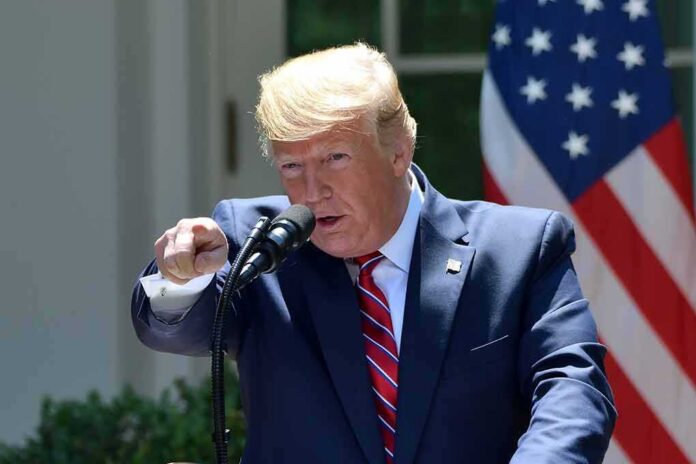
President Trump warned that any nation helping Iran skirt pressure will face “tremendous economic consequences,” pairing new sanctions with a sustained naval blockade.
Story Snapshot
- White House ties tougher sanctions to a long-term naval blockade to choke Iran’s oil cash.
- State Department targets shippers, vessels, and front firms moving Iranian petroleum.
- Iran signals the Strait of Hormuz stays constrained unless sanctions and asset freezes end.
- Reuters says Washington believes it can keep the blockade “indefinitely,” raising stakes for outside enablers.
Trump’s Warning And The Levers Behind It
President Trump issued a blunt message to governments and companies aiding Iran’s economy. The United States will punish sanctions evasion with painful measures. The warning follows months of strikes, financial actions, and a maritime squeeze. Defense leaders said the United States can sustain a naval blockade for as long as needed, linking sea control with economic pressure. The approach aims to cut off Iran’s oil revenue, which funds proxy groups and missile programs, while deterring attacks on commercial shipping.
The State Department announced new sanctions that go after the “shadow” oil trade. The measures list individuals, vessels, and firms that move or sell Iranian petroleum with deceptive practices. The goal is to sever the regime’s cash flow by blocking transport, insurance, and payments that make oil sales possible. This is a direct shot at the global web that blends cargoes, switches flags, masks Automatic Identification System trackers, and launders proceeds. The message: help Iran, lose access to the U.S. financial system.
Hormuz Pressure And Iran’s Demands
Iran has tied any reopening of normal traffic through the Strait of Hormuz to major U.S. concessions. Tehran’s list includes lifting sanctions, releasing frozen assets, and halting military threats. That stance keeps energy markets on edge and raises shipping costs. It also shows why the Trump team is targeting the support network. If Iran tries to hold the world’s oil routes hostage, then pressuring the middlemen who buy, move, insure, or finance Iranian barrels becomes central to U.S. leverage and to protecting allied economies.
Reuters reporting says Washington has expanded maritime, energy, and financial sanctions since the conflict escalated this year. U.S. forces also moved to physically secure routes and deter attacks on tankers. The combined effort seeks to deny Tehran new revenue while keeping lawful trade moving. Energy officials have said U.S. military escorts and patrols can keep critical lanes open. That undercuts Iran’s threat to close the strait and helps stabilize supply while pressure builds on Tehran’s budget.
Implications For Allies, Adversaries, And U.S. Families
Countries that ignore sanctions now face a clearer risk. The United States can blacklist banks, seize cargoes, and block port access. Those tools raise the price of doing business with Iran. Reuters reported Pentagon leaders are prepared to keep naval pressure “indefinitely,” which tells fence-sitters that time favors Washington, not Tehran. For U.S. readers, this matters at the pump and the grocery store. Stable shipping and firm enforcement help prevent oil shocks that feed inflation and crush family budgets.
Iran’s answer is to spread pain by targeting trade routes and energy hubs, hoping to force U.S. concessions through higher costs and fear. The Trump administration’s counter is to tighten the net on facilitators and shield lawful shipping. The State Department’s latest action lists the entities that make Iran’s exports possible and moves to cut them off from the dollar and global insurers. That strategy reflects core conservative principles: peace through strength, rule of law at sea, and no rewards for terror sponsors or blockade blackmail.
What Comes Next And The Limits Of Pressure
Sanctions take time to bite, and evasion networks adapt. Some firms will try blending, reflagging, or circuitous routes. That is why repeat, targeted actions matter. Washington’s cadence of designations, cargo tracking, and interdictions can raise risks and costs faster than smugglers can pivot. As these costs rise, fewer players will touch Iranian barrels. That shrinks Tehran’s cash and weakens its ability to fund missiles, drones, and foreign militias that menace allies and ships.
Two things can be true at once. Iran will try to use Hormuz as leverage, and the United States can still outlast and outmaneuver those tactics with steady enforcement and sea control. For nations helping Iran, the choice is simple. Respect sanctions and maritime rules, or face tough penalties and loss of access to the American market. For American families, a firm line now helps defend energy security, push down costs, and stop a hostile regime from cashing in on chaos.
Sources:
state.gov, reuters.com, cnbc.com