The U.S. Coast Guard fired disabling shots at a boat carrying 25 Chinese nationals off Florida, raising big questions about border security, use of force, and how seriously America is finally taking illegal migration by sea.
Story Snapshot
- Coast Guard crews stopped a boat one mile off Key Biscayne that was smuggling 25 Chinese nationals into the U.S. after it refused to stop.[1]
- After verbal orders and warning shots failed, the Coast Guard used disabling fire on the vessel’s engines; no one on board was hurt.[1]
- The operation is part of a broader campaign of migrant and drug interdictions in Florida waters, including recent major cocaine seizures.[1]
- New Coast Guard rules now give frontline commanders more authority to use force against non‑compliant vessels inside U.S. waters, aiming to secure maritime borders more effectively.[18]
What Happened Off Key Biscayne
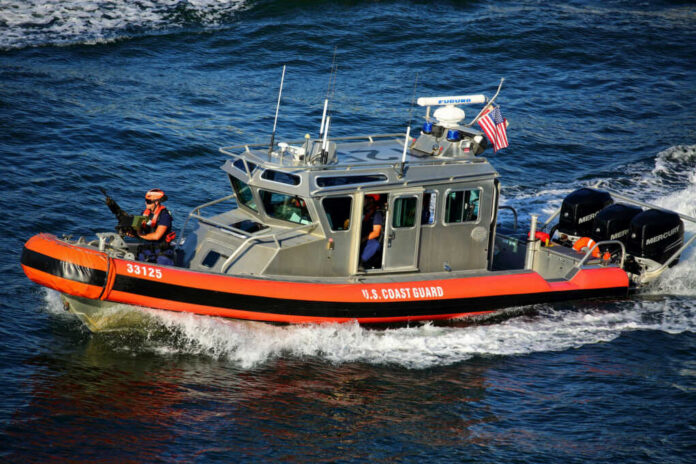
On June 10, a U.S. Coast Guard crew confronted a suspected smuggling boat about one mile south of Key Biscayne, Florida.[1] The vessel was carrying 25 Chinese nationals who, according to the Department of Homeland Security, were attempting to enter the United States illegally by sea.[1] When Coast Guard units ordered the boat to stop, the operator refused to comply and kept going. At that point, this was no longer a simple inspection stop. It became a serious law‑enforcement chase near a busy American coastline.[1]
Coast Guard Station Miami Beach first used warning shots to get the boat to stop, which is standard practice when a vessel ignores verbal orders and flashing lights.[1][19] When those warnings did not work, the crew moved to “disabling fire,” targeting the boat’s engines so it could no longer flee.[1][19] No one on board was hit or injured, which matches long‑standing Coast Guard policy to use the minimum force needed and to focus fire on the motors, not the people.[19] The disabled vessel was then secured and boarded.[1]
How the Coast Guard Handles Non‑Compliant Smugglers
For over a century, the United States Coast Guard has served as America’s primary maritime law‑enforcement force, with clear authority to board vessels, seize contraband, and arrest smugglers in U.S. waters and on the high seas.[21][25] The service trains its people to treat force as a last step on a “use‑of‑force continuum” that starts with presence and verbal commands and only rises to warning shots and disabling fire when a boat refuses to submit to lawful orders.[19] That is exactly the pattern reported in this Key Biscayne case.[1][19]
In 2026, the Coast Guard updated its Surface Use of Force rules to push more authority down to commanding officers and pursuit coxswains on the scene.[18] Before this change, crews often had to wait for a flag officer’s approval before using disabling fire, even when a non‑compliant vessel was racing toward shore with migrants on board.[18] Under the new rules, frontline leaders can decide to shoot the engine when warnings, sirens, and other tactics fail, so long as they stay within strict law‑enforcement policy.[18] The goal is to stop dangerous boats earlier, protecting both the crew and the people being smuggled.[18]
Why This Interdiction Matters for Border Security
The Key Biscayne incident fits into a larger picture of stepped‑up enforcement in Florida waters. The Coast Guard Southeast District has recently reported major drug seizures off Cape Florida and the broader region, including multi‑million‑dollar cocaine busts tied to smuggling routes in the Caribbean and Eastern Pacific.[1][4] Official messaging from Coast Guard Southeast also stresses continuous immigration enforcement and security patrols along America’s 31,000 miles of maritime borders, with a special focus on illegal migration and human smuggling.[7][24]
The Department of Homeland Security said this action was part of Operation Vigilant Sentry, a layered strategy that uses cutters, boats, aircraft, and partner agencies to deter and stop illegal maritime migration before it reaches U.S. shores.[1] After the boat was disabled, the 25 Chinese nationals were transferred to the Coast Guard cutter Margaret Norvell for processing, and their vessel was seized and towed to Station Miami Beach.[1] Federal agents from Homeland Security Investigations and Customs and Border Protection then opened a criminal probe into the smuggling attempt.[1]
Gaps in What We Still Do Not Know
Available public records do not yet include the full incident report from this interdiction, such as the radio logs, precise timeline, or full use‑of‑force review.[10] That means outside observers cannot see every step of the pursuit, how long the Coast Guard shadowed the vessel, or exactly when each warning was given. We also do not yet have the vessel’s name, flag, or any indictment that spells out who organized the smuggling run and how the 25 Chinese nationals were recruited or transported before they reached Florida waters.[10]
Even with those gaps, what is clear from official statements and long‑standing law is that the Coast Guard was acting squarely inside its legal mission when it stopped a non‑compliant boat one mile off the U.S. coast.[19][21][25] The pattern shown here—orders, warning shots, then precise disabling fire at the engine with no injuries—matches both written policy and earlier cases where migrant‑smuggling or drug‑smuggling vessels tried to flee.[4][18][19] For Americans worried about porous borders and foreign smugglers testing our resolve, this case shows that at least at sea, the United States is willing to use firm, lawful force to defend its waters and enforce its immigration laws.
Sources:
[1] Web – New: Coast Guard Opens Fire, Disables Chinese Smuggling Boat
[4] Web – 2026 U.S. Coast Guard Outlook Summit – Defense Leadership Forum
[7] Web – U.S. Coast Guard Southeast | Miami FL – Facebook
[10] Web – Members from the Coast Guard Helicopter Interdiction Tactical …
[18] Web – Key Biscayne – WPLG Local 10
[19] Web – One person was taken to the hospital on Saturday after a vessel in …
[21] Web – [PDF] A Legal Case Study of the Coast Guard’s Airborne Use of Force
[24] Web – [PDF] U.S. Coast Guard Deterrence Evergreen
[25] Web – United States Coast Guard – Wikipedia