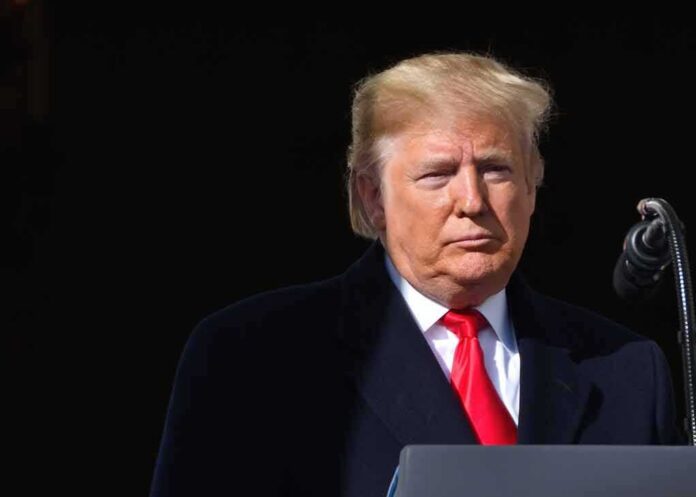
A fragile Iran ceasefire deal and a promise to reopen the Strait of Hormuz are now center stage as President Trump sits down with world leaders who still doubt both Tehran’s word and global security.
Story Snapshot
- Trump arrives at the G7 after announcing an interim deal with Iran to end the war and reopen the Strait of Hormuz, aiming to calm energy markets and global shipping.
- European leaders welcome the ceasefire framework but tie any sanctions relief to “clear, verifiable steps” from Iran on its nuclear program.[1]
- The agreement is a short memorandum of understanding with a 60‑day window, not a final peace treaty, leaving key nuclear and enforcement issues unsettled.
- Conflicting messages from Washington and Tehran over money, nuclear limits, and Lebanon raise questions about whether this deal truly secures American interests.
Trump’s Iran Deal Lands at a High-Stakes G7 Table
President Donald Trump arrived at the G7 summit in Evian-les-Bains, France, fresh off announcing an interim understanding with Iran to halt hostilities and reopen the vital Strait of Hormuz. The memorandum of understanding followed more than three months of war that had closed the key waterway, spiked energy prices, and shaken already stressed global markets. Trump framed the deal as a de-escalation that would “let the oil flow” again and bring “great things” for the world economy.[4]
World leaders gathered in Evian with global economic challenges, international security, and energy stability at the top of the agenda, and the United States–Iran agreement quickly became the dominant topic.[2][3][4] European leaders known as the E4—Germany, France, the United Kingdom, and Italy—treated the ceasefire framework as a serious opening, not a done deal, signaling support while stressing that any sanctions relief depends on real action by Tehran.[1] That careful welcome shows allies want stability but remember past broken promises.
What the Memorandum Does—and What It Does Not
According to public reporting, the memorandum of understanding is a short, roughly page-and-a-half framework that extends the current ceasefire and outlines fourteen main points for future talks. It calls for lifting the American naval blockade of Iranian ports, clearing mines, and reopening the Strait of Hormuz to shipping, with the goal of restoring normal oil flows and lowering pressure on global markets. A sixty-day negotiation window is built into the deal to hammer out harder issues like nuclear limits, uranium disposal, and sanctions relief.[1]
American officials have told reporters the framework includes strong enforcement and verification elements, including dismantling parts of Iran’s nuclear program and giving the United States access to retrieve and destroy highly enriched uranium on site.[2] Trump has vowed Iran “will not have a nuclear weapon” under this arrangement, presenting the deal as tougher and more targeted than the old 2015 nuclear agreement.[2] Yet analysts note the current text does not fully resolve core nuclear questions and instead punts many of them into that sixty-day follow-on process, where Tehran will surely push back.
Lingering Risks: Nuclear Ambiguity, Cash, and Conflicting Stories
Even as markets reacted to the announcement and shipping interests prepared for a possible reopening, several big concerns remain for Americans who care about security and constitutional oversight. Key terms of the memorandum have not been released to the public yet, and news outlets say the full text was promised within days, which means citizens and Congress are being asked to trust summaries rather than read the actual language.[4] That lack of transparency invites both over-selling by supporters and deep suspicion from skeptics who remember past secret side deals with Iran.
Reporting also shows the United States and Iran are already giving different versions of what the deal includes, especially on money, Lebanon, and control of the Strait. Iranian media have claimed large releases of frozen assets and reconstruction commitments worth hundreds of billions of dollars, as well as broad limits on Israeli military action, while American sources emphasize temporary sanctions waivers tied to performance and avoid promising huge payouts. Experts warn that these competing narratives show Tehran will sell the deal at home as proof the regime survived and forced Washington’s hand, which could weaken deterrence if not checked by firm enforcement.[6]
What Conservatives Should Watch Going Forward
For conservatives focused on American strength, limited government, and energy independence, this G7 moment is both an opportunity and a warning sign. On one hand, getting the Strait of Hormuz safely reopened protects working families from even higher fuel prices and shields the global economy from another shock at a time of fragile growth. On the other, a vague, evolving framework with secret details risks repeating the mistakes of past Iran deals that front-loaded cash and relief while nuclear and regional behavior stayed dangerous.
Experts on United States–Iran talks say this fits a long pattern where leaders announce partial frameworks first and argue about what they really mean later, with verification, enrichment limits, and sanctions snapback always at the center of the fight. That is why many stress the need to see the signed memorandum, its annexes, and its enforcement triggers, and to track hard evidence like shipping logs, inspection reports, and sanctions timelines rather than relying on summit sound bites. For now, Trump’s G7 meetings offer a venue to press allies to back strict verification, real nuclear rollbacks, and zero tolerance for Iranian games in the Strait—or to expose who prefers optics over real security.
Sources:
[1] Web – Trump gathers with word leaders for a high-profile session focused on …
[2] Web – G7 summit: US to focus again on Ukraine after Iran deal, Trump says
[3] YouTube – US-Iran Deal Set to Dominate G7 Summit in France
[4] Web – FRANCE 24 English’s post – Facebook
[6] YouTube – President Trump Meets World Leaders at G7 Summit in …