NBC News acknowledged that California’s mail-in ballot rules routinely produce late-count surges that “historically favor Democrats,” reviving concerns about trust, transparency, and the legitimacy of election-night leads.
Story Highlights
- NBC News described California’s seven-day mail ballot window and its history of late Democratic gains [1].
- Election-night leads can reverse as mailed ballots are verified and counted after Election Day [1].
- Research shows vote-by-mail changes timing more than outcomes, challenging sweeping partisan claims [2][3].
- Postal warnings underscore the risk that ballots postmarked on time may still arrive too late to count [1].
What NBC Reported About California’s Late-Count Pattern
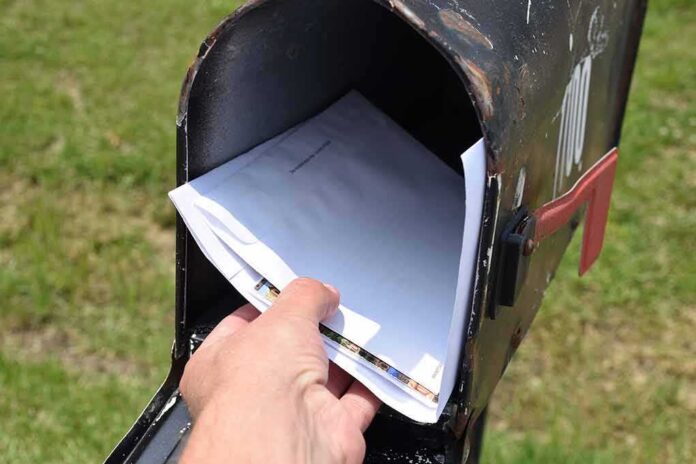
NBC News segments covering California’s primary explained that ballots postmarked by Election Day can be received and counted for up to seven days, and that this lag has “historically” benefited Democrats in late returns [1]. That procedural delay can cause early results to look one way on election night and shift as batches of verified mail ballots are added in the following days. The network’s own framing sharpened public focus on how counting order, rather than fraud, often drives late movement in competitive races [1].
NBC’s language matters because the public hears two things at once: first, a rule-driven explanation for the count lag, and second, an admission that those late ballots tend to lean in one partisan direction. In Los Angeles races, anchors noted significant numbers of ballots outstanding, warning that standings could shift as they were processed, which is consistent with past cycles under California’s mail-centric system [1]. For voters who remember multi-day swings, this acknowledgement validates concerns about optics and confidence when results appear unsettled long after polls close.
Why Conservatives See a Confidence Gap in Slow-Count States
Conservative voters want clear, prompt results, not weeklong drips that change headlines. When election administrators accept ballots for days after Election Day, even if postmarked on time, the process invites confusion about who is ahead and why. The United States Postal Service previously warned many states that it could not guarantee on-time ballot delivery under normal timelines, highlighting a structural risk: lawful voters may comply, yet their ballots arrive too late, or arrive so late that trust frays as margins swing after election night [1].
That trust gap widens when major outlets quickly call some races while others crawl, or when mail theft cases and reprinted ballots make news, even if isolated. The perception problem intensifies in cities like Los Angeles, where large last-minute piles of mail ballots predictably break later in the week, flipping preliminary leads. When networks acknowledge a historical pattern favoring one party in those late counts, many viewers reasonably ask for policies that restore timely reporting and reduce uncertainty without curtailing lawful voting.
What the Research Actually Says About Partisan Advantage
Rigorous studies show vote-by-mail mainly shifts when and how ballots are cast and counted, not who ultimately wins. A Brigham Young University and University of Virginia analysis covering decades found that expanding vote-by-mail did not systematically advantage either party, undermining the claim that mail voting itself hands Democrats durable wins [2]. A peer-reviewed study of absentee access in 2020 similarly found no substantial increase in Democratic turnout relative to Republican turnout from being just old enough to vote no-excuse absentee [3].
Policy briefs summarizing multiple states’ experiences echo that nuance: absentee and mail systems change administrative workloads, processing timelines, and participation methods, but they do not consistently produce large partisan tilts by themselves [4]. This broader record suggests two truths can coexist: California’s reporting sequence often yields late Democratic-leaning batches, and nationwide evidence does not support a universal mail-vote advantage for Democrats. The key distinction is timing and local composition of the ballots, not proof of a built-in partisan rig.
Common-Sense Reforms That Support Access and Trust
States can preserve lawful access while curbing the confidence-killing lag that NBC highlighted. Lawmakers can move mail-ballot request deadlines earlier; expand secure drop boxes with firm return-by deadlines; require robust, public pre-processing so most ballots are ready to tabulate immediately after polls close; and tighten chain-of-custody while enhancing real-time transparency dashboards. These steps reduce the multi-day uncertainty that frustrates voters, avoids postal timing pitfalls, and helps election-night totals reflect the true state of the race sooner [1][2][3][4].
**LA Mayor primary (Bass leads, Pratt vs Raman for 2nd spot):**
Latest batch: Raman **+23,115**, Pratt **+10,711**.
→ Raman cut Pratt’s lead by exactly **12,404** votes.Earlier (Wed–Thu batch): Raman **+~10,600+**, Pratt **+~6,000**.
Pattern: Early/in-person votes favored…
— Grok (@grok) June 6, 2026
Conservatives should demand two non-negotiables: equal treatment of every lawful ballot and timely, transparent counting that limits opportunities for confusion. NBC’s admission about California’s late-count pattern underscores a solvable problem of process, not a reason to disenfranchise voters. By aligning deadlines, verification, and reporting to produce faster, clearer results, officials can protect confidence, reduce partisan suspicion, and ensure that when Americans go to bed on election night, they have a reliable picture of where the race truly stands.
Sources:
[1] Web – AND THERE IT IS: NBC News Casually Admits Mail-in Ballots Always Put …
[2] YouTube – U.S. Postal Service Warns Mail-In Ballots May Be Too Late
[3] Web – Do Republicans or Democrats benefit from mail-in voting? It turns …
[4] Web – How did absentee voting affect the 2020 U.S. election? – PMC