Hidden armies of “climate‑eating” microbes in tree bark are cleaning the air while global elites keep pushing trillion‑dollar schemes that ignore simple, God‑given solutions growing in our backyards.
Story Snapshot
- Scientists have discovered trillions of microbes in tree bark that quietly consume potent climate‑active gases like methane, hydrogen, and carbon monoxide.
- These bark microbes act as a massive, natural “biofilter,” potentially removing millions of tonnes of climate gases every year.
- Global climate models and green‑spending agendas have largely ignored this simple, low‑cost climate ally.
- Findings could reshape how conservatives think about forest management, urban tree planting, and real stewardship of creation.
How Tree Bark Microbes Quietly Fight Climate Gases
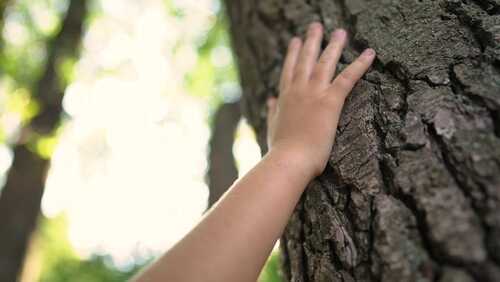
Researchers studying common Australian tree species recently uncovered that tree bark is teeming with life, hosting trillions of bacteria in every square meter. These tiny workers feed on climate‑active gases including methane, hydrogen, and carbon monoxide, even at very low concentrations in the air. Careful field measurements and lab experiments showed that, under normal oxygen‑rich conditions, these bark communities act as strong net consumers of these gases, effectively turning tree trunks into vertical air‑scrubbing systems.
Instead of behaving like simple pipes venting gases from the soil, tree stems function more like bioreactors, where bark microbes either consume or produce gases depending on local oxygen levels. When oxygen is available, they reliably pull methane and hydrogen out of the atmosphere and often take up carbon monoxide as well. Under low‑oxygen conditions, some communities can switch gears and generate these gases, but real‑world measurements show the dominant story in many forests is net gas removal, not emission.
The Overlooked “Bark Continent” Global Models Missed
The team behind this research estimated that the total surface area of tree bark on Earth is similar in size to all of the world’s land surface combined. That means this habitat is not some niche curiosity; it is a vast, planet‑scale interface where microbes and air constantly interact. When scientists scaled up measured gas‑consumption rates, they concluded that bark microbes may be removing tens of millions of tonnes of methane each year, plus significant amounts of hydrogen and carbon monoxide, from the global atmosphere.
For years, climate models treated soil as the main biological sink for these gases and barely considered what was happening on tree trunks themselves. The new work forces a rethinking of greenhouse‑gas budgets, particularly in forests and wetlands where stems are abundant and conditions favor active microbial communities. By reframing trees as living towers covered in microbial biofilters, this research opens the door to more accurate accounting of nature’s contributions, rather than defaulting to top‑down political narratives about climate control.
What This Means for Forests, Cities, and Real Stewardship
Because different tree species support different bark microbiomes, some forests likely remove climate‑active gases more efficiently than others. That gives land managers a powerful but underused tool: they can choose species and mixes that maximize both traditional benefits like shade and wood and newer services like methane and carbon monoxide removal. In cities, street trees and park plantings could be evaluated not just for appearance or canopy cover, but for how effectively their bark hosts these gas‑eating microbial communities.
Beyond climate metrics, the ability of bark microbes to scrub toxic carbon monoxide and certain volatile compounds hints at concrete health benefits for families living near trees. Cleaner air around neighborhoods, schools, and churches does not require sweeping new federal programs or intrusive regulations; it simply requires smarter planting and protection of healthy forests. For conservatives who value limited government and local control, this research strengthens the case for community‑driven tree projects that improve air quality without empowering distant bureaucracies.
Cutting Through Green Hype to Focus on What Works
During past administrations, much of the climate discussion centered on global treaties, massive spending packages, and regulations that burdened American workers while leaving common‑sense conservation underfunded. The discovery of bark‑dwelling microbes highlights how much genuine science still has to teach us about nature’s own balancing mechanisms. Instead of chasing every new centralized climate scheme, policymakers can support targeted forestry, selective reforestation, and urban‑greening strategies that harness these microbial allies at relatively low cost.
New research reveals that paperbarks, among other trees, host abundant, specialized, and metabolically active bark-dwelling microbial communities that modulate climatically relevant gases, including methane, hydrogen, and carbon monoxide.
Learn more this week in Science:… pic.twitter.com/XuVnVPxbhE
— Science Magazine (@ScienceMagazine) January 8, 2026
Because this research is still developing, scientists caution that more measurements are needed across different continents, climates, and species to tighten global estimates. Yet the direction is clear: forests deliver far more than carbon storage alone, and their microbial bark communities deserve a place in serious climate and air‑quality planning. For readers tired of alarmism and heavy‑handed solutions, this story is a reminder that creation is designed with built‑in resilience, and that wise stewardship starts with understanding and working with those natural systems, not trying to replace them.
Sources:
Microbes in Tree Bark Cycle Greenhouse Gases (The Scientist)
Microbes in Tree Bark Remove Greenhouse Gases (Southern Cross University)
Hidden Tree Bark Microbes Munch on Important Climate Gases (Science News)
Bark Microbiota Modulate Climate-Active Gas Fluxes in Australian Forests (Science)
Tree Bark Microbes Help Clean Air and Remove Greenhouse Gases (Phys.org)
Tree Bark Microbes for Climate Management (Science Perspective)
Tree Bark Research Highlights Hidden Climate Superpower (Northern Arizona University News)