Three Democrat-led states now face losing millions in federal funds as the Trump administration cracks down on lax English enforcement for truck drivers—testing constitutional limits and reigniting debates over states’ rights and public safety.
Story Snapshot
- The Trump administration threatens to withhold critical highway safety funding from California, New Mexico, and Washington for failing to enforce federal English proficiency rules for truck drivers.
- States must comply with new federal guidance by August 21, 2025, or risk forfeiting up to 100% of their Motor Carrier Safety Assistance Program (MCSAP) allocations.
- Federal officials cite major accidents and public safety concerns linked to language barriers, urging uniform enforcement nationwide.
- The move intensifies federal-state tensions, reigniting debates over regulatory authority, discrimination risks, and impacts on the trucking industry.
Federal Funding Leverage and Safety Standards
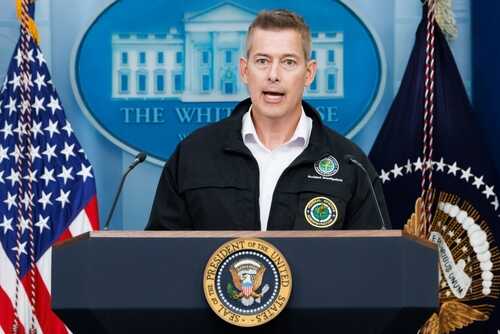
On May 2025, Transportation Secretary Sean P. Duffy announced that California, New Mexico, and Washington must strictly enforce English Language Proficiency (ELP) requirements for commercial truck drivers or lose millions in federal highway safety funds. The administration’s directive follows President Trump’s Executive Order 14224, which officially designated English as the United States’ language and mandated stricter ELP enforcement. This escalation marks one of the most forceful uses of federal funding to compel regulatory compliance, directly targeting states seen as out of step with national safety priorities.
The federal Motor Carrier Safety Assistance Program (MCSAP) is essential for states’ highway patrol operations and safety initiatives. By threatening to cut up to 100% of MCSAP funding, the Trump administration leverages its fiscal power to ensure states adhere to longstanding federal regulations, specifically 49 C.F.R. § 391.11(b)(2), which requires commercial drivers to demonstrate English proficiency for safety reasons. While the rule itself is decades old, enforcement has historically varied by state, with California, New Mexico, and Washington identified as lagging in compliance. The renewed push comes amid investigations into fatal crashes involving non-English-speaking drivers, fueling the federal call for stricter uniformity.
State Resistance and Constitutional Tensions
California, New Mexico, and Washington have been given 30 days to comply, with an August 21, 2025 deadline looming. The California Highway Patrol has publicly refused to enforce the federal ELP regulation, citing concerns over discrimination and the practicalities of roadside language assessments. State officials argue that the federal mandate overreaches, undermining local priorities and creating risks of racial profiling. Critics warn that the administration’s approach could trigger legal challenges on constitutional grounds, especially around federalism and civil rights. The FMCSA has now reinstated ELP violations as “out-of-service” criteria, raising the stakes for both state agencies and truck drivers.
Federal officials, led by Secretary Duffy, maintain that public safety justifies their actions, stating, “States don’t get to pick and choose which federal safety rules to follow.” President Trump has emphasized that English proficiency is “common sense” for safe roadways, framing the policy as a victory for law, order, and national unity. For many conservative observers, the move is seen as restoring accountability and protecting American highways from avoidable tragedies caused by poor communication.
Industry Impact and Stakeholder Reactions
Immediate effects of the policy shift include increased roadside inspections and ELP assessments, forcing trucking companies and drivers to adapt quickly. Industry groups warn of unintended consequences—possible driver shortages, operational disruptions, and increased compliance costs. Some safety advocates welcome the crackdown, citing accident prevention, while others, including civil rights organizations, express concern about racial profiling and fair enforcement. The trucking industry’s vital role in commerce means any regulatory change reverberates widely, with ripple effects on supply chains, costs, and workforce composition.
Trump DOT to punish states that do not enforce English requirements for truck drivers https://t.co/wkC1IiPxdY
— Washington Examiner (@dcexaminer) August 26, 2025
Legal experts highlight the discretionary nature of roadside ELP assessments, noting the potential for inconsistent application and legal disputes. Regulatory scholars point to the broader tension between federal authority and state autonomy, as the Trump administration’s approach may set precedent for future enforcement actions in other sectors. While supporters argue that the measures are necessary for public safety and regulatory uniformity, critics warn of overreach, discrimination, and disruption to interstate commerce. As the August deadline approaches, federal investigations continue, and the nation watches closely for state responses and possible court battles.
Broader Implications for Federalism and Conservative Values
The Trump administration’s crackdown signals a new era in federal regulatory enforcement, using funding threats as leverage to compel state compliance. For conservative audiences, this represents an assertive defense of national standards, public safety, and the primacy of English in American life. The move aligns with long-held principles of individual liberty, limited government, and constitutional order—challenging progressive policies that have, in the eyes of many, eroded traditional values and endangered communities. However, the situation also exposes the complexities of federal-state relations, as states resist what they view as heavy-handed mandates, raising questions about the balance of power and the protection of civil rights. The outcome in California, New Mexico, and Washington will likely set the tone for future battles over regulatory authority, state autonomy, and conservative priorities.
Sources:
Truck drivers react to Trump’s English mandate
Enforcing Commonsense Rules of the Road for America’s Truck Drivers
Trump’s Transportation Secretary Sean P. Duffy targets California, Washington, and New Mexico