
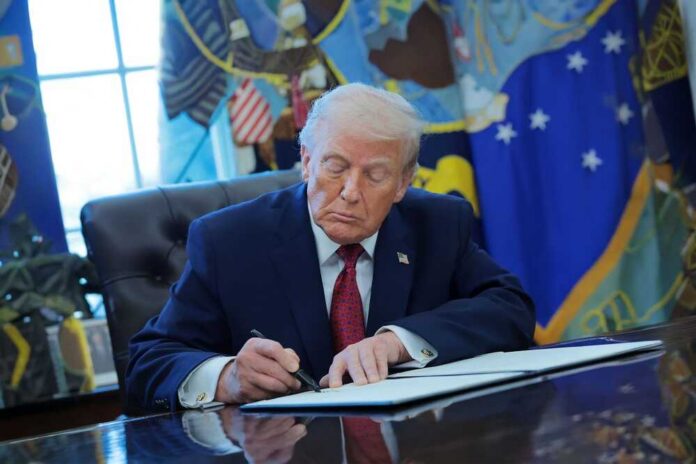
A rare intra-MAGA flare-up is brewing after President Trump vetoed a clean-water bill that even Rep. Lauren Boebert says her Trump-loving district desperately needs.
Story Snapshot
- Rep. Lauren Boebert, usually a reliable Trump ally, publicly criticized Trump’s veto of the Arkansas Valley Conduit water project backed unanimously by Congress.
- Boebert suggested the veto may have been political retaliation tied to her support for releasing Jeffrey Epstein files, an allegation not proven.
- Trump framed the veto as fiscal responsibility and opposition to costly policy, while Boebert argued the decision hits rural “America First” voters hardest.
- Boebert has continued defending Trump’s deportations and government-cut agenda, while also promising oversight of Elon Musk’s Department of Government Efficiency.
What Actually Happened: A Targeted Break With Trump, Not a Full Revolt
Reporting around the dispute shows no evidence that Boebert broadly “warned” that Trump administration policies aren’t putting Americans first. Instead, her criticism centers on one concrete decision: Trump’s veto of legislation tied to the Arkansas Valley Conduit, a long-running project aimed at delivering safe drinking water to communities in southeast Colorado. Boebert’s public posture remains largely pro-Trump on immigration enforcement and downsizing government, making the veto the exception, not the rule.
Boebert’s argument is straightforward: when Washington talks “America First,” it should still prioritize basic infrastructure for American communities—especially rural areas that have been expected to carry the burden of federal mandates and economic shifts for decades. Her statements and follow-up communications emphasize that the people affected are her constituents, many of whom are strong Trump voters, and that the veto delays a project intended to serve tens of thousands across dozens of communities.
The Water Project at the Center: Local Needs Collide With Federal Austerity
The Arkansas Valley Conduit project has been discussed for decades and is designed to provide safe drinking water for 39 communities and about 50,000 people in southeast Colorado. That kind of baseline public health need is why the legislation drew broad, even unanimous, support in Congress. The veto, however, reflects the Trump administration’s broader emphasis on fiscal restraint and skepticism toward expensive federal commitments, even when a bill is popular and bipartisan.
Trump’s stated rationale leaned on fiscal responsibility and opposition to “expensive and unreliable policies.” Boebert’s criticism doesn’t dispute the conservative case for limited government in general; it spotlights a political and practical problem when spending cuts land on core services that everyday Americans notice immediately. For many conservative voters, that tension is real: restrain Washington, but don’t let bureaucracy and politics block clean water for U.S. communities.
Retaliation Claims and What the Evidence Can—and Can’t—Prove
Boebert suggested the veto could be retaliation linked to her support for releasing Jeffrey Epstein files, after reporting indicated Trump pressured her to remove her name from a related push. That allegation has generated headlines because it implies a personal or political motive behind a policy decision that affects a heavily Republican district. Based on the available sources, the retaliation theory remains unproven; it’s an assertion raised in reporting and commentary, not a verified fact with documented confirmation.
Other analysis points to alternative political dynamics in Colorado, including ongoing friction between Trump and Democratic Gov. Jared Polis on unrelated issues. That context matters because it suggests the veto may have been driven by broader political calculations rather than one lawmaker’s dispute. The bottom line from the reporting is that motive remains disputed, and conservatives should separate what is confirmed—the veto and its impact—from speculation about why Trump chose to do it.
Boebert’s Broader Message: Back the Agenda, But Watch the Power Centers
Even amid the veto fight, Boebert has continued defending signature Trump priorities, including deportations, anti-sanctuary city enforcement, and major reductions across federal agencies and programs discussed in her constituent communications. She has also argued for accountability in the administration’s efficiency push by promising oversight of Elon Musk’s Department of Government Efficiency. That combination signals a posture many constitutional conservatives recognize: support reforms that shrink government, while insisting that unelected power and fast-moving restructuring still face scrutiny.
Politically, the dispute highlights a practical challenge for Republicans in 2026: keeping “America First” coalitions intact when national budget fights collide with local realities. When a red district experiences a high-profile loss—especially one tied to safe drinking water—Democrats and legacy media will try to portray it as broader “MAGA chaos.” The more precise read is narrower: Boebert is still aligned with Trump on core priorities, but she’s drawing a line on a specific project her district believes it earned.
For conservative voters frustrated by years of inflation, runaway spending, and bureaucratic arrogance, the lesson is to demand clarity: what gets cut, why it gets cut, and who pays the price. Fiscal discipline is a winning message when it targets waste and ideology-first programs. It becomes politically risky when it’s perceived as punishing everyday Americans in conservative communities. The reporting leaves open how—or whether—the water project gets revived, but it’s already a test of how “America First” is applied in practice.
Sources:
Lauren Boebert defends Trump, promises accountability for Musk in conference call with constituents
Lauren Boebert Slams Trump Over Veto of Water Project After Epstein Vote
Littwin: Lauren Boebert slams Trump over veto of river project