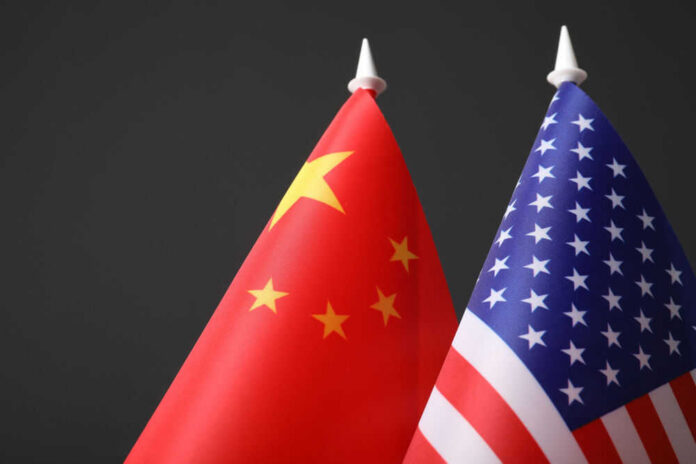
Amid pageantry and big promises, the Trump–Xi “G2” summit touts breakthroughs on trade and energy while hard questions on Taiwan and verification still loom.
Story Highlights
- Trump hailed the Beijing talks as a consequential success and flagged major commercial wins, including aircraft orders and farm purchases [3].
- China’s official readout claimed “new consensus” and pledged to handle each other’s concerns with stronger coordination [1].
- Reports say Trump invited Xi to Washington, signaling continued top-level engagement despite unresolved tensions [4].
- Concrete documents remain unseen; Taiwan and Iran coordination appear aspirational rather than settled [1][3][4].
Trump Frames a High-Stakes Summit as a Strategic Win
President Donald Trump described his Beijing meetings with Chinese leader Xi Jinping as unusually significant, calling it “a big discussion” and noting some consider it “maybe the biggest summit ever.” The White House characterized the talks as productive on trade, energy, and market access for American businesses, and highlighted discussions to expand Chinese purchases of U.S. agriculture [3]. Trump also praised Xi as “a great leader” and forecast “a fantastic future together,” underscoring a public push for stability in a volatile relationship [3].
Trump further touted a headline commercial outcome, saying China agreed to order 200 Boeing aircraft during the summit [3]. The claim, if realized, would support U.S. manufacturing and American jobs—core priorities for voters who want growth without surrendering leverage to Beijing. However, the available material does not include Boeing filings, Chinese procurement documents, or delivery schedules that would verify the scope or enforceability of the deal, leaving the announcement strong on rhetoric but light on documentation [3].
Beijing Emphasizes “New Consensus” While Disputes Persist
China’s Foreign Ministry said the leaders “reached new consensus” and agreed to properly handle each other’s concerns while strengthening communication and coordination on regional and international issues [1]. The language fits a long pattern in U.S.–China summitry where public readouts stress stability and dialogue even as core disputes remain. Analysts caution that ceremonial success can overshadow unresolved points, particularly when official statements dominate coverage and independent documentation is limited [2].
Reports indicate that sensitive security issues shadowed the talks. Coverage described hopes that China would pressure Iran to reduce tensions and help keep the Strait of Hormuz open, but did not show a concrete Chinese commitment or follow-through [3]. Separately, media accounts said Xi warned that U.S. support for Taiwan risked conflict, reinforcing that Taiwan remains a primary red line for Beijing and an enduring challenge for any claimed “breakthrough” narrative [4].
Invitation to Washington Signals Continued Engagement, Not Closure
Trump’s invitation for Xi to visit Washington later this year signaled continuity in high-level engagement and an intent to preserve channels even while policy gaps remain [4]. Continued leader-to-leader talks can reduce miscalculation risks and offer openings on trade, agriculture, and energy cooperation. Yet without published agreements, measurable timelines, or enforcement tools, many outcomes rest on political will and subsequent implementation—areas where both governments often move cautiously after the cameras leave [1][3].
Beijing Summit Day 2: Trump Says He Discussed Iran War With Xi And Both Want ‘Straits Open’ (Live Updates)https://t.co/L8ncHo2CS4 pic.twitter.com/oL62RKbGId
— Forbes (@Forbes) May 15, 2026
The summit’s optics and promises will now be tested by results. For conservatives focused on American strength, the priorities are straightforward: secure verifiable market access, protect U.S. technology, defend Taiwan’s peace without green-lighting aggression, and ensure that any commercial wins—like aircraft or farm purchases—are signed, scheduled, and delivered. The administration’s next steps should include releasing clear readouts, pursuing confirmable purchase orders, and aligning enforcement so Beijing understands that access to American markets comes with reciprocity and accountability [1][2][3][4].
Sources:
[1] Web – Trump and Xi reached new consensus in Beijing summit, China’s foreign …
[2] Web – At the Trump-Xi Summit, China Will Have the Upper Hand
[3] Web – Trump, Xi make remarks at state banquet on day two of …
[4] Web – Xi Warns Trump of Potential “Conflict” over Taiwan in …