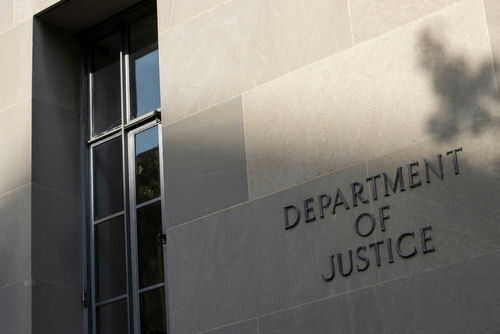
A powerful federal tool meant to claw back foreign corruption money is again raising alarms at home as the Department of Justice seizes a luxury New York condo through civil forfeiture, without any public trial of the owner.
Story Snapshot
- The Department of Justice secured a court order to forfeit a luxury New York condominium and its rental income tied to the 1MDB scandal.
- The property was allegedly bought for fugitive financier Jho Low’s assistant using misappropriated Malaysian sovereign wealth fund money.[1][2]
- The case was handled as a civil forfeiture, meaning the government targeted the property, not a criminal conviction of the individual.[1][2]
- The condo is part of a broader pattern where civil forfeiture powers raise concerns about due process, transparency, and government overreach.
DOJ Targets Manhattan Luxury Condo Tied To 1MDB Scandal
The United States Department of Justice obtained a forfeiture order for a high-end New York City condominium and its rental proceeds, saying the unit was purchased with funds stolen from Malaysia’s 1Malaysia Development Berhad sovereign wealth fund.[1][2] The department’s statement, echoed in multiple news reports, explains that the civil case sought recovery of more than six million dollars in assets tied to an international money laundering conspiracy involving that fund.[1][2] This order formally transfers the condo and income stream to the federal government.[1][2]
According to the Department of Justice account, billions of dollars were misappropriated from 1Malaysia Development Berhad between 2009 and 2015 by high-level officials and associates working with fugitive financier Low Taek Jho, commonly known as Jho Low.[1][2] The department alleges that part of those diverted funds were used to buy the New York condominium for the benefit of May Ling Catherine Tan, described as Low’s personal assistant.[1][2] Officials further say Tan profited by retaining rental income from the property before the recent forfeiture order.[1][2]
How Civil Forfeiture Lets Government Take Property Without A Criminal Verdict
This New York condo case illustrates how civil forfeiture allows the federal government to seize property based on an allegation that it is connected to wrongdoing, even when the public record does not show a criminal conviction of the person tied to the asset.[1][2] Reports describe a civil forfeiture complaint and a resulting order, but do not indicate whether Tan contested the case, whether a settlement occurred, or whether judgment was entered by default.[1] That lack of detail leaves observers unable to see the evidence or any defense response.
Coverage summarizing the Department of Justice position emphasizes the luxury nature of the asset and its link to the larger 1Malaysia Development Berhad scandal, but it does not reproduce bank records, tracing charts, or sworn testimony that would show exactly how the funds moved into the condo purchase.[1][2] The same reports do not cite any detailed rebuttal from Tan or her representatives on the government’s tracing theory or on the handling of the rental proceeds.[1][2] As a result, the public mainly sees a powerful forfeiture headline rather than a transparent contest of facts in open court.
A Pattern Of Asset Grabs In Global Corruption Cases
The action against this condominium fits a broader pattern in which the Department of Justice uses civil forfeiture to recover high-end real estate, yachts, artwork, and business stakes allegedly bought with proceeds of foreign corruption.[1][2] In past 1Malaysia Development Berhad related actions, the department has targeted properties in Beverly Hills, New York, and London, a three-hundred-foot superyacht, and artwork by Claude Monet and Vincent van Gogh, along with investments in a boutique hotel, a film company behind “The Wolf of Wall Street,” and shares in a major music rights firm.[1][2] The condo seizure continues that expansive campaign.
DOJ Seizes Luxury NYC Condo Bought With Funds Stolen From 1MDB https://t.co/sHD9i6DzU1
— CAROL (@CAROL11959252) May 31, 2026
For conservatives worried about concentrated federal power, this pattern raises familiar questions: the same tools that can claw back dirty foreign money can also normalize taking property through complex civil cases that many ordinary Americans could not easily fight. While this specific action targets assets tied to an overseas scandal, the process again relies on government-controlled narratives, sealed or technical financial records, and procedures that may never fully test the case in a traditional, public trial setting.[1][2] That tension between fighting corruption and guarding constitutional protections remains unresolved.
Sources:
[1] Web – DOJ Seizes Luxury NYC Condo Bought With Funds Stolen From 1MDB
[2] Web – Justice Dept. forfeits NYC condo tied to 1MDB corruption probe