A late-night attack in downtown Austin has federal investigators weighing a terrorism angle—while police body-camera-era speed and decisive force stopped the shooter in under a minute.
Story Snapshot
- Three people died and 14 were injured in a shooting outside Buford’s bar on West 6th Street in Austin early March 1, 2026, with the suspected gunman among the dead.
- Austin police say the suspect fired from an SUV, then got out with a rifle and continued shooting before officers killed him at an intersection.
- The FBI’s Joint Terrorism Task Force joined immediately as investigators reviewed the suspect’s background, online activity, and possible ideological indicators.
- EMS reported an extremely fast response—about 57 seconds from the 911 call—with all critical patients transported off-scene within roughly 24 minutes.
What Happened on West 6th Street
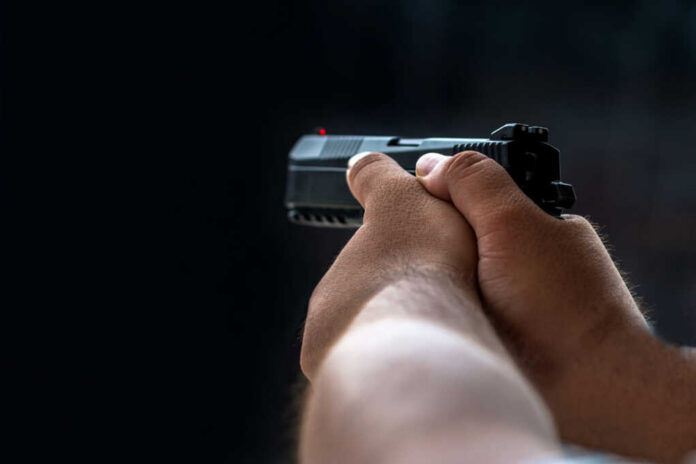
Austin Police described a fast-moving shooting during bar-closing hours on West 6th Street, a crowded entertainment corridor downtown. Police said the suspect drove an SUV around the block multiple times, fired a pistol from the vehicle toward people on a patio, then parked and exited with a rifle. Officers encountered him near an intersection and exchanged gunfire, fatally shooting him and ending the attack.
Authorities reported 17 patients were treated in total. Three people died at the scene—two victims and the suspected shooter—while 14 injured people were taken to hospitals, including three initially described as critical. Witness accounts described sudden “pandemonium,” with bodies on the ground and bystanders trying to help before first responders took over. Officials have withheld victim identities publicly, citing next-of-kin notifications.
First Responders’ Timeline Shows the Difference Seconds Make
Austin-Travis County EMS said the first medics and officers arrived within about 57 seconds of the 911 call, aided by units already nearby in the busy nightlife area. EMS leadership said crews deployed roughly 20 resources and moved quickly to triage, treat, and transport. Officials said all critical patients were off the scene in about 24 minutes, an operational benchmark that likely prevented additional loss of life.
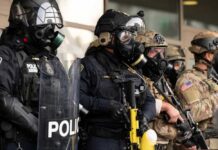
Austin Police Chief Lisa Davis said officers “immediately transitioned” from routine duties into an active shooter response, confronting a suspect who was still firing. That sequence matters because it underscores a hard public-safety reality: when a killer is actively shooting, rapid engagement is often the only way to stop more casualties. In this case, the suspect was killed on scene by officers, ending the threat.
Why the FBI Is Looking at Terrorism Indicators
Federal involvement escalated quickly as the FBI Joint Terrorism Task Force worked alongside Austin police and other agencies. Investigators focused on whether the act was ideologically driven, citing indicators reported in early coverage: the suspect’s clothing and items allegedly found during a search connected to his residence. The incident also occurred amid heightened geopolitical tension, and reporting noted the shooting followed major developments involving Iran.
At the same time, officials have been careful about what they can confirm. Early reporting described the terrorism angle as a probe rather than a concluded finding, and key details—such as a definitive motive, any direct operational ties, or a verified manifesto—were not publicly established in the initial window. That restraint is important, because terrorism designations carry legal and political consequences and should be rooted in verifiable evidence.
Public Safety Pressure Builds as Leaders React
State and local leaders responded with condolences and a renewed focus on security. Texas Gov. Greg Abbott said the state would increase patrols and surveillance, while Austin’s mayor praised the first responders’ actions. Some officials framed the event within the broader debate over “gun violence,” while law enforcement emphasized immediate threat-stopping and the ongoing federal investigation. Those differing emphases are likely to shape the next policy push in Austin.
For many Texans, the constitutional stakes come down to a familiar question: will policymakers focus on targeting criminals and improving enforcement, or will they reach for broad restrictions that burden lawful gun owners who did nothing wrong? The available facts point to a suspect who arrived ready to attack and a rapid police response that stopped him. Any proposals should follow the evidence and prioritize public safety without eroding core rights.
Sources:
Texas leaders react to deadly Austin shooting leaving 3 dead, 14 injured
Austin shooting leaves three dead at Buford’s bar on Sixth Street
Mass shooting at Austin, Texas bar leaves at least 3 dead, multiple people wounded
Multiple people injured in mass shooting on 6th St; Austin police investigating
Witnesses recall deadly shooting Austin’s 6th Street left 3 dead, 14 injured
Austin mass shooting: Blood rushed from San Antonio, UT community impacted; local leaders react