
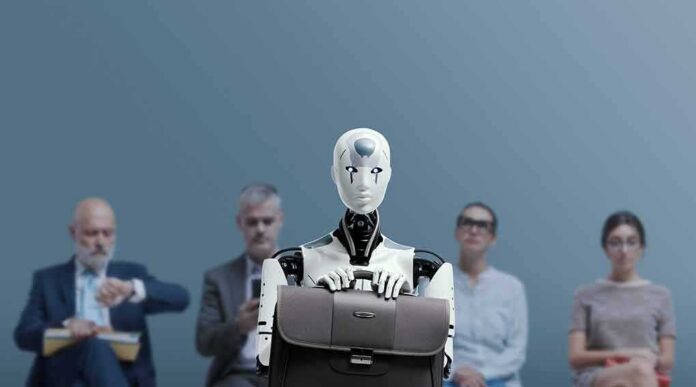
Elon Musk says artificial intelligence and humanoid robots will bring an “age of abundance” where jobs change and money matters less.
Story Highlights
- Musk predicts an “age of abundance” driven by artificial intelligence and robots.
- He says many jobs will change as machines produce far more goods and services.
- He has floated “universal high income,” arguing work could become optional.
- Analysts expect robots to take a meaningful share of physical jobs in 3–5 years.
Musk’s Core Claim: Abundance, Changed Work, Less Scarcity
Elon Musk said the most likely future is an “age of abundance,” where robots and artificial intelligence produce so much that scarcity fades and work shifts for most people. He linked the shift to rapid gains in machine capability and the spread of humanoid robots across industry and daily life. He suggested that income may decouple from a traditional job, adding that “jobs are going to change” as tasks move to machines and people focus more on guiding and choosing what to build.
Coverage of Musk’s comments describes robots taking on roles from childcare to teaching, along with factory and logistics tasks, while people set goals and standards. He and other technologists have used “universal high income” to describe a system where broad prosperity arrives as machines do most work, not a small stipend that keeps people afloat. He added that the timeline depends on energy and computing supply, which still limit large-scale artificial intelligence growth and cost.
Near-Term Labor Shifts: Where Robots Fit First
Consultants and market analysts expect humanoid robots to handle a meaningful share of physical jobs within three to five years, especially repetitive, lower-risk tasks in warehouses, manufacturing, and some service roles. Early adoption aims at filling open jobs and reducing injuries rather than mass layoffs, with companies testing units where costs now pencil out. Banks project millions of robots by the 2030s and 2040s as prices fall, software improves, and factories retool for general-purpose machines that swap tasks by software update.
Past research on industrial robots shows local wage and employment pressure when machines arrive, even as national output rises. That pattern reflects a common automation curve: companies deploy where returns are clear, then expand as reliability grows. Analysts warn that rollout speed will depend on unit price, maintenance, safety rules, and insurance. These practical gates mean wide gains often come in steps, not in a single wave, even when the technology looks ready to scale.
What It Could Mean for Families, Prices, and Policy
If robots raise output and cut costs, families could see cheaper goods, faster services, and fewer shortages. That would help American households hurt by years of inflation and high energy costs. Musk’s view suggests people might choose work they enjoy and spend more time with family, church, and community, while machines handle hard or dull tasks. But even a good transition needs guardrails that protect free speech, property rights, small business, and the dignity of work.
Conservatives will watch for schemes that use artificial intelligence as a pretext for new taxes, central planning, or speech policing. Some proposals push government surcharges on advanced training runs to fund nationwide stipends. Those ideas risk creating a permanent bureaucracy that picks winners and punishes innovators. Smart policy should keep America first in artificial intelligence while stopping coercive mandates that grow the state and shrink liberty.
The Trump-Era Lens: Compete, Don’t Centralize
President Trump has urged America to win the artificial intelligence race while hearing calls from some industry leaders for a slowdown and more safeguards. Reports note public calls from executives to tap the brakes on frontier systems. The administration’s task is to drive energy capacity, chip supply, and security without letting agencies choke off free enterprise. That means clear safety rules, tough penalties for abuse, and strong support for research and domestic manufacturing.
01 | America’s AI Powerhouses Gather at the White House
On September 29, leaders from America’s largest AI, semiconductor, cloud and technology companies gathered at the White House.
The group represented nearly every critical layer of the U.S. AI ecosystem:
Models & Platforms…
— Dong Ge & Dong Shu东哥东叔 (@dngg294601) September 30, 2026
Conservative readers should look for three markers in the months ahead. First, do policies lower costs and speed reliable deployment, or do they push quotas and red tape? Second, do rules protect parental rights, privacy, and the right to speak and worship without algorithmic bias? Third, do benefits flow to working families and small firms, not only to coastal giants and global bureaucrats? If abundance comes, it should strengthen Main Street, not empower gatekeepers.
Sources:
youtube.com, news18.com, news.am, fortune.com, en.sedaily.com, uc.edu, techtarget.com, finance.yahoo.com