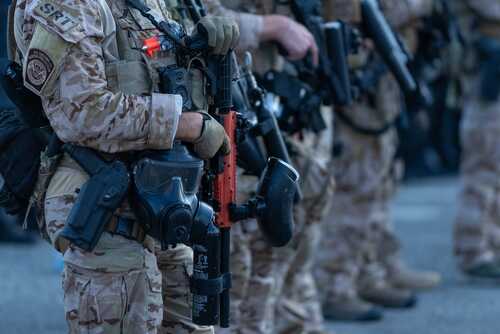
Two Iowa National Guard soldiers and a U.S. civilian interpreter were killed in Syria on December 13, 2025, after an ambush by a Syrian security recruit allegedly tied to ISIS. Three additional Guardsmen were wounded in the attack, which took place in the ancient city of Palmyra.
Story Snapshot
- Two Iowa National Guard soldiers and a U.S. interpreter were killed in a Syria ambush by a Syrian recruit tied to ISIS.
- The insider attack exposes how fragile and risky America’s ongoing mission in Syria remains.
- President Trump has vowed retaliation while questions grow about why Guardsmen are in harm’s way overseas.
- Families and veterans are demanding accountability for policies that keep U.S. troops in endless foreign entanglements.
National Guard Ambush in Syria Shocks Heartland Families
The ambush occurred during a routine interaction between U.S. personnel and Syrian security forces. According to Pentagon briefings, the attacker was a member of local Syrian security forces already under scrutiny for possible ISIS connections. He opened fire on the Americans before being neutralized.
This incident highlights the ongoing risks faced by National Guard units serving in foreign operations. While traditionally focused on domestic defense and disaster response, National Guard personnel have been deployed to Syria as part of broader counter-ISIS efforts since 2014. These assignments often place Guardsmen in advisory and support roles alongside local forces and Syrian Democratic Forces.
How Citizen-Soldiers Ended Up on a Syrian Battlefield
U.S. National Guard units, traditionally focused on defending the homeland and responding to natural disasters, have been quietly rotated into Syria for years as part of broader counter-ISIS operations that began after the terror group’s 2014 rampage. Guard troops have filled advisory and support roles, working with local forces and Syrian Democratic Forces to hunt ISIS remnants. These deployments were sold as limited, lower-cost, and sustainable, but they still put American lives on the line in an unstable, foreign civil war.
Palmyra remains a flashpoint, a central Syrian city where ISIS cells and sympathizers have repeatedly resurfaced despite years of airstrikes and special operations raids. Sleeper cells target U.S.-backed forces, local security units, and any American presence they can find. That dangerous environment means Guardsmen—who may drill one weekend a month back home—suddenly operate in a place where allies can turn into assassins overnight. The Palmyra ambush shows how easily an embedded recruit can exploit that vulnerability to deadly effect.
Inside the Attack and the ISIS Connection
According to official briefings, the attacker opened fire on the Americans during a security interaction, killing the two Guardsmen and the interpreter before being shot dead. Investigators describe him as a Syrian security forces recruit already under scrutiny for possible ISIS links, raising obvious questions about vetting and intelligence sharing. If U.S. officials knew he was under investigation, why was he anywhere near American troops? If they did not, what does that say about the reliability of local partners?
ISIS, though stripped of its former “caliphate,” still uses these kinds of insider strikes to project strength and sow chaos. The group’s fingerprints—radicalized recruits, surprise attacks, targeting Americans—fit a pattern that has frustrated U.S. commanders for years. For families in Iowa and across the country, the strategic jargon means far less than the human cost: two promising lives gone, three more scarred, and a Gold Star community left wondering whether Washington learned anything from decades of nation-building experiments in the Middle East.
Trump’s Vow of Retaliation and the Policy Crossroads
After the victims’ names were released on December 16, President Trump publicly vowed retaliation against those responsible and any ISIS networks supporting them. That promise reflects a familiar conservative instinct: when Americans are murdered by terrorists, there must be a clear, decisive response. At the same time, this attack lands in a moment when many on the right question why U.S. forces are still entangled in Syria at all, especially National Guard units whose first duty is supposed to be American soil.
🚨 BREAKING: The two Iowa National Guard troops kiIIed by ISIS in Syria have been identified as:
– 29 y/o Sgt. William Nathaniel Howard
– 25 y/o Sgt. Edgar Brian Torres TovarMay they rest in peace. Say a prayer for their families today 🙏🏻 pic.twitter.com/jXc7IdFa95
— Nick Sortor (@nicksortor) December 15, 2025
Short term, stronger force protection, tighter vetting of local recruits, and targeted strikes on ISIS cells are likely. Long term, the debate runs deeper: should America keep small footprints in dangerous theaters indefinitely, or should those missions wind down so citizen-soldiers stop paying the price for open-ended commitments? For a conservative base tired of globalist adventures, this ambush underscores the need to reassess every deployment that does not clearly defend the U.S. homeland or vital interests.
Gold Star Families Demand Accountability, Not Platitudes
Veterans organizations, including the Veterans of Foreign Wars, have offered condolences and support to the families of the fallen, emphasizing the sacrifice and service of National Guard members. Families and veterans are also seeking clarity on decision-making, oversight failures, and potential accountability for commanders responsible for the deployments.
Sources:
VFW Conveys Condolences for National Guard Members Killed, Wounded in Syria
Details: Attack in Syria that Killed 2 U.S. Soldiers, 1 Civilian