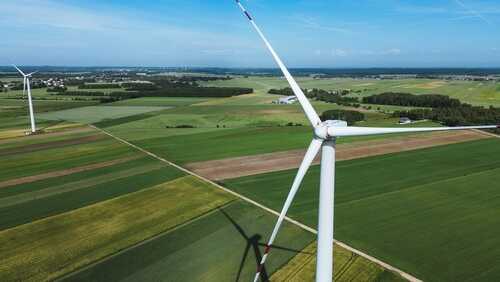
Germany’s obsession with wind farms is getting swatted down by the military’s need to actually see what’s coming—a conflict where one side gets electricity and the other gets national security.
At a Glance
- New military radar restrictions in Germany could block wind farm construction on up to one-third of the land previously designated for wind power.
- Wind turbines are known to interfere with radar signals, creating blind spots for both military air defense and civilian air traffic control.
- The conflict highlights a Europe-wide problem, with an estimated 19 gigawatts of wind energy projects already blocked due to radar concerns.
- The German government’s goal of dedicating 2% of the country’s land to wind power is now facing a major reality check.
Green Dreams Meet Military Reality in Germany
The German government’s “green” energy fantasy is colliding with the hard reality of national security. A new draft law to protect military and civilian radar systems could eliminate up to a third of the federal land that had been earmarked for the construction of wind turbines. The move has sent the German wind lobby into a panic, but for the nation’s defense officials, it’s a matter of non-negotiable security.
The conflict highlights a fundamental flaw in the green agenda: the push for so-called “renewable” energy often ignores basic physics and critical national security needs.
The Inconvenient Physics Problem
Here is the simple truth that climate zealots often ignore: the massive, spinning blades of wind turbines create significant interference that can blind radar systems. This isn’t a political opinion; it’s a matter of physics. The “radar clutter” from a wind farm can make it impossible for military air defense systems to detect incoming threats or for civilian air traffic controllers to safely manage the skies.
As reported by Wind Power Monthly, this is a long-standing problem across Europe. France has restricted turbine construction near its radar installations for years, and in the U.K., over 12 gigawatts of wind projects face objections from aviation authorities.
A Global Green Frustration
While technical solutions like radar upgrades or “stealth” turbine blades exist, they are complex and expensive. The wind industry, naturally, wants taxpayers to foot the bill, adding yet another hidden subsidy to their supposedly “cheap” energy source.
The German Wind Energy Association (BWE) has complained that the new exclusion zones will “result in a huge consumption of land.” This is a stunningly ironic complaint from an industry that requires vastly more land than any conventional power source. According to a report from McKinsey, utility-scale wind farms need an immense footprint compared to traditional power plants.
When you factor in environmental restrictions, technical limitations, and now, non-negotiable military exclusion zones, the German government’s goal of covering 2% of the country in wind turbines was always a fantasy. Now, that green dream is being shattered by the reality of national defense.