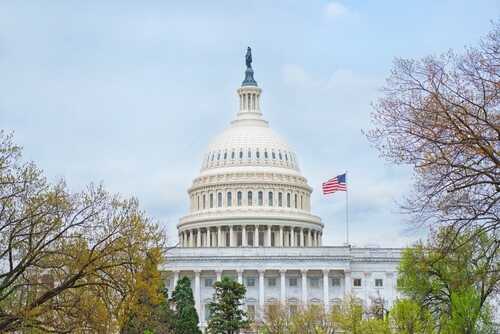
As U.S. grid reliability hangs by a thread, an unexpected alliance between House Democrats and Republicans seeks to streamline energy permitting, sparking debate over deregulation’s impact on America’s energy future.
Story Highlights
- A bipartisan push aims to streamline energy permitting to enhance grid reliability.
- House Democrats break ranks, supporting Republican-led deregulation efforts.
- The initiative faces mixed reactions over potential environmental and economic impacts.
- Legislation awaits Senate action as grid challenges persist.
House Democrats Join Republican Deregulation Efforts
In a significant development, a group of House Democrats has joined Republicans in supporting deregulation bills aimed at improving U.S. grid reliability. The bills, introduced by Rep. Bruce Westerman (R-AR), seek to accelerate energy infrastructure development by streamlining the National Environmental Policy Act (NEPA) permitting process. Democratic support, including from Rep. Jared Golden (D-ME), highlights a pragmatic approach to addressing grid vulnerabilities, diverging from traditional party stances on environmental protections.
The bills were passed by the House in mid-2025, with significant backing from both parties, despite internal Democratic divides. This rare bipartisan effort reflects a response to growing concerns over grid reliability, exacerbated by data center growth, renewable intermittency, and rising electricity costs. The legislative package now awaits Senate action amidst broader debates on permitting reforms.
The Reliable Power Act and the Power Plant Reliability Act will help strengthen America's grid—lowering energy prices and ensuring reliable access to electricity for all Americans.
Watch as @RepBalderson speaks before @RulesReps on these bills ⬇️ pic.twitter.com/6CVyxusPWT
— Energy and Commerce Committee (@HouseCommerce) December 15, 2025
Grid Reliability Challenges and Historical Context
America’s grid challenges stem from decades of underinvestment and a shift towards intermittent renewable energy sources, such as wind and solar, over traditional baseload sources like coal and natural gas. These challenges have been compounded by the lengthy NEPA permitting process, often taking 4-10 years to approve projects. Recent energy crises, including the 2021 Texas freeze and California blackouts, have underscored the grid’s vulnerabilities, prompting calls for reform.
The Federal Energy Regulatory Commission (FERC) has mandated grid operators like PJM to reform interconnection queues to address backlogs exceeding 200 GW. However, progress has been slow, leading to significant capacity shortfalls and rate hikes. House Republicans have advanced grid bills amidst these challenges, emphasizing the need for reliable baseload power.
Stakeholder Interests and Legislative Impact
The legislative push has drawn varied reactions from stakeholders. Republicans, led by Rep. Brett Guthrie (R-KY), aim to eliminate bureaucratic paralysis to ensure affordability and reliability. On the other hand, Democratic efforts, spearheaded by Rep. Don Beyer (D-VA) and others, advocate for interconnection reforms that favor storage and grid technology over a gas-centric approach.
The success of these legislative efforts hinges on Senate approval, with the potential to significantly impact economic, social, and environmental landscapes. In the short term, faster interconnections could stabilize rates, while long-term implications include balancing grid resilience with climate risks if fossil fuel projects are prioritized.
Sources:
Senate Democrats Vote to Approve Deregulation of Energy Permitting, a First Step Toward Project 2025
House Passes Energy and Commerce Bills to Strengthen Grid, Lower Electricity Prices
House Beyer PJM Interconnection Reform
Handful Of House Democrats Embrace Deregulation As America’s Grid Stares Down Disaster