A simple street sign in Southern California is now a flashpoint in the national fight over who gets honored in public spaces—and who gets erased.
Story Snapshot
- Westminster, California installed new “Charlie Kirk Way” street signs leading to the Civic Center, but the change is ceremonial and does not alter addresses.
- The Westminster City Council approved the redesignation in fall 2025 by a 4-1 vote, following a separate 3-2 vote to establish “Charlie Kirk Day” on Oct. 14.
- Mayor Chi Charlie Nguyen framed the tribute as pro–free speech and patriotic, while critics argued it politicizes public property and deepens community division.
- Media coverage and social-media buzz quickly drew visitors to the signs and amplified a local dispute into a broader culture-war story.
What Westminster Changed—and What It Didn’t
Westminster officials unveiled new street signs redesignating part of All American Way as “Charlie Kirk Way,” covering the stretch between Westminster Boulevard and 13th Street leading to the city’s Civic Center. The city emphasized the move is ceremonial: it changes signage, not the legal street name for addressing and mailing purposes. That distinction matters because symbolic actions can still reshape civic identity, even when the paperwork stays the same.
The City Council approved the signage plan in fall 2025 by a 4-1 vote, and it previously voted 3-2 to recognize Oct. 14—Kirk’s birthday—as “Charlie Kirk Day.” The signs were installed Tuesday, April 28, 2026, with coverage breaking the next day as residents and out-of-town visitors stopped by to take photos and argue about what the tribute represents.
Why Charlie Kirk’s Name Triggers Such Different Reactions
Charlie Kirk, a conservative activist and founder of Turning Point USA, became a symbol to many on the right for mobilizing younger voters and defending America-first priorities. According to local reporting, Kirk was killed on Sept. 10, 2025, after being shot at Utah Valley University in Orem, Utah; the shooter was identified as 22-year-old Tyler Robinson. For supporters, the Westminster signs memorialize a figure they see as a patriot.
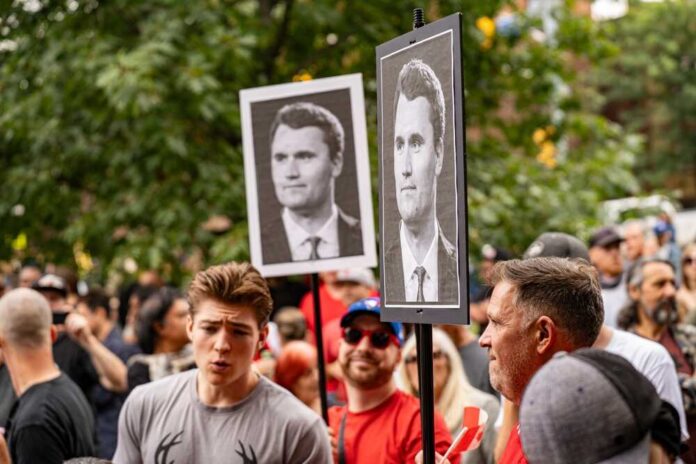
For opponents, the same tribute reads as government endorsement of a polarizing political brand placed directly on the route to public buildings. Residents quoted in coverage called the move “divisive,” “ridiculous,” and even “hateful,” arguing it replaces what they consider a more inclusive “All American Way” message with something narrower and partisan. A local resident, Terry Rains, organized a protest in December 2025, signaling the backlash began well before installation day.
Mayor Nguyen’s Free-Speech Case Meets a Public-Space Reality
Mayor Chi Charlie Nguyen defended the signs by tying the memorial to free speech and civic values rather than party politics, saying the point is to “promote freedom of speech” and describing Kirk as “a patriot.” Nguyen also acknowledged the political reality of modern local government by noting, in effect, that “you can’t please everyone.” The city’s approach—symbolic signage rather than a legal rename—appears designed to honor Kirk while limiting administrative fallout.
Even so, critics see a mismatch between the “not political” argument and the obvious political meaning many attach to Kirk’s public profile. When public property becomes a canvas for contested symbols, small cities can end up relitigating national fights—over speech, ideology, and identity—at the corner of ordinary intersections. The strongest verifiable point from the available reporting is not a hidden agenda, but the visible divide: the same sign is being treated as tribute by some and provocation by others.
What This Tells Us About Local Government—and Public Trust
Westminster’s dispute also lands at a moment when many Americans—right, left, and politically exhausted in the middle—feel government is failing at core responsibilities while spending energy on symbolic battles. Conservatives often read these conflicts through the lens of cultural displacement and “woke” pressure campaigns, while liberals often view conservative tributes as exclusionary or threatening to minorities. In Westminster, the facts show both reactions exist side by side, and neither is going away.
The practical stakes may be small—no addresses change, and the immediate economic impact appears limited beyond a burst of attention and visitors—but the political lesson is larger. Once cities start using signage to take sides in national identity disputes, every future honoree becomes a potential referendum. With no reported reversal so far, Westminster’s decision may serve as a template for other communities: make the tribute symbolic, accept the backlash, and let the next election sort it out.
Sources:
New ‘Charlie Kirk Way’ street signs in Westminster draw mixed reactions from residents
New ‘Charlie Kirk Way’ street signs in Westminster draw mixed reactions from residents