Washington is now using federal power to override state gambling laws—this time to protect “prediction markets” it spent years trying to shut down.
Quick Take
- The Trump-era CFTC has pivoted from restricting prediction markets to actively defending them against state enforcement actions.
- States including Nevada and Arizona have moved to block or prosecute certain prediction-market offerings they say resemble illegal sports betting.
- CFTC Chairman Michael Selig has signaled the agency may intervene in state cases to assert “exclusive jurisdiction” under federal commodities law.
- A bipartisan Senate bill from Sens. John Curtis (R-UT) and Adam Schiff (D-CA) would ban sports-style prediction contracts on CFTC-registered markets.
Federal Power Play Collides With State Gambling Authority
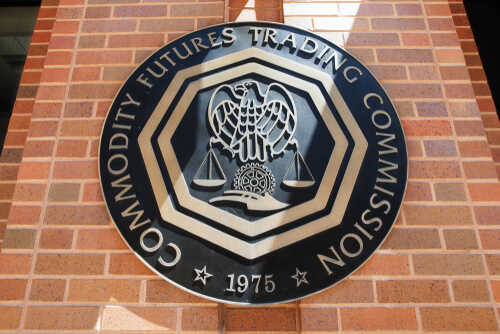
The Commodity Futures Trading Commission is increasingly positioning itself as the primary referee for prediction markets, even when states argue the products look like sports betting. Under the current administration, the agency’s stance has shifted toward defending these platforms and asserting that the Commodity Exchange Act gives it exclusive jurisdiction. That sets up a direct federal-state clash, with states insisting gambling regulation has traditionally been their job.
The immediate friction is playing out in the courts and in state enforcement actions. Nevada has temporarily blocked Kalshi from offering certain sports-related event contracts, while Arizona prosecutors have filed illegal-gambling criminal charges tied to similar activity. The central disagreement is definitional but consequential: states say “sports bets with a different name” still fall under state law, while market operators say they are federally regulated derivatives.
How Washington’s Stance Flipped After Years of Restriction
For years, the CFTC maintained a relatively clear boundary: the agency regulated derivatives markets while discouraging “gaming” contracts. PredictIt operated under a no-action letter with strict limits, including caps on position size and the number of participants, and a prohibition on sports contracts. During the Biden administration, the CFTC withdrew that no-action letter in 2022, prompting litigation that resulted in an injunction allowing operations to continue.
The policy reversal accelerated after a late-2024 federal appeals court ruling favoring Kalshi, finding certain event contracts were not “gaming” under the Commodity Exchange Act. In 2025, the Trump CFTC settled with PredictIt and loosened restrictions, and it granted Aristotle full Designated Contract Market approval. After Michael Selig’s December 2025 confirmation as CFTC chairman, the agency pulled back proposed rules that would have banned political and sports event contracts.
Why Conservatives and Civil Libertarians Are Watching Closely
Prediction markets raise a familiar conservative tension: Washington’s appetite to centralize authority versus states’ police powers and local standards. The CFTC’s claim of “exclusive jurisdiction” may appeal to those who want uniform national rules for financial products, but it also risks sidelining state lawmakers who deliberately rejected sports betting expansion. If a federal agency can preempt state gambling frameworks by re-labeling the activity as commodities trading, states could lose real leverage.
Bipartisan Pushback Targets Sports-Style Contracts
Sen. John Curtis and Sen. Adam Schiff have introduced the “Prediction Markets Are Gambling Act,” aiming to prohibit CFTC-registered entities from listing contracts that resemble sports betting or casino-style games. Their argument is that these markets can evade state and tribal consumer protections, generate no public revenue for local governments, and undermine tribal regulatory regimes. The bill reflects a rare coalition: concerns about consumer protection and sovereignty on one side, and concerns about federal overreach and regulatory loopholes on the other.
Key facts remain contested because the heart of the issue is legal classification. Industry advocates describe prediction contracts as swaps that belong under federal commodities regulation and warn that bans could push activity offshore. State officials counter that the practical effect looks like gambling, especially when contracts track discrete sports outcomes. Until courts or Congress clarify the line, Americans should expect more litigation, more preemption fights, and more skepticism that government is serving the public rather than whichever powerful interests can win the jurisdiction battle.
Sources:
https://velawood.com/prediction-markets-are-sports-betting/