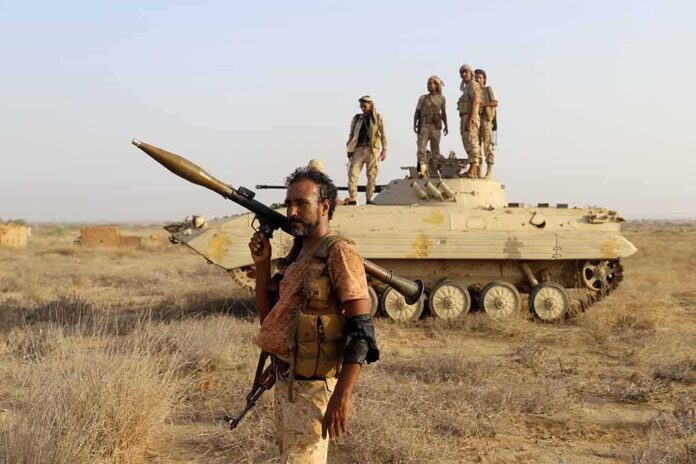
Armed militants in Yemen are pushing missile and drone warfare forward while holding key cities, and a new report says actors there even tried to use artificial intelligence to build guided weapons.
Story Highlights
- United Nations reporting says the Houthis control the capital and large areas of Yemen.
- Reuters and others report ongoing Houthi missile and drone strikes in Marib and beyond.
- Anthropic says users in northern Yemen tried to use its artificial intelligence to design guided weapons, but did not field an operational system.
- United Nations measures place the Houthis under an arms embargo and call for them to halt offensive operations.
Militant Control Over Population Centers And Trade Routes
United Nations materials say the Houthis control Sana’a and large parts of northern Yemen, including areas with key roads and the Red Sea port of Hodeidah. That means they hold sway over a large share of the population and revenue hubs, even if they do not control every mile of ground. This de facto control lets them tax trade, recruit fighters, and move missiles and drones. It also complicates relief work and peace talks, since the group acts like a governing power on the ground.
Security Council pages and reporting show the group remains under targeted arms restrictions, yet still acquires parts and weapons through smuggling networks. That mix of control and supply is why the risk picture is rising. When a non-state force taxes ports and fields long-range weapons, it can threaten shipping lanes and neighbors. This puts pressure on allied navies and drives up costs for global trade, which American families feel at the pump and the store.
Missile And Drone Attacks Keep The War Hot
Reuters detailed fresh Houthi strikes using missiles and drones against Saudi-backed forces and sites in Marib. The group claimed it hit depots, vehicles, and other equipment, signaling both intent and capacity to keep fighting. A United Nations envoy condemned recent attacks on Saudi Arabia as well, underscoring how the conflict jumps borders and targets energy and civilian sites. Each strike risks wider war, higher oil prices, and more danger for American ships and crews in nearby waters.
These attacks fit a years-long pattern where the Houthis rely on asymmetric tools. They fire drones and missiles, keep costs low, and force costly defense from others. That playbook drains partners and strains global supply lines. United Nations and expert summaries place this inside a sanctions and embargo framework that the group keeps trying to evade. The longer this continues, the more likely we see miscalculation that drags in more actors and risks American interests.
Artificial Intelligence Attempt Points To A New Threat Vector
Reuters reported that Anthropic identified accounts in northern Yemen that used its artificial intelligence to help design software for guided rockets and even a planned long-range missile concept. The company banned the accounts and said the actors did not succeed in fielding a working device, with at least one guided rocket test described as a failure. Even with that failure, the attempt shows how cheap tools can shrink the skills gap for militants.
Bloomberg and other outlets added that Anthropic did not name the exact unit behind the accounts, leaving some attribution gaps. But the location and context match a conflict where the Houthis already use drones and missiles, and where outside help has long been alleged. For conservatives, the takeaway is clear: hostile actors are probing artificial intelligence to speed weapons work. That is why strong export controls, platform safeguards, and strict border security matter to keep these tools away from terrorists.
What Washington’s Policy Must Do Next
United Nations Resolution 2216 demands the Houthis stop attacks and withdraw from seized areas, while the Security Council materials outline ongoing embargo measures. The United States should rally partners to tighten maritime checks, track parts flows, and share threat data on artificial intelligence misuse. Agencies should push vendors to log and flag dangerous query patterns while protecting free speech and lawful use. Clear lines, steady enforcement, and real costs for embargo evasion can help deter the next leap.
Why It Matters For American Families
Every drone strike near oil routes and every missile aimed across borders risks new price spikes. That hits gas, groceries, and heating. It also challenges the safety of American sailors guarding sea lanes. The report of artificial intelligence use, even if it failed, shows where the fight is going. Our policy must defend trade routes, punish embargo breakers, and block terrorist access to high-end tools. That approach backs strength, protects wallets, and keeps faith with our duty to defend our people.
Sources:
trtworld.com, bloomberg.com, documents.un.org, securitycouncilreport.org, nbcbayarea.com, news.un.org, reuters.com, main.un.org, aa.com.tr, english.aawsat.com