California leaders boast “no deficit,” but the state’s own fiscal analysts say the gap is only masked by raids on reserves and short‑term maneuvers.
Story Highlights
- Newsom says the 2026–27 budget is balanced with no deficit this year or next.
- State analysts say balance relies on withdrawals from reserves and borrowing.
- Legislative Analyst’s Office reports a $14 billion structural deficit in 2026–27.
- Analysts call the budget only “roughly balanced,” not a clear surplus.
Newsom’s “Balanced” Claim Versus Independent Fiscal Warnings
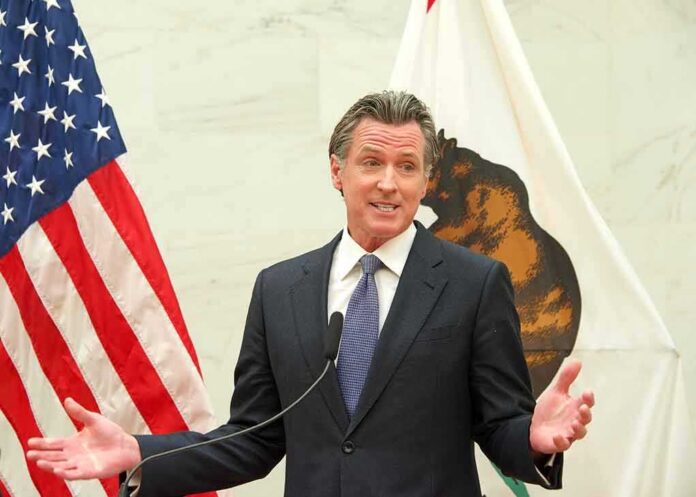
Governor Gavin Newsom signed California’s 2026–27 budget and declared it balanced with no deficit this year or next. His office framed it as proof of fiscal responsibility with strong reserves and steady services for families. However, the state’s nonpartisan Legislative Analyst’s Office said the near‑term balance rides on one‑time tools. The analysts warned that calling this “no deficit” confuses cash balance today with the ongoing gap between what the state spends and what it reliably takes in.
The Legislative Analyst’s Office wrote that, even after improved revenues, the plan should be viewed as only “roughly balanced,” not a clear surplus. The office highlighted that the administration itself projected a roughly $3 billion deficit in earlier materials. That is why analysts resist victory laps. They separate a balanced checkbook for one year from a true fix to the state’s recurring mismatch. That mismatch is what they call the structural deficit.
How Sacramento Achieved Paper Balance: Reserves, Delays, Borrowing
The analysts’ initial comments on the May revision outline how the numbers pencil out. The plan draws down or suspends about $20 billion in reserve actions and adds roughly $4 billion in borrowing to hit balance. It also counts deferrals, like delaying school aid, to keep spending commitments without paying all the bills now. This approach fills the hole for a year but does not erase it for the years ahead, the office said.
The same report said the administration still reports a $14 billion structural deficit in 2026–27. That means ongoing revenues fall short of ongoing spending by that amount, even after the maneuvers. In plain terms, California is using savings and timing shifts to bridge today’s gap while the long‑term shortfall remains. Families would never call that fixed; they would call it buying time.
What “Structural” Means And Why It Matters To Taxpayers
Legislative Analyst Gabe Petek defines structural balance as collecting enough in the same year to pay for that year’s spending. He and his office argue California is not there yet. When a budget leans on one‑time tools, it leaves future lawmakers to face the same gap, plus interest or delayed bills. That is why the office warns about “operating deficits” in the years ahead unless leaders reduce ongoing costs or grow durable revenues.
This debate is not new in California. Revenues swing with capital gains and stock markets. Spending promises, once made, tend to grow. The analysts caution that, despite recent cash strength, the state still faces large multiyear shortfalls under both their numbers and the administration’s. Their guidance urges caution now to avoid sharper cuts or tax hikes later. Conservative readers know this playbook all too well.
Schools, Reserves, And The Risk Shift To The Future
Reports note the budget tools include suspending some reserve deposits and tapping emergency accounts to fund current programs. Coverage of the plan also cites borrowing tied to school funding and deferring required education payments into later years. These choices let leaders claim balance while shifting costs forward. That can crowd out classrooms or safety services when the next downturn hits and the bill comes due.
Lawmakers also tout large reserve balances after accounting moves. But analysts stress the headline reserve number says little about future gaps if ongoing spending still outruns ongoing income. Reserves are a cushion, not a cure. A house can have savings and still overspend each month. California needs to slow recurring costs, stop budget tricks, and rebuild honest balance, so families and small businesses are not hit with surprise tax schemes when the cycle turns.
Bottom Line For Californians And The Country
President Trump’s administration is pressing states to live within their means and protect taxpayers. California’s claim of “no deficit” sounds good, but the state’s own analysts show the fix depends on savings raids, delays, and short‑term loans. The math says the structural hole remains. Real discipline means cutting ongoing spending, ending gimmicks, and putting students, public safety, and working families ahead of political spin. That is the path to trust and growth.
Sources:
gov.ca.gov, lao.ca.gov, ebudget.ca.gov, jasonsisney.substack.com