A Supreme Court ruling on Los Angeles immigration sweeps has sparked a fierce fight over race, language, and constitutional limits.
Quick Take
- The Supreme Court lifted a lower court order that had limited immigration stops in Los Angeles.
- Critics say the ruling opens the door to stops based on race, accent, job, and location.
- The Court said visible ethnicity alone cannot justify a stop, but it can matter with other factors.
- The case is still being fought, and the legal battle is not over.
Court Gives Enforcement New Room
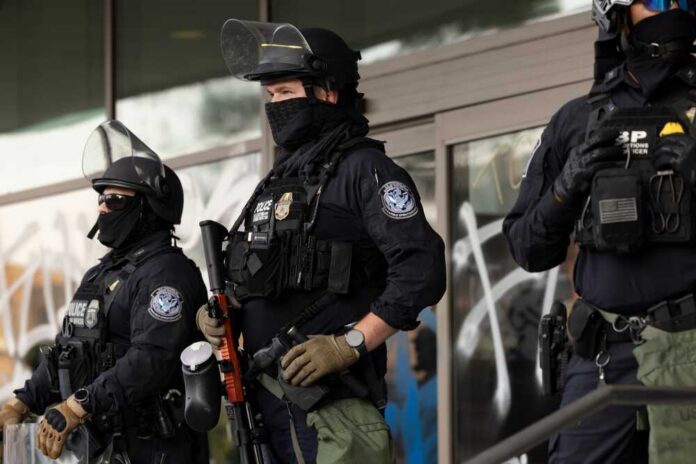
The United States Supreme Court let federal immigration operations continue in Los Angeles while appeals move forward.[1] The 6-3 ruling came from the Court’s conservative majority and overturned a lower court order that had blocked stops without reasonable suspicion.[1][2] The decision is being treated as a major win for President Donald Trump’s deportation push, because it restores broad enforcement power in a huge part of Southern California.[1][3]
At the center of the dispute is what officers may consider before stopping someone. The lower court said agents could not use apparent race or ethnicity, speaking Spanish, a job site, or certain kinds of work as the sole basis for a stop.[1][2][4] The Supreme Court paused that order, but it also said visible ethnicity alone cannot create reasonable suspicion.[1][2] Supporters of the ruling call that a normal enforcement standard.
What The Lower Court Found
United States District Judge Maame E. Frimpong said there was a “mountain of evidence” showing unconstitutional stops in the Los Angeles raids.[1][3] According to reports of her ruling, the challenged conduct included detentions tied to race, ethnicity, Spanish speech, accented English, work type, and location.[1][2][4] Critics of the Supreme Court decision say that pattern should have kept the injunction in place until the facts were fully tested in court.[2][4]
The district court also found that immigration officers had relied on broad profiles instead of specific facts.[2][4] That is why the case has become so charged. For many readers, the fight is not just about immigration. It is about whether the government can stop people because they look or sound a certain way, even before any real proof of unlawful conduct is shown.[2][3]
The Dissent Warns Of Broad Harm
Justice Sonia Sotomayor’s dissent said countless people in the Los Angeles area were seized and handcuffed because of their appearance, accents, and manual labor jobs.[3] Reports also say she warned the ruling could leave all Latinos, citizens or not, open to seizure at any time.[3][6] That language has fueled outrage among civil liberties advocates, who argue the decision weakens basic protections against unreasonable search and seizure.[3][4]
The majority took a different view. According to the Court’s explanation, ethnicity alone is not enough, but it may be one factor in a totality of circumstances analysis.[1][2][6] The majority said the lower court’s injunction went too far because it tied the hands of immigration officers who were trying to enforce federal law.[1][6] That is the heart of the conservative argument: enforcement should not be crippled when officers have a broader set of facts to consider.
Why The Fight Matters
The ruling lands in a country already divided over immigration, public order, and the limits of federal power. Supporters see the decision as a needed tool to crack down on illegal immigration in a state where enforcement has often been blocked by activist judges and left-wing pressure.[1][2] Opponents see it as a warning sign that the government can now lean too hard on appearance, language, and working-class job sites when choosing who to question.[2][4]
What happens next will shape more than one case in Los Angeles. The broader question is whether the Supreme Court will keep allowing immigration agents to use broad, practical clues, or whether later rulings will tighten the rules again.[1][6] For now, the Court has put the lower court order on hold, and the fight over constitutional limits, race, and immigration enforcement remains alive.[1][2]
Sources:
[1] Web – MS Now Guest Suffered a Total Meltdown Over the Supreme Court’s …
[2] Web – Supreme Court allows federal officers to more freely make …
[3] Web – Supreme Court lifts limits on LA immigration raids – BBC
[4] Web – Supreme Court lifts restrictions on ‘roving’ ICE raids in Los Angeles
[6] YouTube – Supreme Court backs White House in detaining people …