
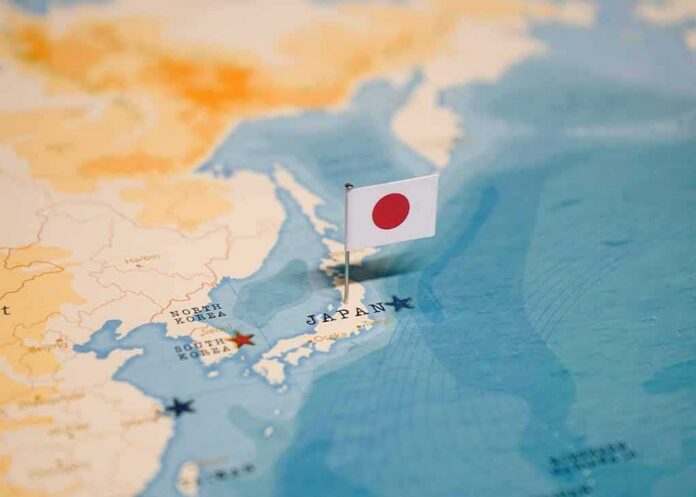
A strong offshore quake hit northern Japan with no tsunami, but shaky reporting and online panic again showed how fast bad information can spread in a crisis.
Story Snapshot
- A major quake struck off Iwate Prefecture with strong shaking in Aomori, but no tsunami threat.
- Prime Minister Sanae Takaichi quickly activated a crisis task force and urged calm, careful vigilance.
- Japan’s Meteorological Agency revised key technical details, while foreign and social media pushed mixed numbers.
- Sensational headlines and conspiracy talk online overstated the danger and blurred facts from other quakes.
Strong Quake, No Tsunami, Government on Alert
At about 7:30 in the morning local time, a strong offshore earthquake struck near the coast of Iwate Prefecture in northeastern Japan, jolting people who were just starting their day.[1] The Japan Meteorological Agency reported a maximum seismic intensity of “upper 6” in Hashikami Town in Aomori Prefecture, which means very strong shaking but not total collapse of modern buildings.[1] Prime Minister Sanae Takaichi stated clearly there was no risk of a tsunami, a key relief point for a nation still scarred by 2011.[1]
Right after the tremor, the Prime Minister’s Office set up a response room inside the national Crisis Management Center, pulling in key ministries to check damage and support local authorities.[1][2] Takaichi ordered them to gather damage information, help with rescue and relief, and give the public timely and accurate updates so people would not have to rely on rumors.[1][2] Media reports added that the quake was felt mildly in Tokyo, but no major impact was seen in the capital, and daily life continued with only small delays.[2]
Magnitude Disputes Show Limits of “Breaking News Science”
Early technical data on this quake tells a story many Americans will recognize from our own disasters: real science is careful, but fast media is not. Japan’s Meteorological Agency first put the magnitude near 6.9 offshore, then refined its numbers, while some foreign agencies and news outlets described it as a 7.0 or 7.2 event based on their own systems.[2][7] Depth estimates also shifted by several kilometers as more seismic stations reported their readings, which is normal for offshore quakes.[7][22]
Past studies of large Japanese earthquakes show that first estimates often undershoot or overshoot by a few tenths of a point and are then corrected within hours as long-period seismic waves are processed.[14][22] That is how honest science works: you publish a best first estimate, then improve it as fresh data comes in. The danger comes when cable networks, click-hungry websites, and social media treat every initial figure like a fixed truth, then shout “conflict” when numbers change.
Media Panic, Conspiracy Talk, and the Need for Sober Leadership
While Japanese officials stressed there was no tsunami threat from this quake, some online videos and social posts blasted out “TSUNAMI ALERT!” headlines or lumped this event together with much larger quakes in Venezuela and earlier tsunamis in Japan.[3][12] Other posts pushed fringe theories about solar storms or secret nuclear tests causing the shaking, though no scientific body backed those claims in any way.[3] These tactics are designed to scare people into clicking, not to help families prepare or stay calm.
#WATCH : 🇯🇵 Visuals of a powerful earthquake that shook northeastern Japan : tremors were felt in the Kuril Islands, and there are casualties. pic.twitter.com/tjzjeZ5Gxj
— The Observer Lens (@TheObserverLens) June 25, 2026
For American readers, the lesson hits close to home. We remember how so-called experts used crises to sell climate fear, justify shutdowns, or push globalist deals while people were still digging out. Japan’s experience today is one more reminder that in any disaster, citizens are best served by clear facts, limited but strong government action, and leaders who respect people enough to tell them the truth quickly and plainly. That is the standard we should keep demanding here too.
Sources:
[1] YouTube – Prime Minister Takaichi says earthquake has struck northern Japan
[3] Web – At least 4 injured as M7.2 quake hits northeastern Japan, traffic …
[7] Web – A strong earthquake struck northern Japan | Instagram
[12] Web – At least 4 injured after 7.2-magnitude earthquake hits northeastern …
[14] Web – MAGNITUDE 7.2 EARTHQUAKE IN JAPAN No casualties or major …
[22] Web – 2025 Earthquake Report Summary – Jay Patton online