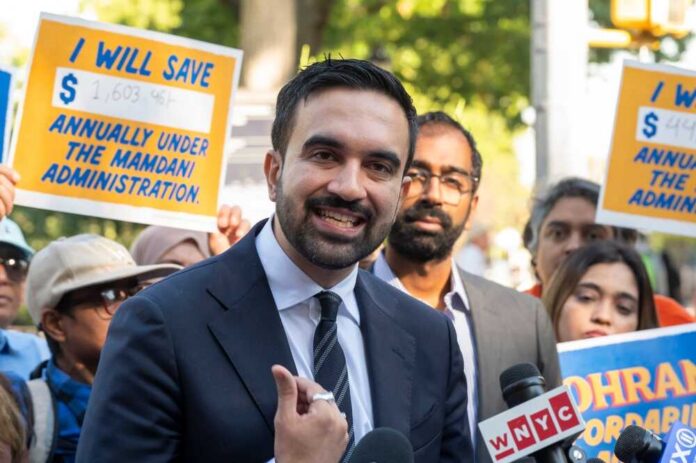
A socialist mayor is selling himself as a man of the people while handing out only 1,000 discounted World Cup seats in a city of millions—and questions about who really benefits are just beginning.
Story Snapshot
- New York City Mayor Zohran Mamdani is touting 1,000 World Cup tickets at $50 for city residents while overall prices stay sky high.
- The lottery is tightly controlled, capped daily, and limited to New Yorkers only, shutting out neighboring New Jersey despite games at MetLife Stadium.
- Tickets are non-transferable and handed out on match-day buses, a setup that helps officials police resale more than it expands broad access.
- No evidence yet proves Mamdani got personal luxury perks, but lack of transparency fuels suspicion that the “people’s deal” is more show than substance.
Mamdani’s $50 Ticket Deal: Small Program, Big Headline
New York City Mayor Zohran Mamdani is selling his World Cup ticket plan as a victory for working people, but the numbers tell a smaller story. His office says the city, with the New York–New Jersey host committee, secured just 1,000 tickets at $50 each for World Cup matches at MetLife Stadium, including free round-trip buses for winners.[5] Those 1,000 seats are spread over seven games, about 150 tickets per match.[5] For a city of over eight million, that is a drop in the bucket.
Sports coverage points out how tiny this program is compared with total stadium capacity. One report calculated that 1,000 tickets across those games equal roughly 0.17 percent of available seats.[3] At the same time, official last-minute tickets sold by the soccer body for similar games were going for around $1,550, with resale seats still several hundred dollars.[3] That contrast lets Mamdani claim a win for “the people,” while leaving almost the entire market costly and unchanged for everyone else.
Tight Rules, Narrow Access, and New Jersey Shut Out
The rules around the lottery show how narrow this “affordable” access really is. City documents say only New York City residents aged 15 and older can enter the drawing, and they must prove they live in one of the five boroughs.[5] A separate guide notes that applicants must use an official city portal, can enter once per day, and face a hard limit of 50,000 entries each day, which has already been hit within minutes when the window opens.[1] That setup favors those with time, fast internet, and inside knowledge.
The deal also leaves out the biggest game. Reports explain that the discounted tickets cover five group-stage matches and two knockout games at MetLife Stadium, but do not include the World Cup final.[1] That means the one match many fans most want to see is still priced at full market rates. On top of that, only New York City residents qualify, even though the stadium sits in New Jersey. Coverage notes that New Jersey officials complained that the deal “leaves them out,” turning a global event into a turf fight instead of a unifying moment for the region.[3] That is classic big-city politics: rewards for insiders, frustration for neighbors.
Free Buses or Behavior Control? How the System Works
Mamdani’s team highlights free transportation as proof the plan truly helps regular fans. The city says every winning New Yorker gets a bus ride to and from the stadium included with the $50 seat.[5] Another report describes how tickets will not be sent in advance. Instead, winners are expected to receive their tickets only when they board the official bus on match day.[1] City leaders say this makes the process simpler and helps keep people from being priced out by resellers.[5]
Those same details also show how tightly City Hall controls the experience. The non-transferable tickets, the on-site handoff, and the bus-only distribution are all designed to stop people from reselling seats, according to reporting that calls these “anti-scalping rules.”[1] The soccer body itself wanted assurances that discounted tickets would go to real fans in the stadium, and the bus system is part of that.[3] From a conservative view, this looks less like trust in citizens and more like a heavy-handed system where government picks a few winners, manages their movements, and then claims credit for generosity.
Populist Optics, Missing Records, and Open Questions
Mamdani’s own words frame the program as a stand against high prices. In his announcement, he said the goal was to make sure “working people will not be priced out of the game that they helped to create” and bragged about “a thousand affordable tickets.”[5] That language admits that the wider market is still out of reach for most families. It also makes the 1,000-ticket cap a central political prop: a small fix used to advertise a much bigger promise of fairness that the policy does not actually deliver.
So far, there is no public proof that Mamdani personally took luxury seats, free hospitality, or travel from the soccer organizers or the host committee. The record shows a public lottery, strict rules, and free buses, not direct self-dealing.[1] But there is also no detailed paper trail in public view that shows how many tickets the city asked for, how many were offered, or whether more could have been secured.[5] That missing information leaves space for spin on both sides and raises a basic question conservatives always ask: if the deal is as good as the mayor says, why not show the full numbers and negotiations?
Sources:
[1] Web – Commie Mayor Cashes In: Mamdani’s Free Luxury World Cup Ride Exposed
[3] Web – Mamdani’s $50 World Cup ticket lottery fuels feud with N.J. – ESPN
[5] Web – 1,000 World Cup tickets. $50 each. All for New Yorkers … – Instagram