
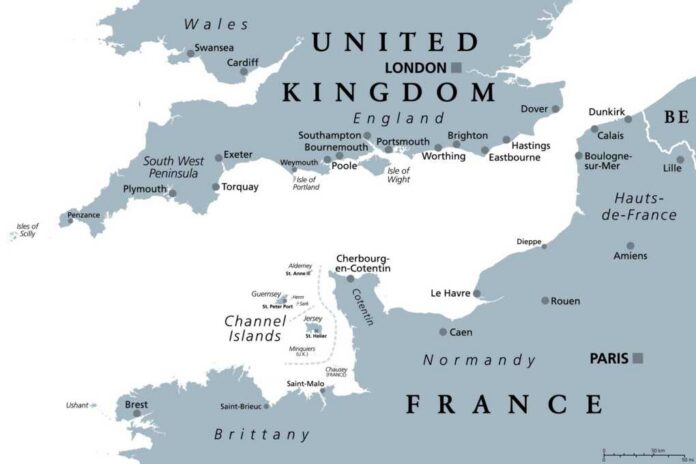
Nearly 700 people just sailed illegally into Britain from France in small boats, stark proof that years of “tough” talk and billion‑pound deals still have not secured the border.
Story Snapshot
- Almost 700 migrants crossed the English Channel in small boats in a single day, with reports framing it as part of a 48‑hour surge.[2]
- French police and rescue services were active on the coast, yet boats still launched and reached UK waters.[1][5]
- More than 200,000 illegal small‑boat crossings have been detected since 2018, turning this route into a permanent pipeline.[4]
- Costly UK‑France enforcement deals and new powers have not stopped the flow, raising hard questions about political will and deterrence.[1][6]
Nearly 700 Cross in a Day: A “Surge” That Feels More Like the New Normal
Reports from the period describe some 696 migrants making the illegal journey from France to the United Kingdom in 14 small boats in a single day, a figure widely cited as “almost 700” and linked to a 48‑hour spike in crossings.[2] That many people crossing in flimsy craft in such a short window underscores why many Britons feel their border is effectively open. When numbers of this size become routine headlines, officials cannot plausibly claim the situation is under control.
Coverage notes French police were present on the beaches, with clashes reported near Dunkirk, yet the departures went ahead and the boats still reached British waters.[1] French coastal services have also carried out rescue operations, saving at least 119 people in one recent incident off the north coast.[5] These episodes show not an absence of French personnel, but a pattern where police, rescue crews, smugglers, and migrants all operate in the same space while the boats keep getting through.
A Multi‑Year Crisis: 200,000 Crossings and Rising Costs
According to a summary of Home Office figures, by May 2026 authorities had detected 200,580 migrants crossing the Channel in small boats since 2018.[4] Annual totals soared from just 297 in 2018 to a peak of 45,755 in 2022, dipped to 29,437 in 2023, and then climbed again, with around 41,000 people detected in 2025 alone.[4] Analysts note that 2025 crossings rose about 13 percent on 2024, confirming that the small‑boat route has become entrenched rather than contained.
That entrenched route carries a punishing price tag for taxpayers. Migration Watch United Kingdom estimates that 41,472 illegal migrants were recorded crossing the Channel in 2025 and highlights broader assessments putting the annual cost of the small‑boats crisis in the billions of pounds once hotel accommodation, processing, and related services are included. For ordinary families already squeezed by high taxes and living costs, the idea of billions being diverted to manage illegal arrivals looks less like compassion and more like systemic failure.
Expensive Deals, Limited Deterrence, and Awkward Questions for Politicians
Faced with mounting public anger, London and Paris have repeatedly announced new enforcement packages. One highly publicised three‑year deal is worth over £662 million, with around £160 million reportedly made conditional on reducing small‑boat crossings after the first year.[6] Media reports say the package included extra French beach patrols, deployment of riot‑trained police, and new surveillance and drone technology intended to spot and stop launches along the northern coast.[6]
Yet the crossings continue at scale, including the nearly 700‑person surge that triggered this latest debate.[2] Critics argue that when hundreds can launch in a short window despite extra riot police, drones, and British funding, something deeper than tactics is broken.[1] Either the conditions tied to that money are weak, the follow‑through is lacking, or governments are more focused on performing action for the cameras than delivering real deterrence. Large, repeat surges make it harder for leaders to insist the system is working.
French Constraints, Humanitarian Risks, and the Limits of “Management”
Defenders of the current approach point to operational and legal limits, especially on the French side. BBC reporting notes that French police are reluctant to intercept small boats once they are at sea because of safety concerns for officers and migrants alike, so much of the focus falls on beach patrols and rescue rather than aggressive interdiction.[6] Weather also plays a major role, with smugglers exploiting calm periods to launch multiple boats in quick succession, overwhelming limited resources.[3]
Seacat Services Ltd is a UK-based marine operator that has provided chartered catamarans and crew to assist the UK Border Force in intercepting and recovering migrants crossing the English Channel
— ScooterChris (@ScooterChr71588) May 24, 2026
Humanitarian coverage underscores the deadly risks, with reports of drownings and capsized boats in the busy shipping lanes between France and Britain.[5] No serious person wants to see more bodies pulled from the water. But the hard reality is that a system which effectively rewards illegal entry with processing, housing, and long asylum queues creates powerful incentives for more people to attempt the journey. Until the route clearly leads back to a safe third country rather than a long stay in the United Kingdom, numbers are likely to remain high, no matter how many headlines announce “new” deals and “tougher” enforcement.
Sources:
[1] YouTube – BREAKING: 700 migrants have crossed the Channel this weekend
[2] Web – Almost 700 migrants enter UK by crossing English Channel in single …
[3] YouTube – Hundreds cross Channel after a month without migrant crossings
[4] Web – English Channel illegal migrant crossings (2018–present) – Wikipedia
[5] Web – French coastal services rescue more than 100 migrants crossing the …
[6] YouTube – Border force intercepts almost 700 migrants crossing the channel in …