Trump is now openly tying America’s future in NATO to whether foreign capitals help prosecute a war with Iran—forcing voters who backed “no new wars” to confront a hard choice.
Quick Take
- President Trump is scheduled to meet NATO Secretary-General Mark Rutte in Washington next week amid rising alliance tensions.
- Trump has criticized NATO allies for refusing support tied to the U.S.-Israel conflict with Iran, including basing, overflight, and help around the Strait of Hormuz.
- Trump has said he is “strongly considering” a U.S. withdrawal from NATO, calling the alliance a “paper tiger,” escalating uncertainty for Europe and Washington.
- NATO describes Rutte’s visit as “long-planned,” but the timing lands as energy markets and war politics collide.
Rutte’s Washington trip lands as NATO unity fractures over Iran
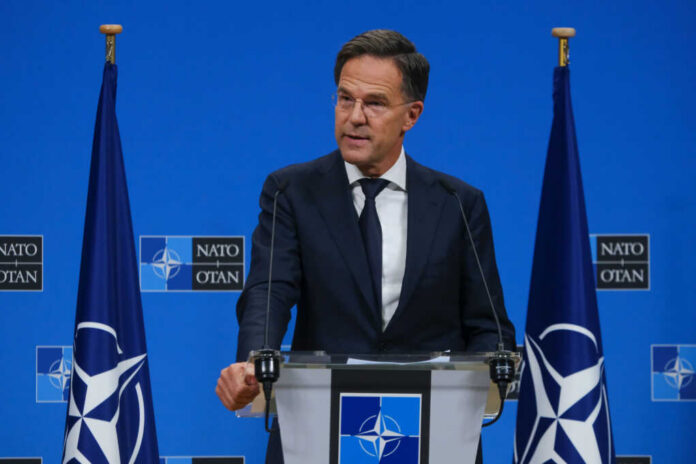
NATO Secretary-General Mark Rutte will meet President Donald Trump in Washington next week, according to NATO spokesperson Allison Hart and a White House official. The visit is being described as “long-planned,” yet it arrives when Trump is pressuring European allies to provide practical support connected to the U.S.-Israel fight with Iran. The immediate dispute centers on whether allies will provide ships, basing, and overflight access linked to operations affecting the Strait of Hormuz.
Trump’s frustrations sharpened after allies declined requests related to military access and assistance, including help aimed at reopening Hormuz shipping lanes that have slowed during the conflict. The Strait of Hormuz is routinely described as a chokepoint for roughly one-fifth of global oil shipments, so any prolonged disruption can translate into higher fuel and consumer costs at home. That economic pressure is exactly what many conservative households, already tired of inflation and energy shocks, are watching closely.
Trump’s NATO withdrawal threats shift from “burden-sharing” to war leverage
Trump has long criticized NATO for uneven burden-sharing, but this round of rhetoric is tied more directly to allied participation in an Iran-related campaign than to defense spending targets alone. In interviews reported this week, Trump said he is “strongly considering” leaving NATO and labeled the alliance a “paper tiger.” Separate reporting also quoted him saying he was “absolutely” considering withdrawal, which immediately raises questions about how far the White House is willing to push.
Reporting also points to a mid-March phone call in which Trump aired grievances to Rutte about allied refusals for overflight support, basing rights, and assistance connected to Hormuz operations. Some accounts describe Trump implying the United States could link allied cooperation on Iran to other priorities, including support connected to Ukraine. The agenda for next week’s meeting has not been published, and neither side has released detailed readouts in advance, leaving the public to interpret signals through press accounts.
Why the Iran war is splitting the MAGA coalition at home
The political tension is not limited to Europe. The ongoing U.S.-Israel war against Iran is now testing Trump’s coalition, with many supporters who applauded his earlier “America First” framing also deeply wary of another open-ended Middle East commitment. It does not provide polling numbers, but it does show the central dispute: NATO allies are resisting deeper involvement, while Trump is escalating pressure by casting the alliance’s value in existential terms.
For conservative voters, the immediate question is not academic: Will Washington’s strategy drive a broader regional conflict that keeps energy prices high and pulls U.S. forces into a longer campaign? A second concern is whether the United States is drifting into a posture where alliance commitments become bargaining chips for war support. If NATO membership is treated as leverage for participation in Iran operations, the next crisis—anywhere—could come with the same ultimatum.
Constitutional guardrails and the reality that NATO exit isn’t unilateral
Trump’s statements create real diplomatic shockwaves, but the U.S. system is designed to slow down major strategic reversals. Prior reporting notes that withdrawing from NATO would require congressional involvement, which is a reminder that foreign policy is not meant to turn on a single interview cycle. That guardrail matters for voters who care about constitutional process, checks and balances, and preventing the executive branch from making irreversible commitments—or exits—without debate.
Still, even the threat of withdrawal can alter behavior abroad and at home. European diplomats reportedly view the recurring threats as a pressure tactic—“Groundhog Day”—to extract resources or cooperation, while also acknowledging genuine frustration in Washington. Rutte has emphasized the danger posed by Iran’s nuclear and missile ambitions, describing the issue in existential terms for Israel, Europe, and the broader world. That framing sets up a difficult conversation: deterrence and defense versus escalation and mission creep.
The meeting next week may clarify whether the administration is seeking concrete allied contributions, a diplomatic offramp, or simply a public demonstration of leverage. For Americans who backed Trump to end costly overseas entanglements while prioritizing the border, energy independence, and economic stability, the core test is outcomes. If the Iran conflict expands and energy disruptions persist, the White House will own the consequences—and so will every elected Republican who argued that this time would be different.
Sources:
https://www.newarab.com/news/nato-chief-visit-washington-next-week-trump-threatens-exit