
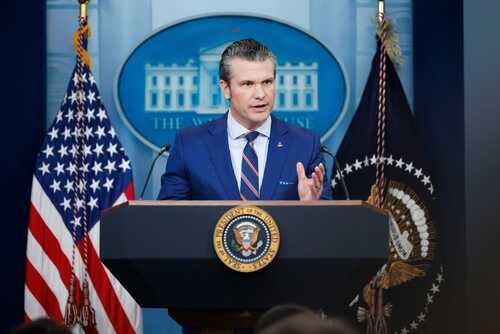
A new Pentagon task force aims to tackle Mexican cartels, raising questions about sovereignty and US-Mexico relations.
Story Highlights
- Pentagon launches Joint Interagency Task Force-Counter Cartel (JIATF-CC) under US Northern Command.
- Aimed at disrupting Mexican cartel operations threatening US security.
- US strategy extends to potential operations beyond border security.
- Mexican government resists US military involvement on its soil.
Pentagon Launches New Task Force
The Pentagon has established the Joint Interagency Task Force-Counter Cartel (JIATF-CC) under the US Northern Command. Announced on January 16, 2026, the task force unites the Defense Department, law enforcement, and intelligence to combat Mexican cartel threats along the border. Led by Brig. Gen. Maurizio Calabrese, this initiative is part of a comprehensive strategy to disrupt operations that challenge US security.
The formation of JIATF-CC follows a series of assertive moves by the Trump administration, including the capture of Venezuelan President Nicolás Maduro on January 3, 2026. This success has emboldened the US to pressure Mexico for cooperation against cartels without launching a full-scale invasion. The task force’s creation underscores the urgency of addressing the fentanyl crisis that has claimed over 100,000 American lives annually since 2020.
Mexican Resistance and US Strategy
Despite US efforts, Mexican President Claudia Sheinbaum remains firm in rejecting foreign troops on Mexican soil, citing sovereignty concerns. Instead, Mexico has proposed deeper intelligence sharing and enhanced command center roles. This stance highlights the delicate balance between cooperation and national sovereignty, a persistent theme in US-Mexico relations.
Trump’s administration employs “coercive bargaining” tactics, using economic and diplomatic pressures to secure Mexican collaboration. The task force is seen as a direct response to Mexican syndicates, emphasizing interagency collaboration and a whole-of-government approach to border threats.
Potential Impacts and Concerns
Short-term effects of the JIATF-CC could include tactical successes such as disrupting cartel leadership and operations. However, without significant reforms within Mexico, experts warn that these measures are unlikely to dismantle cartel networks entirely. The task force has the potential to strain US-Mexico relations, but it also presents an opportunity to strengthen border security and reduce the flow of fentanyl into the US.
Pentagon forms new 'counter-cartel' task force, eyeing Mexican syndicates https://t.co/PJm1CAFZn2
— Inside Defense (@insidedefense) January 16, 2026
As the task force begins operations, its effectiveness will be closely monitored by both American and Mexican authorities. The broader implications for economic, social, and political landscapes remain to be seen, but the initiative underscores the Trump administration’s commitment to addressing cartel-related threats decisively.
Sources:
Pentagon forms new ‘counter-cartel’ task force, eyeing Mexican syndicates
Joint Interagency Task Force-Counter Cartel established under US Northern Command
Trump’s threats to hit land in Mexico: escalation logic, operational limits, and political effects
Pentagon announces new counternarcotics task force in the Caribbean