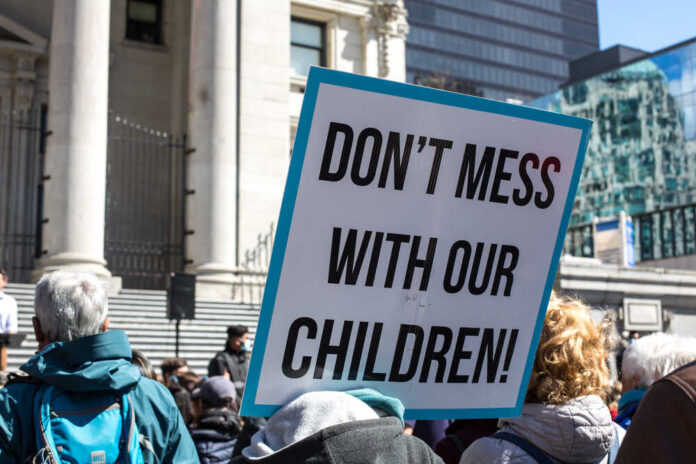
A medical fight over children’s bodies has turned into a constitutional brawl, and the science both sides wave around is far shakier than most Americans are being told.
Story Snapshot
- Dozens of states now restrict or ban gender drugs and surgeries for minors, while blue states and big medical groups push back.
- Trump’s administration is using federal funding rules to block “gender-affirming” procedures on anyone under 19, putting Washington in the middle of the fight.
- Supporters call the treatments lifesaving; critics say the evidence is weak, risks are lifelong, and children cannot give true informed consent.
- Both sides cite science, but much of the “consensus” comes from advocacy statements, not long-term, gold‑standard studies on kids.
States, Courts, and Washington Clash Over Kids and Gender Medicine
Across the country, state laws on gender treatment for minors have exploded in number and intensity over just a few years. A legal review found that at least 25 states introduced bills to restrict puberty blockers and cross‑sex hormones for children, with some laws threatening to discipline or even strip licenses from doctors who perform these procedures on minors.[1] Another analysis from the University of California Los Angeles reported that by March 2023, 30 states had either enacted limits or were actively debating them, showing how mainstream this fight has become in statehouses.[6]
Several of these laws treat child transition as serious criminal conduct, not routine health care. In Alabama, for example, providing puberty blockers or cross‑sex hormones to a minor has been made a Class C felony that can mean up to ten years in prison for a clinician.[1] A Kaiser Family Foundation policy tracker later found that more than twenty states impose professional or legal penalties on those who offer gender‑transition drugs or surgeries to minors, and that half of trans‑identifying teens now live in states with such limits in place.[20] That scale signals deep, ongoing concern among lawmakers about medical risk, consent, and parental rights.
Medical Establishment Backs Youth Transition While Admitting Evidence Gaps
Large medical bodies have lined up publicly against these state‑level restrictions, which shapes how legacy media covers the issue. The American Medical Association urged states to “stop interfering in health care of transgender children” and warned that blocking access to gender‑affirming treatment could lead to “tragic” physical and mental health outcomes.[4] A Williams Institute brief stresses that major groups such as the American Academy of Pediatrics and the Endocrine Society describe youth gender care as safe, effective, and medically necessary, especially for mental health.[6]
Federal agencies under Health and Human Services are also leaning hard toward access. The Office of Population Affairs issued guidance stating that “research demonstrates that gender‑affirming care improves the mental health and overall well‑being” of gender‑diverse children and teens.[8] That document lists social transition, puberty blockers, and hormones as parts of a continuum it presents as beneficial, while grouping surgeries mainly with adults. At the same time, the department’s evidence review, “Treatment for Pediatric Gender Dysphoria: Review of Evidence and Best Practices,” shows the federal government recognizes the need to formally assess the quality of the underlying data instead of treating it as settled fact.[5]
Evidence on Benefits Is Short-Term, While Long-Term Risks Remain Murky
Supporters of early medical transition point to short‑term mental health gains. A University of Washington summary highlighted a JAMA Network Open study in which teens 13 to 20 who received puberty blockers or hormones had sharply lower odds of moderate to severe depression and suicidal thoughts over one year compared with those who wanted treatment but did not receive it.[9] Advocacy briefs from groups like The Trevor Project echo that message, arguing that gender‑affirming care reduces suicidal thinking and improves overall well‑being in transgender youth.[7]
Critics counter that these are small, non‑randomized studies that follow patients for months, not decades, and often mix different interventions together. Even the government’s own pediatric review notes that the literature lacks robust long‑term follow‑up on fertility, bone health, sexual function, and regret among children given blockers and hormones.[5] The legal scholarship reviewing state bans underscores this point, explaining that most of the available records describe laws, advocacy, and testimony rather than controlled outcome trials in minors. That means both the strongest claims of “lifesaving” benefits and the sharpest claims of severe harm go beyond what the current data can firmly prove.[1]
Surgeries on Minors Are Rare, but Laws Reach Far Beyond the Operating Room
One key talking point in the debate involves surgeries on teenagers. A Harvard public health study of insurance data found little to no use of gender‑affirming surgeries among transgender minors, with no procedures documented for youth age twelve and under and very low rates even among those aged fifteen to seventeen.[12] The researchers concluded that surgeons are already strict about following guidelines before operating on minors and argued that laws banning all gender‑affirming care respond to a “problem that does not actually exist,” at least for surgery.[12]
Yet many state bans sweep in far more than rare surgeries. The Close Up Foundation notes that most restrictions block puberty blockers, hormones, and surgery alike, and in some states even bar providers from referring minors to out‑of‑state clinics.[17] Some laws also threaten parents with investigations or custody fights if they support medical transition for their child.[19] On the other side, at least sixteen states and the District of Columbia have passed “shield laws” that protect access to gender care and seek to block out‑of‑state subpoenas or prosecutions.[17] That patchwork creates a situation where a treatment can be promoted as best practice in one state yet treated as child abuse in another.
Trump’s Washington Moves In, and the Constitutional Stakes Get Higher
The Trump administration has now moved the fight from the state level to the federal purse strings. Shortly after taking office, President Donald Trump signed an order directing all federal agencies to recognize only two biological sexes in law and policy.[15] A second order, “Protecting Children from Chemical and Surgical Mutilation,” told federal agencies to withhold funding from hospitals and clinics that provide gender‑affirming drugs or surgeries to anyone under nineteen years old.[15] That set the stage for sweeping rules from the Centers for Medicare and Medicaid Services.
In late 2025, those Centers proposed two rules that would sharply limit youth transition care wherever federal dollars flow. One rule would bar any hospital that accepts Medicare or Medicaid from giving gender‑affirming medical treatment to minors.[15] The other would block Medicaid and the Children’s Health Insurance Program from paying for such services. A Kaiser Family Foundation tracker reports that by mid‑2025 the Supreme Court had already upheld a Tennessee ban on youth gender drugs and surgeries, allowing twenty‑five similar state bans to remain in force.[20] With Washington now tying funding to strict limits, the legal and political stakes around child transition are only going to rise.
Sources:
[1] YouTube – TRANS DEBATE GOES OFF THE RAILS
[4] YouTube – The fight for gender-affirming health care
[5] Web – AMA to states: Stop interfering in health care of transgender children
[6] Web – Gender Dysphoria Report – HHS Office of Population Affairs
[7] Web – Prohibiting Gender-Affirming Medical Care for Youth
[8] Web – Gender-Affirming Care for Youth – The Trevor Project
[9] Web – [PDF] Gender-Affirming Care and Young People
[12] Web – Criminalizing Gender Affirmative Care with Minors
[15] Web – “They’re Ruining People’s Lives”: Bans on Gender-Affirming Care for …
[17] YouTube – New HHS rules target care for transgender minors
[19] Web – Bans on Best Practice Medical Care for Transgender Youth
[20] Web – States are banning gender-affirming care for minors. What does that …