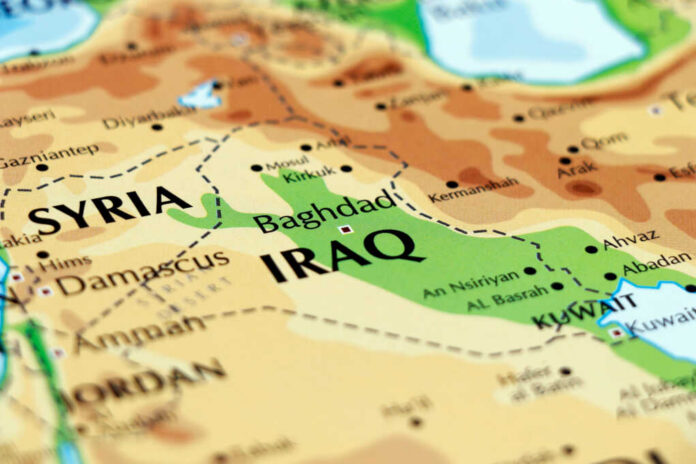
President Trump has drawn a hard line in the sand, threatening to impose crippling economic sanctions on Iraq if the Iranian-backed former Prime Minister Nouri al-Maliki returns to power for a third term.
Story Snapshot
- Trump publicly warned Iraq he will end all U.S. support and impose severe sanctions if al-Maliki becomes prime minister again
- Threatened sanctions target Iraq’s oil exports, central bank, and dollar access—measures that could collapse Iraq’s economy within weeks
- Al-Maliki’s 2006-2014 tenure weakened Iraq and enabled ISIS to conquer one-third of the country through his divisive, Iran-aligned policies
- Oil revenues fund 88 percent of Iraq’s federal budget, making sanctions an existential economic threat that would halt trade and prevent salary payments
- Trump’s direct intervention reasserts American influence over Iraqi politics and aims to block Iran’s proxy from controlling a key Middle Eastern nation
Trump’s Ultimatum Targets Iranian Influence
President Trump issued an unprecedented public ultimatum on January 27, 2026, declaring the United States would abandon Iraq entirely if former Prime Minister Nouri al-Maliki returns to office. Trump stated bluntly: “Because of his insane policies and ideologies, if elected, the United States of America will no longer help Iraq and, if we are not there to help, Iraq has ZERO chance of Success, Prosperity, or Freedom.” The threat came just days after Iraq’s dominant Shia political bloc, the Coordination Framework, nominated al-Maliki for a third term as prime minister on January 24.
Maliki’s Disastrous Record and Iranian Ties
Nouri al-Maliki served as Iraq’s prime minister from 2006 to 2014, a tenure marked by polarizing sectarian politics that catastrophically weakened the nation. His divisive leadership created the conditions for ISIS to conquer approximately one-third of Iraq during 2014. Maliki maintains deep ties to Iran dating back to his years in exile before 2003, and his ideological commitment to Shiism produced policies that consistently favored Iranian interests over American ones. He supported the total withdrawal of U.S. forces in 2011 and subsequently backed Iran-aligned militias, entrenching Tehran’s influence over Iraq in lasting and dangerous ways.
Devastating Economic Sanctions Specified
U.S. officials have communicated detailed sanctions threats to Iraqi political leaders through diplomatic channels. According to an Iraqi government adviser, Washington’s warning message specifies targeting the State Oil Marketing Organization, the Central Bank of Iraq, security and diplomatic sectors, and current and former political figures. The threatened measures include restrictions on Iraqi oil sales, limitations on government access to U.S. dollars, and sanctions on banks and financial institutions. These actions could result in a near-total halt in foreign trade and create severe difficulties in paying public sector salaries across Iraq.
The economic consequences would be catastrophic for Iraq. Oil revenues account for approximately 88 percent of Iraq’s federal budget based on 2025 figures. Closing Iraq’s oil account would deprive the country of access to these revenues, quickly triggering financial collapse. Even more gradual sanctions options could produce similarly devastating effects. The Trump administration has essentially placed Iraq’s economic survival on the line, demanding the nation choose between American partnership and Iranian influence. This represents a dramatic escalation from the Obama administration’s 2014 approach, which involved subtle diplomatic pressure rather than explicit public ultimatums and existential economic threats.
Defiance Meets Political Reality
Despite facing overwhelming U.S. pressure, al-Maliki initially responded defiantly on January 28, rejecting American interference and claiming to defend Iraqi sovereignty. The Coordination Framework reaffirmed its support for his nomination on January 30, attempting to stand firm against Trump’s intervention. However, political reality has set in. Broad consensus now exists across Iraq’s political scene that Maliki has lost any realistic hope of returning to office, even as he continues pressing his candidacy with populist rhetoric about resisting American interference. The Coordination Framework faces a stark choice: back down to preserve the crucial U.S. relationship or risk severe economic consequences that could destabilize the entire nation.
Trump’s intervention effectively reasserts American prerogative over Iraq’s leadership selection, demonstrating his administration’s willingness to directly intervene in Iraqi domestic affairs when U.S. strategic interests are at stake. This pressure-based strategy places full responsibility for Baghdad’s choices squarely on Iraq itself while making clear the consequences of defying American demands. The situation reflects Trump’s broader regional strategy to limit Iranian influence throughout the Middle East by preventing Tehran’s proxies from controlling key governments. For conservatives who understand the threat Iran poses to American interests and regional stability, Trump’s hardline approach represents exactly the kind of decisive leadership needed to counter Iranian expansion.
Sources:
Alhurra – Trump threatens Iraq with sanctions if Maliki returns as PM
Press TV – US threatens Iraq with sanctions targeting key institutions
Arab Center DC – Washington Policy Weekly: Trump opposes Maliki
Alhurra – Detailed sanctions analysis
TIME Magazine – Trump, al-Maliki, Iraq, and Iran oil
Atlantic Council – Why Trump is refusing to accept Maliki’s third term
Chatham House – What Maliki’s PM bid tells us about Iraq