
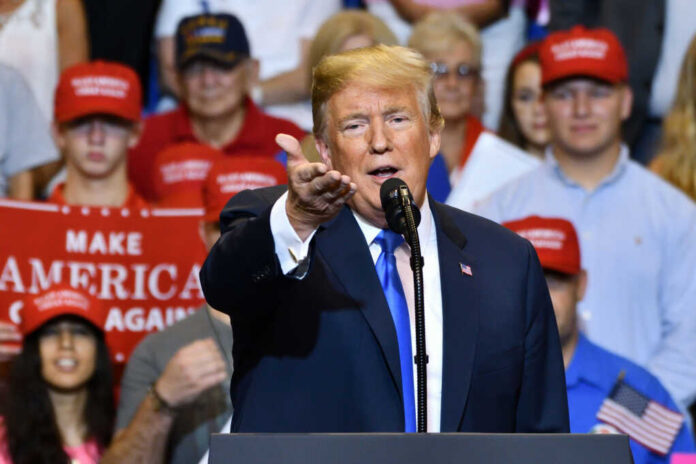
As American jets pound Iran’s terror infrastructure, President Trump is openly demanding “unconditional surrender” from the regime he now brands the “loser of the Middle East.”
Story Snapshot
- Trump and Israel have launched a massive air and missile campaign across Iran after years of nuclear cheating and proxy terrorism.
- The president is rejecting half‑measures, warning Tehran that strikes will intensify until the regime effectively surrenders.
- Iran has fired missiles and drones at U.S. bases and Israel, dragging the whole region closer to multi‑front war.
- War costs near $1 billion per day, reviving hard questions about strategy, congressional authority, and America’s long‑term role.
Trump’s Message to Tehran: Surrender or Face Escalating Firepower
During the first week of the 2026 Iran war, President Trump used blunt language that cut through years of diplomatic fog, warning Iran that the United States will increase strikes until the regime accepts what amounts to unconditional surrender and abandons its nuclear and missile ambitions. In a video address announcing the joint U.S.–Israeli operation, he urged Iranian citizens to “take over your government” and called on the Islamic Revolutionary Guard Corps to lay down its arms in exchange for immunity.
The campaign began February 28 with Operation Epic Fury, also called Roaring Lion, unleashing one of the largest combined air operations in modern Middle Eastern history. U.S. bombers and missiles joined hundreds of Israeli jets to hit nuclear facilities, command bunkers, and regime leadership sites deep inside Iran. Among the reported targets was a meeting location for Supreme Leader Ali Khamenei, whose killing has thrown the clerical regime’s succession and cohesion into crisis at the very moment it is under maximum external pressure.
From Failed Diplomacy to Relentless Military Pressure
This confrontation did not start overnight; it grew from decades of bad faith from Tehran and weak responses from Western governments. After the 2015 nuclear deal collapsed and sanctions ebbed and flowed, Iran steadily expanded enrichment, backed terror groups from Hezbollah to Hamas, and harassed U.S. forces across the region. By June 2025, international inspectors found Tehran only weeks from weapons‑grade enrichment, prompting earlier Israeli strikes and a U.S. operation that temporarily damaged, but did not eliminate, its nuclear infrastructure.
Through late 2025 and early 2026, Iran rebuilt parts of its program, stepped up missile work, and cracked down violently on mass protests at home. Indirect talks in Geneva and Muscat failed to produce meaningful limits on enrichment or regional aggression. Omani mediators even touted a last‑minute “breakthrough,” only to see it evaporate when Tehran refused to abandon its nuclear and proxy projects. Those cycles of appeasement and stalling left Washington with fewer options and a regime increasingly convinced that time and Western caution were on its side.
Regional War Footing and the Risk for American Forces
Since strikes began, Iran has answered with the tools it spent years building while Western leaders talked: ballistic missiles, drones, and proxy militias. At least fourteen U.S. bases across Bahrain, the United Arab Emirates, Kuwait, Jordan, and Saudi Arabia have been targeted according to Iranian outlets, while rocket and drone barrages have hit Israel. Hezbollah has opened fire from Lebanon, triggering the heaviest Israeli bombardment of Beirut since the 2024 conflict and forcing tens of thousands of civilians to flee southern neighborhoods.
For American readers who watched endless “forever wars” in Iraq and Afghanistan, the echoes are impossible to ignore. U.S. officials now quietly predict at least three more months of operations, at a staggering burn rate of roughly $1 billion per day. The Pentagon insists America and Israel hold overwhelming air and naval superiority, but Iran’s asymmetric tools can still inflict serious damage on exposed bases, shipping lanes, and regional economies. The question many conservatives are asking is simple: if we are spending this kind of money and taking these risks, what is the clear, achievable end state?
Constitutional Questions, War Powers, and the Conservative Dilemma
Trump’s supporters see a president finally treating Iran’s regime as the main exporter of terror it is, rather than another “partner” to be bribed at the negotiating table. They applaud the willingness to destroy nuclear and missile infrastructure and to call for the end of a theocracy that has spent decades chanting “Death to America.” At the same time, legal scholars and members of Congress across the spectrum are pressing hard on whether this scale of sustained warfare has adequate authorization under U.S. law and whether the administration has articulated a realistic exit strategy.
For conservatives who care deeply about the Constitution, that tension is real. Many readers remember how the 2003 Iraq invasion expanded under vague resolutions, ballooning into years of occupation, mission creep, and trillions in spending. Today’s Iran campaign is different in key ways—heavy on air and naval power, light on boots on the ground—but the same core principles apply: Congress must debate war openly, the mission must be tightly defined, and any operation must serve American security, not the globalist ambitions of permanent war planners.
Costs, Consequences, and What Comes Next
Beyond the immediate strikes and rhetoric, the long‑term stakes are enormous for American families already battered by years of inflation, reckless spending, and open‑border chaos under the previous administration. A prolonged conflict threatens higher energy prices if shipping in the Gulf is disrupted, new pressure for defense spending increases, and renewed efforts by the Left to tie war fatigue to demands for domestic cutbacks that often hit the military and veterans first. Voters who fought to put America First will need to watch closely that this war does not become another blank check for the permanent bureaucracy.
Inside Iran, pressure on the regime could eventually crack the system or harden it further; no one can predict which path a cornered dictatorship will choose. What is clear is that Trump has discarded the old pattern of endless “talks” that bought Tehran time and has forced a moment of decision. For conservatives, the task now is twofold: support the defeat of a sworn enemy while demanding strict constitutional oversight, defined objectives, and a strategy that keeps America strong without dragging our children into another open‑ended, unaccountable war.
Sources:
Guide: Trump’s Second Term Military Strikes and Actions — Council on Foreign Relations