
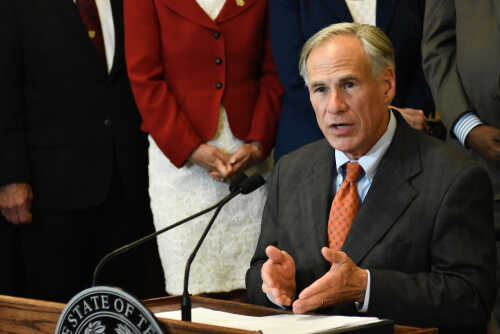
Texas Governor Greg Abbott signed groundbreaking legislation banning so-called “Sharia compounds” after a controversial Muslim community development sparked fears of parallel legal systems operating outside American constitutional law.
Story Snapshot
- Governor Abbott signed House Bill 4211 in late 2025, explicitly prohibiting developments like EPIC City from creating private governance systems based on religious law
- The EPIC City project near Dallas triggered federal and state investigations after critics alleged it would enforce Sharia law and discriminate against non-Muslims
- DOJ closed its investigation in June 2025 finding no violations, though Texas Fair Housing Act probes continue through the state Workforce Commission
- Federal lawmakers introduced the “No Sharia Act” in early 2026 to ban Islamic law nationwide, following Texas’s legislative action
EPIC City Development Triggers State Action
The East Plano Islamic Center announced EPIC City in 2024 as a Muslim-majority residential community featuring over 1,000 homes, a mosque, K-12 school, community college, and shops located 40 minutes from Dallas in Collin County. Critics immediately raised alarms about potential religious discrimination and Sharia law enforcement, prompting U.S. Senator John Cornyn to call for a Department of Justice investigation into whether the development would violate fair housing protections by restricting sales to Muslims or creating separate legal governance. Developers repeatedly denied any intent to implement Sharia enforcement, emphasizing full integration under existing U.S. and Texas law.
Abbott and Cornyn Lead Legislative Response
Governor Abbott posted on X in February 2025 declaring “Sharia law is not allowed in Texas” in direct reference to EPIC City, signaling state-level action against perceived threats to American legal supremacy. The Department of Justice conducted an inspection of the project in June 2025, closing the investigation after finding no evidence of discrimination or illegal religious governance structures. Despite federal clearance, Abbott signed House Bill 4211 later that year, explicitly targeting EPIC City-style projects and prohibiting private governance systems based on religious law. This legislative approach mirrors the “American Laws for American Courts” model laws adopted in eight states since post-9/11 concerns about foreign law infiltration.
Federal Arbitration Act Complicates Legal Landscape
The 1925 Federal Arbitration Act permits voluntary religious arbitration for matters like marriage disputes, similar to Jewish Beth Din courts and Catholic annulment tribunals, creating constitutional tension with outright Sharia bans. The Dallas Islamic Tribunal has operated since before 2015, handling voluntary Muslim divorces under Sharia principles while remaining subordinate to Texas law, with no documented cases of forced participation or violations of individual rights. Legal scholars note that Oklahoma’s 2010 constitutional amendment banning Sharia was struck down as unconstitutional for specifically targeting Muslims, raising questions about whether Texas’s HB 4211 could face similar challenges. The Cato Institute argues that personal religious practices remain protected under the First Amendment, distinguishing voluntary community standards from state-enforced penal codes seen in some Islamic nations.
National Momentum Builds Against Religious Legal Systems
U.S. Representatives introduced the “No Sharia Act” in the House just two weeks after Abbott signed the Texas ban, indicating growing momentum for federal-level prohibition of Islamic law application. The legislation reflects conservative concerns that religious communities might establish parallel legal systems undermining constitutional protections, though no evidence has emerged of Sharia overriding Texas law in actual practice. This movement tests the balance between protecting constitutional governance and preserving religious freedom, with critics warning that targeting specific faiths could violate First Amendment protections while supporters argue American law must remain supreme over all religious codes.
Sharia in Texas? The Truth They’re Not Telling You https://t.co/jweLifSzj0 via @YouTube
— Raymond Ibrahim (@RaymondIbrahim5) January 22, 2026
The EPIC City controversy exposes tensions between voluntary religious practice and fears of legal separatism, with investigations finding no evidence supporting the most alarming allegations. Short-term impacts include halted Muslim community developments and reassurance for conservatives concerned about foreign law infiltration, while long-term effects may chill faith-based housing initiatives and spark constitutional lawsuits similar to Oklahoma’s failed ban. The economic impact includes delayed housing development in the growing Dallas area, though the broader question remains whether legislation addresses genuine threats or targets religious communities exercising rights already protected under federal arbitration law and the First Amendment.
Sources:
No Sharia Law Coming to Texas – Cato Institute
Does Sharia Law Trump Texas Law? – Texas Standard
Cornyn Calls on DOJ to Investigate EPIC City – U.S. Senate
Governor Abbott Signs Law Banning Sharia Compounds in Texas – Texas Governor