Spain’s refusal to let U.S. forces use key bases for Iran operations has triggered President Trump’s blunt warning: trade with America is on the line.
Quick Take
- President Trump publicly threatened to cut off trade with Spain after Madrid denied U.S. access to the Rota Naval Base and Morón Air Base for operations tied to Iran.
- Trump linked Spain’s decision to NATO burden-sharing, criticizing Madrid for failing to meet defense spending expectations as allies push higher targets.
- Spanish officials said the bases remain under Spanish sovereignty and that any use must align with treaties and the UN Charter, describing offensive strikes as unjustified.
- As of March 3, 2026, the trade cutoff is a threat, not a finalized policy, and implementation could be complicated by the EU’s trade framework.
Trump’s Trade Threat Ties Security Cooperation to Economic Leverage
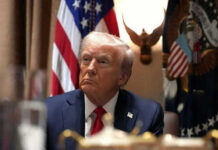
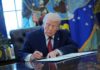
President Donald Trump escalated tensions with Spain on March 3, 2026, after Spain refused U.S. access to Rota and Morón for operations connected to the Iran conflict. During a White House meeting with German Chancellor Friedrich Merz, Trump described Spain as “unfriendly” and said the U.S. could cut off trade in response. Trump also directed Treasury Secretary Scott Bessent to consider ending “all dealings” with Spain, framing the move as retaliation and leverage.
Trump’s remarks landed amid ongoing U.S.-Israeli strikes on Iran, which he defended as preemptive, arguing the U.S. must act before facing imminent threats. The core policy question now is whether the U.S. will turn rhetoric into formal restrictions—tariffs, procurement limits, or broader trade barriers—against a NATO ally. Available reporting indicates no specific mechanism has been announced yet, and no final action had been confirmed as of the same day.
Spain Cites Sovereignty, Treaty Limits, and the UN Charter
Spanish officials publicly framed the denial as a matter of sovereignty and legal constraints. Foreign Minister José Manuel Albares and Defense Minister Margarita Robles said the bases, while hosting U.S. forces under long-standing agreements, remain under Spanish control and cannot be used for offensive operations outside agreed terms. Spain’s position emphasized that any activity must be consistent with treaties and the UN Charter, with officials describing the strikes as unjustified and dangerous.
That stance puts Madrid on a collision course with Washington at a moment when Americans are watching allies closely. For U.S. voters who remember years of overseas commitments paired with lopsided burden-sharing, the dispute revives a familiar frustration: the U.S. is expected to provide security, while some partners limit operational help when it matters most. Spain’s government also signaled it expects the U.S. to respect international trade rules, hinting it will look to broader European protections if threatened.
NATO Spending Dispute Moves from Talking Point to Pressure Campaign
Trump connected Spain’s base decision to NATO defense spending, arguing allies should meet or exceed agreed targets rather than rely on American taxpayers and the U.S. military. Reporting around the meeting with Chancellor Merz emphasized that Spain has remained below the long-standing 2% benchmark and has resisted newer pushes for higher commitments. Merz publicly backed the argument that Spain is lagging and said he would work to convince Madrid to move toward higher spending.
For conservatives focused on limited government at home, the logic is straightforward: if Washington is going to shoulder the world’s deterrence and respond to threats like Iran, it will demand real contributions from partners—especially those benefiting from U.S. security architecture. The counterargument from Spain centers on law, domestic politics, and avoiding entanglement. What is missing so far is a clear public explanation of the specific terms Spain believes constrain base usage and how those terms apply to today’s operations.
What Happens Next: Real Trade Action, EU Complications, and Market Fallout
The practical barrier is that Spain operates inside the European Union’s trade framework, which could complicate any attempt to single out Spanish goods without triggering broader disputes. Bloomberg reporting highlighted uncertainty over how a cutoff would work in practice, and whether measures would be targeted or sweeping. At the same time, even a limited U.S. move could hit politically sensitive exports and trigger reciprocal pressure from European institutions, increasing costs for businesses and consumers.
Another unresolved detail is the operational timeline around the bases. Separate reporting referenced flight tracking showing multiple U.S. aircraft departures from Spanish facilities, but the purpose and timing relative to Spain’s denial were unclear. That uncertainty matters because it affects how both sides will argue the facts: Spain can claim it enforced sovereignty limits, while U.S. officials can point to continued activity and the need for reliable access. For now, the standoff remains a high-stakes warning shot rather than a completed rupture.
Sources:
trump-threatens-to-cut-off-trade-after-spain-denies-air-base-use
Fox Business video 6390325955112