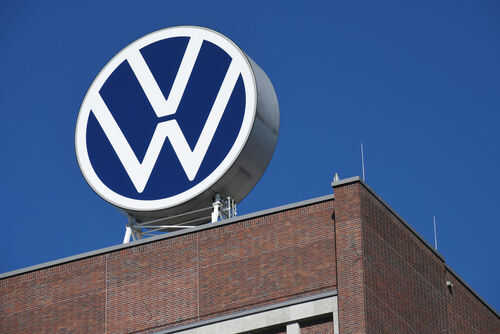
A German auto giant may soon be building key Iron Dome hardware with Israel—an eyebrow-raising shift that underscores how fast Europe is retooling for war while many Americans are asking why Washington keeps getting pulled into the next fight.
Quick Take
- Volkswagen is in talks with Israel’s Rafael Advanced Defense Systems to repurpose its Osnabrück plant from cars to Iron Dome-related components, potentially preserving about 2,300 jobs.
- Reporting indicates the plant would produce support equipment—such as heavy-duty trucks, launchers, and generators—rather than interceptor missiles.
- German government support is reportedly part of the proposal, reflecting Berlin’s post-Ukraine “Zeitenwende” defense-spending shift.
- The talks remain preliminary, with worker approval and final terms still unresolved; Rafael and Germany’s defense ministry have not publicly commented.
Volkswagen’s Osnabrück plant faces a 2027 cliff
Volkswagen’s Osnabrück facility in Lower Saxony has been tied to low-volume specialty production, including the T-Roc Cabriolet, which is expected to end in 2027. That timeline has hung over roughly 2,300 workers as VW navigates the EV transition, overcapacity pressures, and weaker demand for certain combustion models. With a prior pathway—reported talks with Rheinmetall—stalling in late 2025, VW has been looking for alternatives that keep the site running.
Reports published March 24–25, 2026 say VW is now discussing a partnership with Israel’s Rafael Advanced Defense Systems that could convert Osnabrück toward manufacturing Iron Dome-related components. The coverage is consistent across multiple outlets that attribute the details to Financial Times reporting and sources familiar with the talks. The key point: this is presented as a repurposing plan that could preserve jobs without turning VW into a direct missile maker.
What “Iron Dome components” likely means in this proposal
The reporting emphasizes that Osnabrück would focus on non-missile items: heavy-duty trucks, missile launchers, and generators supporting Iron Dome batteries. That distinction matters because it keeps the work closer to industrial manufacturing competencies already present at a large automaker, and it also helps explain why the conversion could be feasible with limited investment. Multiple reports also cite a relatively fast timeline—roughly 12 to 18 months—if the workforce agrees.
VW has publicly stressed caution. Statements cited in coverage say the company is “exploring various solutions,” that no final decision has been made, and that it is ruling out direct weapons production. Rafael and Germany’s defense ministry have not offered public comment in the reports referenced, leaving the public to weigh a proposal built largely from sourced reporting rather than official press conferences. That uncertainty is important for readers trying to separate confirmed facts from likely outcomes.
Germany’s defense pivot is reshaping industry, not just budgets
Germany’s post-2022 shift toward higher defense readiness—often described as Zeitenwende—forms the backdrop. If Berlin wants more air and missile defense capacity, localizing parts of production can reduce dependence on stretched supply chains during crisis periods. Rafael’s chairman Yuval Steinitz has been linked in reporting to proposals earlier in March 2026 to produce Iron Dome in Germany. The broader trend is European industry adapting civilian capacity toward defense output as procurement accelerates.
For Americans watching Washington’s posture in 2026—with the U.S. at war with Iran and the MAGA base split between hawkish deterrence and deep fatigue with foreign entanglements—Europe’s approach stands out. Germany is described as backing an industrial plan that secures its own supply and jobs at home. U.S. voters, meanwhile, are debating whether America’s security commitments keep expanding without clear constitutional accountability or a defined end state, especially after years of skepticism toward regime-change thinking.
Why this story is hitting a nerve with pro-Trump conservatives
The strongest, documented takeaway is not that VW “picked a side,” but that the industrial West is reorganizing around persistent conflict. Israel’s Iron Dome is widely recognized as a defensive system against short-range rockets, yet the political argument in the U.S. is increasingly about scope: when allied security needs become de facto American obligations. With the Iran war dividing even Trump supporters, stories like this spotlight how quickly allies and partners are preparing for long-term strain—while Americans are demanding clearer limits, clearer missions, and lower energy costs.
The bottom line is that the VW–Rafael talks appear real but unfinished. Worker consent, final contract terms, and formal government or company confirmation remain outstanding in the available reporting. Still, the direction is clear: Europe is adapting factories and workforces to defense production faster than many people would have imagined a decade ago. Whether Washington learns to define interests narrowly—or keeps drifting into open-ended commitments—will shape how U.S. taxpayers and military families experience the next chapter.
Sources:
Volkswagen: Could a potential deal with Israel save the plant in Saxony?
From cars to air defence: Will Volkswagen soon be producing parts for Israel’s Iron Dome?
Volkswagen in talks with Israel’s Rafael to make Iron Dome components in Germany – report
Report: Volkswagen to switch from cars to defense at key plant
Volkswagen in Talks With Israel’s Defense Company Over Osnabrueck Plant, FT Says, Citing Sources
Volkswagen in Talks to Produce Iron Dome Parts at German Plant