
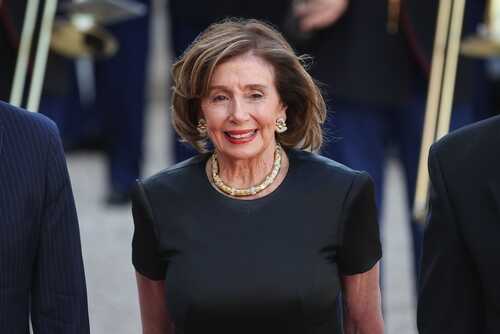
Trump’s recent verbal attack on Nancy Pelosi following her retirement announcement underscores the deepening personal and political divides in America.
Story Snapshot
- President Trump calls Nancy Pelosi an “evil woman” after her retirement announcement.
- Pelosi’s departure marks the end of an era in Democratic leadership.
- MSNBC analysts struggle to contextualize the significance of Trump’s remarks.
- The event highlights ongoing polarization and personal attacks in U.S. politics.
Trump’s Reaction to Pelosi’s Retirement
On November 6, 2025, Nancy Pelosi announced her decision not to seek re-election in 2026, marking the end of nearly four decades of service in Congress. This announcement was quickly followed by President Donald Trump’s public statement, in which he referred to Pelosi as an “evil woman.” Trump’s use of such inflammatory language is consistent with his history of personal attacks on political adversaries, further fueling partisan tensions.
Pelosi has been a formidable force in American politics, serving as the first female Speaker of the House and a leading Democratic strategist since 1987. Her leadership during Trump’s presidency was marked by significant legislative battles and symbolic acts, such as tearing up Trump’s State of the Union speech. Her retirement signals a potential shift in Democratic leadership and strategy, as the party faces internal debates about generational change and renewal.
President Trump on Thursday called former House Speaker Nancy Pelosi an "evil woman" when asked to comment on her retirement announcement. https://t.co/3OjBHa1MW0
— ABC News (@ABC) November 6, 2025
Media Reactions and Challenges
The media’s response to Trump’s comments highlights the difficulty in processing the complexity of current political discourse. MSNBC analysts, in particular, expressed their struggle to articulate the significance of Trump’s remarks, with one analyst stating, “God, we need like an hour for this.” This reflects the broader challenge media outlets face in covering increasingly personal and polarized political events.
Trump’s rhetoric continues to shape Republican messaging and public discourse. His ability to mobilize the Republican base through provocative statements remains a potent force, even after his presidency. This ongoing influence underscores the personal nature of political discourse in the U.S., where insults and personal attacks have become more normalized.
Implications for U.S. Politics
In the short term, Pelosi’s retirement and Trump’s response have intensified partisan rhetoric and media scrutiny. The Democratic Party now faces a leadership vacuum, prompting discussions about generational transitions and the future direction of the party. Meanwhile, Trump’s comments have energized his Republican supporters, further polarizing the political landscape.
Looking ahead, the long-term implications of this event include potential shifts in Democratic leadership and strategy, as well as the continued normalization of personal attacks in political discourse. These developments could significantly impact Congressional dynamics and future elections, shaping the political landscape for years to come.