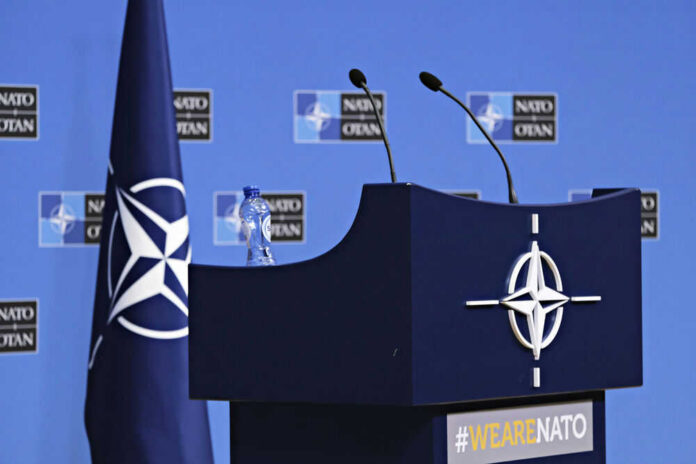
President Trump’s Iran war has turned into a wrecking ball aimed squarely at NATO, with the commander-in-chief threatening to pull America out of the 77-year-old alliance after European allies refused to join his Middle East military adventure—leaving many wondering if this is the betrayal of the “America First” promise that was supposed to keep us out of endless wars.
Story Overview
- Trump threatened NATO withdrawal after Spain, France, and Italy refused to support February 2026 Iran airstrikes with overflight and refueling access
- President branded NATO allies “cowards” and called the alliance a “paper tiger,” echoing Putin’s assessment of Western resolve
- A 2024 law requires Senate approval for treaty withdrawal, but Trump could effectively kill NATO by refusing to honor Article 5 collective defense obligations
- The Iran conflict exposes deeper US frustration with NATO costs, suggesting structural shift in alliance relations beyond Trump’s tenure
Trump’s Iran Campaign Fractures Western Alliance
Trump launched airstrikes against Iran in February 2026, expecting NATO allies to fall in line with American military objectives in the Middle East. Instead, major European powers including Spain, France, and Italy declined to provide overflight rights and refueling support for the operations. The refusal infuriated the administration, prompting Trump to publicly attack the alliance as ineffective and question its value to American security interests. Secretary of State Marco Rubio reinforced the president’s position, renouncing his previous support for NATO in recent interviews and warning allies of a fundamental rethinking of the relationship.
European Support Proves Selective and Limited
The reality of European participation reveals a more nuanced picture than Trump’s blanket criticism suggests. The United Kingdom permitted American forces to use RAF bases and Diego Garcia for Iran operations, providing critical staging areas for the military campaign. Germany allowed use of Ramstein air base for logistics coordination and medical evacuations of wounded personnel. Denmark offered specialized minesweeper vessels for potential operations in the Strait of Hormuz, recognizing the strategic importance of keeping vital shipping lanes open. These contributions demonstrate that some allies recognized shared interests in Gulf security, even as others balked at direct involvement.
Legal Roadblocks Cannot Stop Effective NATO Collapse
A law passed in 2024 explicitly forbids an American president from withdrawing from treaty alliances without obtaining Senate approval first, creating a legal barrier to formal NATO exit. However, Trump possesses alternative means to effectively destroy the alliance without triggering this requirement. The president could simply refuse to authorize action under Article 5, NATO’s collective defense provision, if a member state faced attack. This would leave European nations—particularly vulnerable Baltic states bordering Russia—without credible American security guarantees, rendering NATO meaningless regardless of its formal existence on paper.
Putin Benefits as Western Security Architecture Crumbles
Trump’s public acknowledgment that Putin shares his dim view of NATO as a “paper tiger” reveals the strategic windfall Russia gains from this crisis. The alliance has faced the latest existential threat to grip the 77-year-old institution, with member confidence in American commitments eroding rapidly. Eastern European nations, especially Baltic states with significant Russian-speaking populations, face the greatest vulnerability if Article 5 protections become unreliable. Russia’s strategic position strengthens considerably as the Western security architecture that has constrained its ambitions since World War II potentially collapses, not from Russian military pressure but from internal American political decisions driven by Middle East entanglements.
Europeans Face Impossible Defense Alternatives
The potential collapse of NATO forces European nations to confront harsh realities about independent defense capabilities. Experts question whether British and French nuclear arsenals could credibly replace Washington’s nuclear umbrella for non-nuclear NATO members facing Russian threats. Europeans would need to develop coherent alternatives to NATO or create a twin-pillar structure alongside diminished American commitment, requiring massive investments in drone production, counter-drone systems, and satellite surveillance capabilities. These requirements come at the worst possible time, as European economies struggle with energy costs and fiscal constraints that make such investments extraordinarily difficult to sustain politically or economically.
Deeper Strategic Shift Beyond Trump’s Rhetoric
Analysis suggests the Iran crisis merely catalyzed existing American strategic dissatisfaction rather than creating new tensions from scratch. US strategic thinkers have grown increasingly disillusioned with costly NATO commitments that provide unclear benefits to American security interests. Even if Democrats replace Trump after 2028, Washington’s pressure on Europe to shoulder greater defense burdens will likely continue, though delivered with more diplomatic polish. This indicates the current crisis represents a fundamental reassessment of transatlantic relations rather than temporary Trump-era turbulence. The alliance’s survival may depend less on Trump’s political fortunes than on European willingness to dramatically increase defense spending and capabilities, something many governments find politically impossible given domestic priorities and economic constraints.
Sources:
The Independent – NATO, Donald Trump, and the Iran Crisis
BGNES/AFP – Could NATO be collateral damage from Trump’s Iran war