Trump’s Venezuela crackdown is colliding with a constitutional question: can the U.S. keep sanctions in place while insisting a foreign defendant still gets a fair trial in a New York courtroom?
Story Snapshot
- Nicolás Maduro and Cilia Flores are facing U.S. federal charges after their January 3 capture and transfer to New York, with both pleading not guilty at arraignment.
- The Trump administration is opposing dismissal motions tied to OFAC sanctions that block Venezuelan state funds from paying the defendants’ legal bills.
- Maduro’s defense argues the funding blockade interferes with Sixth Amendment rights, while U.S. prosecutors say personal funds and permitted channels remain available.
- A March 26 pre-trial hearing kept the case moving, even as critics frame the prosecution as a “show trial” and supporters call it overdue accountability.
Trump signals escalation as Maduro’s U.S. case advances
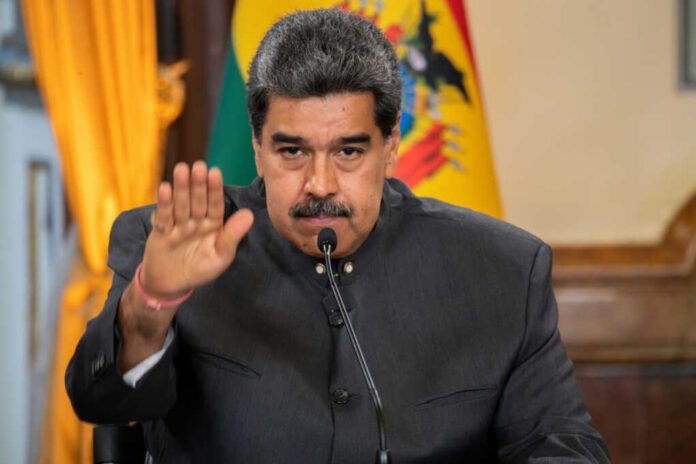
President Trump has publicly suggested Nicolás Maduro could face additional legal exposure even as the current federal case proceeds in Manhattan. Maduro and his wife, Cilia Flores, were captured by U.S. forces on January 3 and flown to New York, where they pleaded not guilty on January 5. A pre-trial hearing on March 26 highlighted how the fight is now as much about procedure and funding as the underlying narcotics and weapons allegations.
For many conservatives, the case is politically complicated in 2026. The same voters who backed Trump to restore border security, curb globalist priorities, and roll back culture-war mandates are also exhausted by open-ended foreign entanglements. The Maduro prosecution sits at the intersection: it looks like strength against transnational crime, but it also raises concerns about how far the federal government can go—at home and abroad—without tripping due-process safeguards Americans expect for everyone in U.S. courts.
Sanctions and defense funding put due process under a microscope
The immediate legal flashpoint is money. Maduro’s attorney has argued that Treasury sanctions and OFAC licensing changes blocked Venezuelan government funds intended for the couple’s legal defense, and that the restriction undermines the right to counsel. The Trump administration has urged the court to reject dismissal efforts, maintaining the defendants can use personal funds and that sanctions should not become a backdoor way for a foreign government to finance litigation while under U.S. penalties.
This dispute matters beyond one high-profile defendant. When the government blocks a defendant’s preferred source of legal funding, judges must weigh national-security and sanctions policy against the practical ability to mount a defense. The record available in the research does not show public evidence presented in court tying Maduro personally to narcotics trafficking at this stage, meaning pre-trial skirmishes are shaping the narrative. That is exactly when process and constitutional guardrails matter most.
Rare “narcoterrorism” theory and shifting claims add uncertainty
Prosecutors are pursuing charges that include narcoterrorism, cocaine importation, and weapons-related allegations, a package that supporters see as a long-overdue response to a “narco-state” model. But the case is also testing legal theories that are not routine, and reporting cited in the research notes the Department of Justice dropped a prior “Cartel de los Soles” claim at arraignment. That adjustment gives critics ammunition to argue the government is still refining its storyline.
Several outlets describe Venezuela’s overall role in global trafficking as more limited than public rhetoric suggests, which does not exonerate any individual but does highlight why the government’s evidence will ultimately decide the case. For conservative readers wary of politically driven prosecutions in any direction, the key question is straightforward: will prosecutors prove the charges with hard, court-tested facts, or will the case lean on broad geopolitical framing that never fully translates into admissible proof?
What it means for U.S. foreign policy in a war-weary 2026
Maduro’s capture through a U.S. military operation sets this episode apart from earlier indictments that were never enforced. That fact alone feeds the “regime-change” debate splitting parts of the MAGA coalition while the U.S. is also at war with Iran and support for Israel is being questioned more openly on the right. The administration’s supporters argue decisive actions deter hostile leaders. Skeptics hear echoes of the old interventionist playbook.
Venezuela’s post-Maduro power scramble and America’s leverage
Inside Venezuela, the research describes Acting President Delcy Rodríguez pursuing a thaw with Washington while restructuring oil and mining policies, signaling how quickly power recalibrates after a leader is removed. U.S. sanctions and the custody of Maduro give Washington enormous leverage, but that leverage comes with responsibility: American courts must remain visibly fair, especially in politically charged cases involving foreign leaders. If the public concludes the process is tilted, it can weaken trust in institutions conservatives want cleaned up and restored.
Next steps will hinge on Judge Alvin Hellerstein’s handling of the defense-funding dispute and the pace at which prosecutors reveal evidence supporting the narcoterrorism and trafficking allegations. Conservatives can reasonably hold two ideas at once: the United States has a legitimate interest in stopping cross-border drug networks and punishing corruption, and the Constitution’s guarantees—especially the right to counsel and a fair trial—cannot become optional when a defendant is unpopular or foreign. Those guardrails are for Americans first, but they protect the integrity of the system for everyone.
Sources:
Trump administration blocks Venezuela from paying Maduro’s legal bills amid federal charges
Oppose Trump’s ‘show trial’ of Venezuela’s President Maduro
What are the charges against Venezuela’s Nicolás Maduro