Beirut apartment building collapsing into rubble in seconds is a stark reminder of how fast Middle East escalation can spill into dense civilian neighborhoods.
Story Snapshot
- An Israeli airstrike hit a residential building in Beirut’s Bachoura district around 5:30 a.m. on March 18, 2026, collapsing the structure within seconds.
- Israeli forces issued an evacuation warning roughly 90 minutes beforehand, instructing residents to move at least 300 meters away.
- Reports described this as a repeated target, following an earlier strike on the building’s basement on March 12 and additional attempts.
- Lebanon’s health ministry reported six killed and 12 injured in broader overnight attacks in Beirut, while initial reporting said no injuries were immediately confirmed from this specific collapse.
What happened in Bachoura, and what reporting confirms
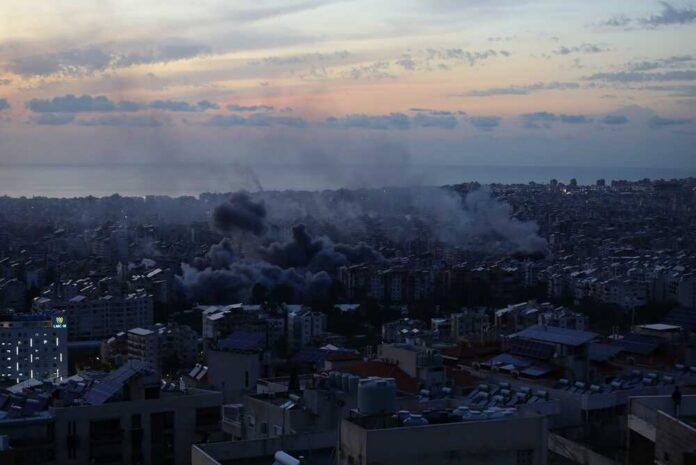
Israeli aircraft struck a residential building in Beirut’s Bachoura neighborhood near downtown early March 18, bringing the entire structure down in a rapid, full collapse captured on video. Reporting placed the strike at about 5:30 a.m., with a thick dust cloud rising over surrounding streets and apartments. The incident stood out because the building appeared to pancake straight into rubble rather than sustaining partial damage typical of smaller blasts.
Israeli messaging before the strike is a key factual point in the public record. News reports said the Israeli military issued an evacuation warning around 4:00 a.m., telling people near the site to leave and move at least 300 meters away. That timeline suggests a window for evacuation, but it does not settle questions about who remained nearby, what happened in adjacent buildings, or how effectively the warning was received in a dense urban area.
Competing claims: the alleged Hezbollah link and what remains unproven
Israeli forces publicly framed the target as connected to Hezbollah, including an allegation that the site was used to store funds. Reporting also noted that no evidence was presented publicly in the available coverage to substantiate the specific “funds” claim. For those trying to separate verified facts from wartime messaging, that distinction matters: the collapse and warning timeline are widely reported, while the precise purpose of the targeted location is still an assertion.
Multiple reports described this strike as part of a pattern rather than a one-off event. The building’s basement was reportedly struck on March 12, and later coverage characterized the March 18 strike as another attempt—described as the fourth strike on the site after earlier efforts did not level the structure. That sequence helps explain why observers saw a dramatic “total collapse” outcome and why the incident drew wide attention online.
Broader Beirut attacks and casualties reported overnight
Lebanese officials reported fatalities and injuries tied to overnight strikes across Beirut, not solely to the Bachoura building collapse. Coverage cited Lebanon’s health ministry saying six people were killed and 12 were injured in overnight attacks in the capital. At the same time, some reporting said there were no immediate injuries confirmed from the specific building that collapsed, underscoring a recurring fog-of-war issue: casualty totals can be citywide while a viral video spotlights one location.
Why this matters to Americans watching from afar
Regional escalation involving Israel, Hezbollah, and Iran-linked tensions can quickly reshape global risk—energy markets, shipping, U.S. diplomatic posture, and counterterror priorities. The available reporting also highlights a reality conservatives tend to recognize: armed non-state actors operating in densely populated areas can blur civilian and military lines, and governments respond with force while trying to claim precision. The public, meanwhile, is left sorting verified facts from claims that are still unproven.
Limited public detail means key questions remain unresolved, including what was inside the building at the time of the strike, whether any independent body has validated the alleged Hezbollah financial link, and how many residents were displaced afterward. What is clear from cross-reporting is the basic timeline—warning, strike, collapse—and the larger context of intensified operations and retaliatory dynamics in and around Lebanon.
Sources:
Watch: Israeli strike in Beirut reduces building to rubble in seconds
Building reduced to rubble after strike that hit central Beirut