
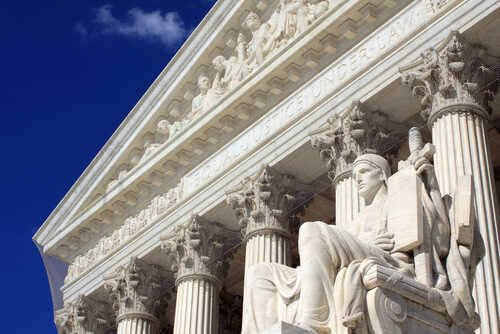
Supreme Court deliberations on transgender athlete bans threaten to redefine fairness in women’s sports.
Story Overview
- Conservative-majority Supreme Court likely to uphold transgender athlete bans.
- The case focuses on state laws in Idaho and West Virginia.
- The Trump administration supports state-level restrictions.
- Potential impact on Title IX and federal funding for schools.
- Bans affect 27 states, impacting transgender athletes’ rights.
Supreme Court’s Position on Transgender Athlete Bans
The U.S. Supreme Court, with a conservative majority, recently heard arguments in cases challenging Idaho and West Virginia’s bans on transgender women and girls participating in sports teams matching their gender identity. The justices appeared inclined to uphold these bans, emphasizing fairness in women’s sports. The outcome may establish a precedent affecting transgender rights and Title IX interpretations, impacting federal policies and school funding.
Conservative justices, including Chief Justice John Roberts and Justice Amy Coney Barrett, questioned whether transgender athletes should be considered under existing definitions of sex in sports. The Trump administration, through its legal representative Hashim Mooppan, argued for a “reasonable fit” standard to justify the bans, emphasizing fairness over perfect alignment with biological sex.
FIGHT FOR FAIRNESS: The Supreme Court seems likely to side with the states after hearing challenges to restrictions on transgender athletes competing in scholastic sports. | @AlexandriaHoff pic.twitter.com/wb5qCFwEM1
— FOX & Friends (@foxandfriends) January 14, 2026
Implications of Upholding the Bans
Should the Court uphold the bans, transgender athletes in 27 states will face restrictions, barring them from competing according to their gender identity. The decision could also influence federal interpretation of Title IX and impact school funding based on compliance with transgender participation policies. This ruling may entrench the existing divide among states, with half maintaining bans and the other half allowing participation.
Beyond immediate sports implications, the ruling could set a broader civil rights precedent, influencing how transgender rights are perceived across various sectors. Educational institutions will need to navigate the complexities of compliance while balancing federal funding threats and state-level mandates.
Stakeholder Reactions and Concerns
Transgender student athletes and advocacy groups, such as Lambda Legal and the ACLU, argue that the bans unfairly stigmatize and exclude transgender youth from athletic opportunities. Legal experts like Karen L. Loewy emphasize the need for courts to respect transgender individuals’ rights to equal participation in public life. The conservative justices, however, focus on preserving fairness in women’s sports, potentially overlooking the nuanced realities faced by transgender athletes.
As the nation awaits the Supreme Court’s decision, the ongoing debate reflects deeper societal tensions around gender identity, fairness, and constitutional rights, highlighting the complexities of balancing individual freedoms with collective norms.
Sources:
Supreme Court Appears Likely to Uphold Transgender Athlete Bans
Supreme Court State Transgender Athlete Bans
Live Coverage: West Virginia v. B.P.J. SCOTUS Arguments
Supreme Court Transgender Rights
Supreme Court Weighs State Restrictions on Transgender Student Athletes