Iran tried to choke the world’s most important oil corridor, then quietly proved it couldn’t—because a real blockade demands power, discipline, and a willingness to suffer the blowback.
Quick Take
- Iran’s late-February 2026 “blockade” of the Strait of Hormuz functions more like selective harassment than a full closure.
- Ships tied to non-Western or regionally sensitive trade have still received passage, undercutting Tehran’s own intimidation campaign.
- Traffic reportedly plunged early on, but repeated breaches and targeted exceptions reveal enforcement limits.
- History suggests Hormuz threats usually collapse under economic self-harm and overwhelming U.S.-led naval counterpressure.
The 2026 Hormuz Play: Retaliation Without the Muscle for Total Control
Iran’s de facto restrictions began after U.S.-Israeli strikes on February 28, 2026, a shock event compounded by the reported killing of Supreme Leader Ali Khamenei. The Islamic Revolutionary Guard Corps moved fast with maritime warnings, attacks, and the specter of mines to frighten commercial shipping into hesitation. That first wave mattered: fewer ships, higher insurance, and a sudden sense that the Gulf could become ungovernable overnight.
Iran also revealed the main weakness of its own strategy: it did not, or could not, stop everybody. Reports describe permission granted for Turkish passage and continued movement for some India- and Saudi-linked shipping, while the IRGC messaged that restrictions targeted the U.S., Israel, and aligned Western traffic. A blockade that comes with carve-outs turns into a political statement, not a reliable military reality—and markets, navies, and captains adapt quickly to that distinction.
Selective Enforcement Is Not Strength; It’s a Tell
March’s timeline reads like a pressure campaign with gaps. Vessels took hits, some crews died, and multiple incidents set nerves on edge across the Gulf. Yet ships still slipped through, and approvals appeared to depend on nationality, destination, or Tehran’s immediate calculations. That inconsistency sends a message Tehran doesn’t want to send: the IRGC can punish, but it can’t administratively “own” the Strait in the way a true closure requires.
Iran’s asymmetric toolkit—drones, missiles, fast boats, mines—creates danger without guaranteeing control. Mines can slow traffic, but they also trigger rapid countermeasures and international justification for force. Strikes on shipping generate headlines, but they also unify nervous importers and insurers against the aggressor. Conservative common sense says deterrence works when it’s credible and repeatable; a campaign that relies on sporadic violence and selective permissions looks more like improvisation than command.
Why Hormuz Blockades Historically Break: Economics Always Collects
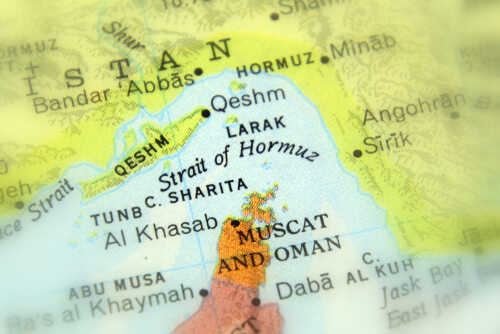
The Strait of Hormuz is a 21-mile-wide choke point with outsized leverage, carrying roughly a fifth to nearly a third of global oil trade by many estimates. That leverage tempts Tehran, but it also traps it. Iran depends on the same regional commerce and energy flows that a closure would disrupt. Past episodes show the pattern: threats spike fear, then economic consequences and naval reality squeeze Iran harder than its targets.
History offers receipts. Britain’s 1951 blockade episode and the Iran-Iraq War “Tanker War” both underline a stubborn truth: the Strait can remain passable even under heavy attack. During the Tanker War, hundreds of vessels suffered strikes, yet Hormuz did not fully close. When mines crossed a line and the U.S. escalated, Iran paid a direct military price. That memory sits behind every modern IRGC threat and behind every U.S. decision to keep the passage open.
The U.S. Countermove: Remove the “Mine Narrative,” Restore the Shipping Math
The United States does not need to “win” a propaganda argument to defeat a blockade attempt; it needs to change the cost curve for ship operators and insurers. Reports that U.S. forces destroyed Iranian minelayers and demanded mine removal signal that Washington’s strategy centers on making Iran’s most disruptive tool unsustainable. Once commercial actors believe clearance and escorting can keep lanes viable, traffic resumes—slowly at first, then with growing confidence.
This is where the “destined to fail” claim has real footing. Iran can generate incidents, but it struggles to enforce a durable closure against modern surveillance, allied basing in the Gulf, and a global economy that will pay handsomely for any safe alternative route. Tehran can force a temporary slowdown. It cannot easily force a long-term halt without triggering a coalition response that damages Iran’s remaining leverage.
The Human Cost and the Political Backfire Tehran Can’t Escape
The most tragic detail is the human one: commercial crews, not policymakers, absorb the immediate risk. Reports cite multiple damaged vessels and deaths among sailors, including Indian and Thai crew members. Every burned hull and emergency rescue hardens attitudes among trading nations that might otherwise stay neutral. Iran may believe selective targeting prevents total blowback, but shipping deaths and Gulf insecurity rarely stay compartmentalized for long.
Tehran’s internal politics also complicate execution. A leadership vacuum and IRGC primacy can produce aggressive action, yet that same structure often struggles with consistent, disciplined follow-through. A coherent blockade requires centralized command and stable objectives, not shifting messages about who may pass today and who must turn back tomorrow. From an American conservative lens, regimes that gamble with chaos usually discover they can’t control the fire they started.
Iran’s Hormuz campaign looks less like a door slammed shut and more like a hand shaking the doorknob—enough to rattle markets, not enough to stop determined traffic backed by superior naval power. The open loop now is whether Tehran escalates toward true closure or retreats into face-saving “selective enforcement.” History suggests the latter, because Iran can’t afford to strangle the Strait without strangling itself.
That reality won’t comfort every sailor or stabilize every oil contract tomorrow, but it does point to the likely endpoint: a grudging return to transit under protection, higher costs, and constant watch. Blockades succeed when the enforcer can keep them airtight. Iran has shown the opposite—exceptions, breaches, and a growing counterforce assembled for the single mission Tehran fears most: keeping Hormuz open.