Iran didn’t “blockade its own petrochemical industry”—it halted exports after U.S. warships moved to choke off the Strait of Hormuz, a reminder that energy security still drives everything from family budgets to foreign policy.
Quick Take
- Iran’s state-linked media reported a suspension of all petrochemical exports “until further notice,” not a self-imposed industry blockade.
- The export halt follows Israeli strikes on major petrochemical and utility nodes and a U.S. naval blockade posture around Hormuz.
- Because most Iranian trade runs through Hormuz, disruption hits Tehran’s revenue, workers’ jobs, and global energy prices at the same time.
- This shows how quickly Middle East flashpoints turn into inflation pressure and market volatility back home.
What Iran Actually Announced—and Why the Wording Matters
Iran’s reported move was a suspension of petrochemical exports, described as a response to U.S. enforcement actions in and around the Strait of Hormuz and the continuing fallout from strikes on key facilities. That is materially different from “blockading its own industry,” which implies a voluntary domestic shutdown for internal political leverage. It frames the decision as reactive: exports cannot reliably move, and production networks are damaged or constrained.
The distinction matters because propaganda thrives in crises. Iran’s information ecosystem, including outlets tied to the Islamic Revolutionary Guard Corps, has incentives to portray economic pain as patriotic resistance rather than vulnerability. On the U.S. side, the Trump administration’s posture is designed to pressure Tehran’s revenue streams, not to manage Iranian internal narratives. For Americans trying to parse the headlines, “export suspension amid blockade and strikes” is more accurate than “self-blockade.”
How the Strait of Hormuz Turns a Regional Clash Into a Global Bill
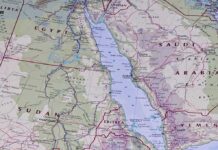
The Strait of Hormuz is the chokepoint that makes this story bigger than Iran’s petrochemical sector. Reporting indicates Iran relies on Hormuz for the overwhelming majority of its trade, with daily economic activity tied to the waterway measured in the hundreds of millions of dollars. When shipping slows or insurers price in war risk, the market response is immediate: crude rises, refined products follow, and the costs filter into transportation and consumer goods.
For U.S. voters—especially those already worn down by years of inflation—this is the kind of overseas disruption that collides with domestic frustration about government competence. Conservatives tend to focus on deterrence and energy independence; liberals often focus on humanitarian fallout and escalation risks. Both sides, however, understand that Washington’s decisions abroad can show up as higher household costs, even when the action is intended to curb an adversary’s leverage.
Damage on the Ground: Strikes, Shutdowns, and Civilian Spillover
Iran’s petrochemical system is clustered around Persian Gulf infrastructure, including major complexes and ports. It describes Israeli strikes hitting critical petrochemical and utility sites, with knock-on effects that go beyond export earnings. Petrochemicals feed into everyday supply chains—packaging, textiles, and industrial inputs—so disruption can translate into shortages and job losses inside Iran. Additional strain comes from reported internet shutdowns and financial restrictions that complicate normal business operations.
Those internal stresses do not excuse Tehran’s regional behavior, but they do clarify the leverage Washington is aiming at. Cutting off export flows attacks the regime’s cash generation and its ability to stabilize the economy. The downside is that civilians and workers often absorb much of the immediate pain, which can also harden political narratives. It includes projections and warnings about severe inflationary conditions in Iran, though precise outcomes remain uncertain.
What the Trump Blockade Strategy Signals—and the Risks to Watch
U.S. statements described in the research convey a high-intensity deterrence message tied to interdiction and maritime control. Strategically, a blockade posture can be a substitute for broader war: it targets revenue and logistics while keeping U.S. forces positioned to enforce red lines. Politically, it fits a Republican-controlled Washington that prefers visible strength, clear enforcement, and limiting Tehran’s ability to finance proxy networks.
Iran Announces Blockade of Its Own Petrochemical Industryhttps://t.co/ODsMm3XfxJ
— RedState (@RedState) April 15, 2026
The key risk is escalation by miscalculation. It notes continued disruption even after a ceasefire announcement, highlighting how hard it is to “turn the dial down” once maritime traffic, insurance, and regional militaries have shifted into crisis mode. For Americans, the practical question is whether U.S. policy can sustain pressure on Iran without triggering a wider supply shock. The reporting does not provide definitive answers on duration or end-state, so the best read is to watch shipping movement and enforcement actions.
Sources:
https://www.iranintl.com/en/202604148766
https://www.the-express.com/news/world-news/204957/iran-suspends-all-petrochemical-exports
https://www.iranintl.com/en/202604147667