New York City’s new “racial equity” push is colliding with a familiar reality: soaring budgets, higher taxes, and fewer cops on the street.
Story Snapshot
- Mayor Zohran Mamdani’s proposed $127 billion NYC budget increases funding for racial equity offices to $10.2 million, up about 42% from the prior level reported in coverage.
- The plan funds 38 staff in the Office of Racial Equity and 16 paid roles in the city’s Commission on Racial Equity, alongside six-figure DEI-style posts across agencies.
- The same budget debate includes proposals such as a possible 9.5% property tax increase, a tax hike aimed at wealthy residents, and 5,000 NYPD job cuts.
- Mamdani’s administration released a citywide racial equity plan and a “True Cost of Living” measure saying 62% of New Yorkers fall short financially.
Budget Trade-Offs Put Public Safety and Taxpayers in the Crosshairs
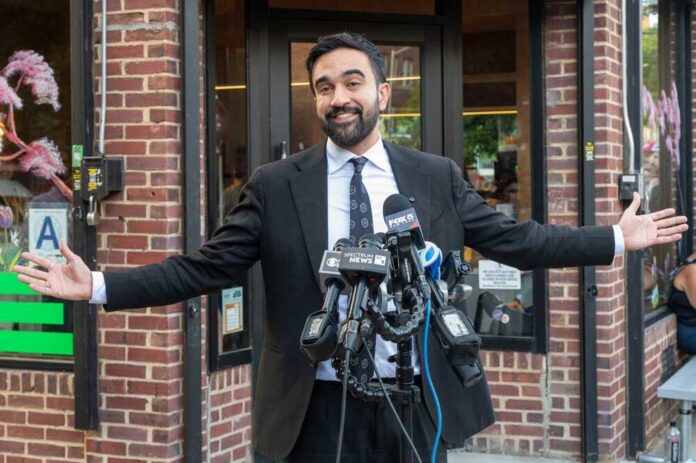
Mayor Zohran Mamdani’s budget fight has become a test of priorities in a city already strained by high costs and uneven public safety outcomes. Reporting on his proposed $127 billion budget highlights $10.2 million set aside for racial equity offices, plus additional spending tied to diversity-focused positions across multiple agencies. At the same time, the proposal includes ideas such as higher taxes and significant reductions to NYPD headcount, forcing New Yorkers to weigh results against rhetoric.
The political tension is predictable: progressives argue equity offices help coordinate fairer outcomes, while critics see bureaucracy expanding as core services face cuts. For conservative-leaning readers, the flash point is less the slogan and more the trade-off. When a budget pairs new administrative growth with reduced policing and potential property tax hikes, it invites the question many families ask first: will streets, subways, and neighborhoods be safer, or will residents pay more for less day-to-day security?
What the “Racial Equity” Spending Actually Funds
The figures cited in coverage break down into two main structures: the NYC Office of Racial Equity and the NYC Commission on Racial Equity (CORE). The proposal described includes 38 staff tied to the Office of Racial Equity and 16 paid roles at CORE, totaling more than 50 positions connected to the equity framework. Other highlighted spending includes high-salary diversity leadership roles in agencies such as Education and the FDNY, plus spending connected to gender equity work.
Supporters present these offices as a way to standardize how agencies plan, budget, and report through an equity lens, with the theory that prevention and earlier interventions reduce later, more expensive crises. That case was laid out in commentary emphasizing that disparities can drive higher costs in areas like health and incarceration. The counterargument, rooted in limited-government instincts, is that outcomes are hard to measure while headcount and overhead are immediate—and once a bureaucracy is built, it rarely shrinks.
Why Mamdani Can’t Simply Walk Away From the Framework
The backstory matters because it narrows what City Hall can do without legal consequences. New York City’s racial equity system traces to 2022 charter amendments approved by voters, which created the requirements for citywide racial equity plans, an Office of Racial Equity, and the independent CORE. That structure is not just advisory; it is designed to pressure compliance. In 2025, CORE sued then-Mayor Eric Adams over delays, showing it can use the courts to enforce deadlines.
That legal backdrop weakens simplistic claims that Mamdani invented the entire program from scratch. He inherited a charter mandate, but he still controls how much money and staffing are routed into the effort and how it competes with other priorities. Conservatives who are skeptical of “woke” governance often focus on exactly this dynamic: even when voters approve broad language, the implementing bureaucracy can expand faster than the public realizes, and it can outlast the elected officials who originally sold it.
A Cost-of-Living “Shocker” Meets Hard Questions About Results
In April 2026, Mamdani’s administration rolled out a citywide racial equity plan alongside a “True Cost of Living” measure stating that 62% of New Yorkers fall short financially. That statistic lands in a city where rent, food, and taxes already pressure middle-class families and retirees. The political risk is obvious: if a majority feels they cannot keep up, they are more likely to demand visible improvements—faster permitting, safer transit, better schools—than new layers of planning language.
The open question is whether the equity plan can demonstrate measurable improvements without increasing the tax burden or hollowing out core services. With the budget still under review and criticism reportedly unanswered in at least one account, the next fights will likely hinge on transparency: who was hired, what was delivered, and whether New Yorkers feel the changes in their daily lives.
Sources:
Mamdani pumps millions into ‘racial equity’ offices, six-figure DEI jobs
Opinion: A racial equity plan must guide Mamdani’s budget process
Mamdani’s “True Cost” shocker exposes NYC’s racial equity crisis
Civil Rights Policy Recommendations for Mayor-Elect Mamdani
Press Release: Racial Equity Plan