Even after a high-profile conservative leader was gunned down in broad daylight, the most basic question—what actually fired the fatal bullet—has become a courtroom fight that could make or break the case.
Story Snapshot
- Defense attorneys for accused assassin Tyler Robinson are challenging whether investigators can conclusively link the recovered .30-06 rifle to the bullet that killed Turning Point USA’s Charlie Kirk.
- Authorities say a Mauser Model 98 bolt-action rifle was found near the scene with a spent cartridge and additional rounds bearing ideological engravings.
- Investigators have leaned on physical evidence and a probable-cause affidavit describing engraved ammunition, suspect movements, and efforts to hide the rifle.
- Early media claims about “trans” engravings on the ammunition were later corrected, underscoring how fast narratives can outrun verified facts.
Defense Strategy Focuses on the Bullet-to-Rifle Chain
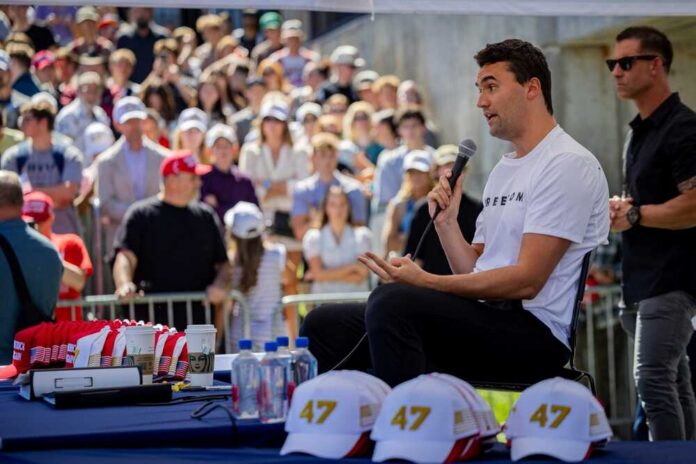
Police recovered a Mauser Model 98 .30-06 bolt-action rifle after Charlie Kirk was shot in the neck during a Turning Point USA “American Comeback Tour” event at Utah Valley University in Orem, Utah. Investigators have described the rifle as wrapped in a towel and abandoned in nearby woods, with a spent cartridge present and additional unspent rounds in the magazine. Prosecutors typically rely on ballistics, chain-of-custody documentation, and scene context to connect a weapon to a fatal shot.
Available reporting in the provided research does not include detailed courtroom filings explaining the defense’s full technical argument, but the premise is clear: if lawyers can cast doubt on whether the recovered rifle fired the fatal round, the rest of the circumstantial case becomes harder to sustain. That challenge can target multiple pressure points at once—how evidence was collected, whether the projectile was recovered intact, and whether lab comparisons are definitive rather than merely consistent.
What Investigators Say They Found at the Scene
Law enforcement accounts describe a targeted attack in daylight that triggered chaos as attendees fled. Authorities tracked the suspected shooter’s movements on campus, described the suspect as college-age, and released photos of a person of interest while offering a $100,000 reward for information. The rifle’s recovery the next day became a central pillar of the investigation, with the FBI and other agencies examining prints, footwear evidence, and other imprints tied to the weapon and the area where it was found.
Investigators also emphasized engraved ammunition as a window into motive and planning. Reporting based on an affidavit describes anti-fascist rhetoric, internet-style memes, and markings that suggested a downward shooting angle. A firearms expert cited in the research noted that ditching a weapon can be an attempt to frustrate forensic work, but it can also backfire if it leaves behind traceable purchase history, identifiable handling marks, or recoverable physical traces. Those investigative angles matter most if prosecutors can firmly place that rifle at the moment of the killing.
The Engraved Ammunition Narrative—and a Key Correction
Several outlets initially reported that ammunition included “trans” and antifascist engravings, a claim later corrected by an editor’s note indicating the transgender-specific detail was not supported. That correction matters because it highlights a recurring problem in politically charged cases: activists and media consumers often latch onto the most inflammatory detail first, while courts demand strict proof. For conservatives already skeptical of agenda-driven framing, the correction is a reminder to separate verified evidence from early viral claims.
Why Ballistics Disputes Matter in Politically Charged Violence Cases
From a constitutional perspective, the system is designed to require proof beyond a reasonable doubt, even when the crime is horrifying and the victim is a public figure. That standard protects everyone from sloppy investigations and politicized prosecutions, and it also protects victims’ families from the injustice of a case collapsing later due to avoidable errors. If defense lawyers can legitimately undermine ballistics certainty—or show gaps in chain-of-custody—jurors may hesitate even if they believe the broader story.
At the same time, conservatives watching this case are not just following a murder investigation; they are watching whether political violence is treated with seriousness and competence. The research available here is limited to what was reported around the initial investigation and does not provide post-2025 trial details, including the complete technical basis for the defense’s “bullet-rifle link” challenge. What is clear is that prosecutors will have to prove the mechanical facts, not just the ideological context suggested by the engravings.
Turning Point USA supporters and the broader campus community remain caught between two realities: the public-facing narrative about motive and extremism, and the courtroom reality that evidence must be connected cleanly, step-by-step, to the act itself. The engraved rounds may influence perceptions of intent, but intent does not substitute for proving which weapon fired which bullet. If the government wants a durable conviction, it must win on forensics, documentation, and credibility—without relying on sensational details that later require correction.
Sources:
Engravings on ammunition offer clues in Charlie Kirk murder investigation
What bolt-action rifle? What we know about gun used to kill Charlie Kirk
Rifle in Charlie Kirk assassination had ammo with trans, antifascist engravings, sources say
Rifle in Charlie Kirk assassination had ammo with trans, antifascist engravings, sources say
Rifle in Charlie Kirk assassination had ammo with trans, antifascist engravings, sources say
Rifle in Charlie Kirk assassination had ammo with trans, antifascist engravings, sources say