Iran just told Washington it won’t even talk about peace unless America accepts demands that could tighten the world’s most critical oil chokepoint—and keep this war burning.
Quick Take
- Iranian state media and officials rejected a 15-point U.S. peace proposal delivered through Pakistan, calling it disconnected from battlefield realities.
- Tehran countered with five conditions, including a ceasefire “on all fronts,” reparations, and sovereignty claims tied to the Strait of Hormuz.
- The White House said the U.S. is open to peace but warned of severe consequences if the offer is refused, as Israel prepared intensified strikes.
- Conflicting claims—Trump describing encouraging contacts versus Iran publicly denying direct talks—are deepening uncertainty about an off-ramp.
- Any threat to Hormuz or Bab al-Mandab raises immediate stakes for energy prices and U.S. domestic political unity, including within MAGA.
Iran’s Rejection Signals a Harder Line, Not a Pause
Iran’s state media and officials rejected a U.S. 15-point proposal aimed at ending the current Middle East war, saying it was “excessive” and out of touch with conditions on the ground. The plan reportedly sought limits on Iran’s nuclear enrichment and ballistic missile program and restrictions tied to Iran-backed proxy forces. Iran’s response was not a counteroffer in the usual sense; it was a public message that Tehran sees leverage and intends to use it.
Iran’s five stated conditions included an end to hostilities “on all fronts,” compensation framed as reparations, and demands tied to sovereignty and control issues around the Strait of Hormuz. Iranian officials also signaled they would continue what they describe as defensive operations and intensify pressure until demands are met. That posture matters because it reduces the odds of quick diplomacy and increases the odds of expanded regional spillover through multiple fronts.
Trump Says Progress; Tehran Denies Direct Talks
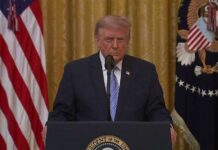
President Trump publicly suggested recent discussions with unidentified Iranians were moving in a positive direction, and he described a “significant prize” related to oil, gas, and the flow of shipping through the Strait of Hormuz. Iranian officials, however, publicly denied direct negotiations, with senior political figures disputing the idea that talks were underway. The mismatch between public claims and official denials leaves Americans guessing whether backchannel efforts exist or whether messaging is driving events.
White House Press Secretary Karoline Leavitt said the U.S. remains open to peace while pointing to “military success,” and she warned of “hell” if Iran rejects the offer. At the same time, reporting indicated Israel’s leadership was briefed and prepared an intensified campaign, including a 48-hour surge in strikes and a major increase in munitions use compared with the June 2025 conflict. That combination—diplomatic pressure plus expanded strikes—can force choices, but it can also harden Iran’s refusal.
Oil Chokepoints Turn a Regional War into a U.S. Cost-of-Living Issue
The Strait of Hormuz and Bab al-Mandab are not abstract geopolitical phrases for most Americans in 2026; they are direct levers on gasoline, heating, trucking, and grocery prices. Reporting tied Iran’s demands to Hormuz, while Iranian warnings also referenced opening or expanding a Bab al-Mandab front. Even the threat of disruption can rattle energy markets, and any sustained risk to shipping lanes puts U.S. households right back in the pressure cooker of high costs.
For a conservative audience already angry about inflation, overspending, and energy price shocks, the chokepoint issue is where foreign policy meets daily life. When a conflict threatens shipping routes that move major energy flows, voters notice it in their bills and their retirement accounts. That’s why the “no new wars” expectation collides so hard with the current reality: even limited operations can escalate when adversaries tie ceasefires to maximal demands and regional leverage.
What the Standoff Means for MAGA Unity and Constitutional Priorities at Home
MAGA supporters are split between backing strong military pressure and resisting another open-ended conflict that looks like regime-change logic by another name. The reporting available does not establish a final U.S. end-state or timeline, and it also leaves unanswered questions about what Tehran would accept beyond its public conditions. That uncertainty is exactly what fuels grassroots distrust: Americans remember how unclear goals overseas can become lasting costs at home.
For conservatives focused on constitutional limits and accountable government, the key question is not slogans but scope: what Congress is told, what the public is told, and what “success” means. The sources describe a proposal rejected, no confirmed direct talks, and intensifying military operations. If Washington cannot define measurable objectives and a realistic diplomatic exit, the country risks drifting into a long war that strains budgets, energy prices, and public trust—without clarity on how it ends.
Sources:
Iran rejects US peace plan, offers its own conditions to end war
Iran rejects US proposal for peace talks: state media