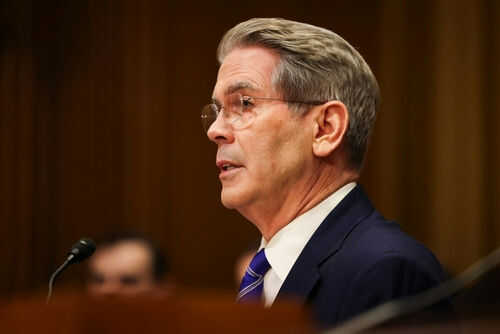
Treasury Secretary Scott Bessent’s “empathy” pitch for President Trump over Robert Mueller is the latest reminder that the press would rather relitigate the Russia years than level with voters about tariffs, shutdown leverage, and Iran.
Story Snapshot
- Scott Bessent told NBC’s Kristen Welker that Americans should show “a little empathy” for President Trump when pressed about Trump’s remarks after Robert Mueller’s death.
- The interview followed Trump’s State of the Union and quickly shifted from economic policy to media-driven questions about the Mueller era and presidential tone.
- Bessent also defended Trump’s tariff strategy after a narrow Supreme Court ruling, arguing the administration still has workable legal tools and that many past challenges failed.
- Bessent discussed looming shutdown politics and signaled support for changing Senate rules to pass the SAVE Act, escalating an already-heated filibuster debate.
NBC Presses Bessent on Mueller, and He Refuses the Script
Kristen Welker’s exchange with Scott Bessent centered on President Trump’s comments after the death of former Special Counsel Robert Mueller, a figure still synonymous with the 2017–2019 Russia investigation. Bessent’s answer did not offer a detailed re-litigation; instead, he urged “a little empathy” for Trump’s perspective after years of investigations Trump labeled a “witch hunt.”
Left-leaning coverage framed Bessent’s response as “baffling” or “canned,” largely because it avoided condemning Trump’s tone and leaned into the idea that outsiders cannot fully understand the experience of being investigated for years. That framing matters because it treats emotional posture as the core scandal rather than clarifying what was actually said and when. Based on the available research, the most verifiable point is that the Mueller segment became a “gotcha” moment precisely because it hijacked a policy interview with personal-politics theater.
What’s Knowable vs. What’s Still Unclear About the “Epitaph”
It describes Trump’s statement as a sharp, even gleeful reaction to Mueller’s passing, but it also acknowledges missing specifics: the exact date of Mueller’s death is not included, and the epitaph’s precise phrasing is not quoted. That limitation is important for trying to separate documented conduct from characterization. The broader historical context is clearer: Mueller led the special counsel probe into Russian election interference and possible Trump-campaign ties, producing a report that did not establish a criminal conspiracy while detailing disputes over obstruction themes.
In practical terms, this is why the Mueller story keeps returning: it functions as a political Rorschach test. Critics hear vindictiveness and see a president unwilling to rise above past grievances. Supporters hear a reaction to years of what they viewed as institutional overreach and media hype that consumed the first Trump term and hardened public distrust. The sources show Bessent leaning into that latter perspective—without providing new evidence about Mueller—while Welker pressed for a more conventional apology-style answer.
Tariffs After the Supreme Court Ruling: The Policy Stakes Behind the Clip
Bessent used the same NBC appearance to defend Trump’s tariff posture, pointing to a narrow Supreme Court ruling and arguing the administration still has viable authority for tariffs—citing tools used under trade and national-security justifications. He also argued the tariff framework has survived extensive pushback in the past, describing thousands of legal challenges that did not succeed. The interview described Trump announcing a 15% tariff window for roughly 150 days, while refund questions were remanded to a lower court with a short timeline.
For many conservative voters, this is the real headline: the administration is trying to preserve leverage for reshoring and trade enforcement while courts and corporate interests keep testing the boundaries. It does not provide an independent audit of Bessent’s numeric claims inside the interview, but it does establish the core dispute—Welker raised legal vulnerability and uncertainty, while Bessent projected confidence and continuity. Either way, policy is where Americans feel consequences, not in recycled Washington psychodrama.
Shutdown and Filibuster Fights: Power, Procedure, and the SAVE Act
The interview also touched on the threat of a government shutdown and a brewing procedural brawl over the Senate filibuster. Bessent argued Democrats were positioned as the obstacle in spending negotiations, while he also signaled openness to changing Senate rules to advance the SAVE Act. That matters to constitutional conservatives because rule changes in Washington rarely stay “temporary”; once majorities normalize procedural shortcuts, the same tools can later be used against taxpayers, states, and civil liberties when power flips back.
The sources also reference foreign-policy tension with Iran and describe an “escalate to de-escalate” concept, alongside plans for talks shortly after the interview. Those issues underscore why the Bessent-Welker moment spread: it combined hard policy topics—trade, shutdown mechanics, and Iran—then veered into a morality-play about Trump and Mueller. That pivot is the enduring media incentive structure, and it leaves viewers with heat instead of clarity when they most need straightforward facts.
WATCH: Scott Bessent Gives Baffling Canned Defense of Trump’s Jaw-Dropping Mueller Epitaph When Grilled By NBC’s Welker
Source: Mediaite @SecScottBessent has no morals or decency. Maybe his lifestyle gives influence for poor taste ? https://t.co/cbZiNHA6p0— Geri (@lightNlove51) March 23, 2026
From a conservative standpoint, the most defensible takeaway is not that Bessent “won” or Welker “lost,” but that the public still lacks key specifics about the Mueller-related remark while the administration’s agenda is actively moving on tariffs, Senate procedure, and diplomacy. When coverage leads with personality outrage and treats policy as background noise, voters should treat viral clips as a prompt to read the details—not as a substitute for them.
Sources:
NBC video: Treasury Secretary Scott Bessent interview clip (ModernGhana)