
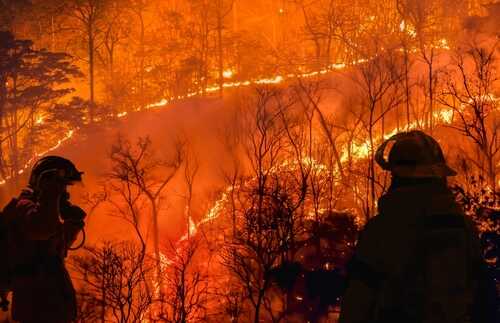
Thousands of residents in Mono County, California, have been forced to flee their homes as the Pack Fire rages out of control, threatening lives and property in a region already strained by years of drought and mismanagement.
Story Snapshot
- The Pack Fire exploded from a few acres to over 3,000 in just hours, fueled by dry conditions and high winds.
- Mandatory evacuations are in effect for Long Valley and McGee Creek, with Crowley Lake under warning.
- Over 1,700 residents and more than 1,100 structures are directly impacted by evacuation orders.
- Emergency crews are battling the blaze with limited resources, while weather conditions continue to challenge containment efforts.
- Damage assessments are ongoing, with fears of significant property loss and long-term economic disruption.
Rapid Escalation and Evacuation Orders
The Pack Fire ignited near McGee Creek Road on November 13, 2025, and quickly grew to over 3,000 acres by the evening. Fueled by dry vegetation and strong winds, the fire forced immediate evacuations for the Long Valley and McGee Creek communities. Crowley Lake was placed under an evacuation warning, and emergency shelters opened at Mammoth Lakes Middle School and the Tri-County Fairgrounds. The rapid growth of the fire—expanding from a few acres to thousands within hours—demonstrates the extreme danger posed by current environmental conditions and the urgent need for robust emergency response.
Local authorities and emergency crews have been working around the clock to contain the fire and protect residents. As of November 14, the fire remains only 5% contained, with minimal activity overnight due to light rainfall. However, the threat persists, and residents are urged to remain vigilant and follow official evacuation orders. The unified command structure, involving CAL FIRE, the Inyo National Forest, the Bureau of Land Management, and local fire districts, is coordinating efforts to build containment lines and safeguard lives and property.
The Pack Fire in Mono County, California, sent plumes of smoke billowing into the sky as it burned over 3,400 acres of land and at least 15 structures on Thursday. pic.twitter.com/4TN9NiFrjT
— AccuWeather (@accuweather) November 14, 2025
Impact on Communities and Infrastructure
The Pack Fire has disrupted daily life for thousands of residents, with 1,795 people and 1,196 structures affected by evacuation orders and warnings. The region’s limited road access complicates evacuation and firefighting efforts, putting additional strain on emergency services. Local businesses, tourism, and agriculture are facing significant disruptions, and the long-term economic impact could be severe. Damage assessments are ongoing, but early reports indicate potential for substantial property loss and environmental damage.
Emergency crews have deployed 30 engines, 6 water tenders, 4 dozers, 14 hand crews, and 368 personnel to combat the blaze. Despite these efforts, the fire’s rapid spread and challenging conditions have made containment difficult. The incident highlights the importance of early detection, rapid response, and continued investment in fire prevention and emergency preparedness.
Broader Implications and Expert Perspectives
The Pack Fire is part of a larger trend of increasingly frequent and intense wildfires in California, driven by prolonged drought, high temperatures, and climate change. Fire management experts emphasize the need for early detection and rapid response to prevent large-scale fires. Environmental scientists point to the role of climate change in exacerbating fire conditions, while economists analyze the long-term economic impacts of large-scale evacuations and property damage. Local residents express concerns about safety, property, and community resilience, while business leaders advocate for support and recovery programs.
The response to the Pack Fire underscores the critical importance of coordinated efforts among multiple agencies and the need for continued investment in fire prevention, emergency preparedness, and community resilience. As the situation evolves, residents and emergency services must remain vigilant and prepared for further challenges.